After the post about VHS, it's worth mentioning VCR as well. If you remember the days of video cassettes, you have definitely heard the word VCR. In the 90s, it was heard in advertisements, in electronics stores, and even in everyday conversations. But what does it actually mean? Is there a difference between VCR and a video recorder? Let's break it down simply and without technical jargon.
What does VCR mean?
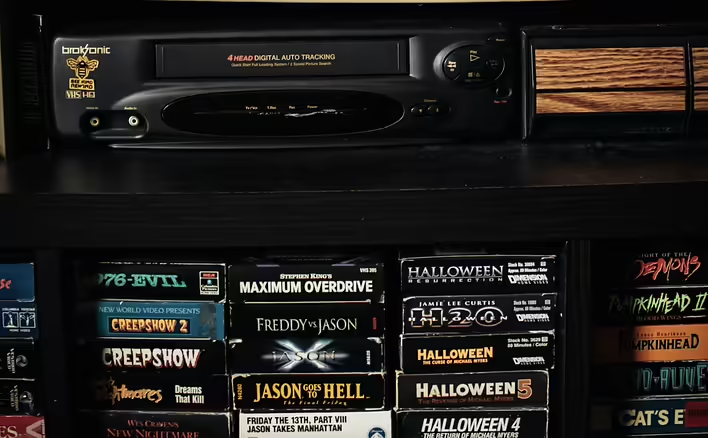
VCR (Video Cassette Recorder) is a video recorder, a device for playing and recording video on cassettes, usually in VHS format.
In simpler terms:
VCR is the box you inserted a cassette into to watch a movie. We called it a "vidik".
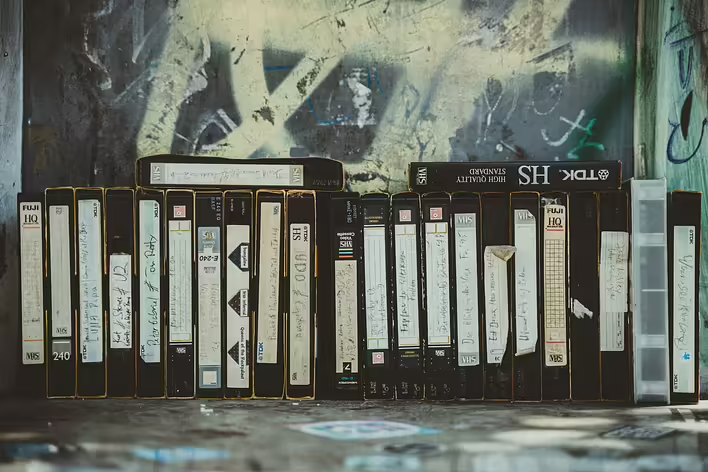
VCR is not a cassette, but a device that played them. VHS is the actual cassette format. VCR is the technology that worked with this format.
That is:
VHS = cassette
VCR = video recorder
Why were VCRs popular?
In the 80s and 90s, the VCR was the main hub of home entertainment. It allowed:
to watch purchased or rented cassettes;
to record favorite shows from TV;
to set a timer for overnight recording;
to view home videos from camcorders.
In fact, it was the ancestor of modern streaming and video players.
Were there other types of VCRs?
Yes, depending on the format:
VHS VCR - the most common in the world;
Betamax VCR - competitors of VHS;
S-VHS VCR - improved image quality;
Dual VCR - devices with two cassette slots for copying.
But most people saw only the regular VHS VCR. VCR is a video recorder, a device for playing and recording cassettes (mostly VHS). It was the heart of home theaters for several decades and became a symbol of the video rental era.