This content has been automatically translated from Ukrainian.
In recent years, artificial intelligence has rapidly entered our lives. We encounter its products daily - from automatic translators and chatbots to generated images, music, or even books. But along with this, a new concept has emerged that is actively discussed in media and communities - AI slop, which can be translated into Ukrainian as "ШІ-помиї" (taken from Wikipedia).
This term is almost always used in a negative context. I often see it on Twitter/X in messages from artists regarding brands that, having budgets, use AI slop instead of supporting artists.
Definition
AI slop is low-quality, mass-generated content created by artificial intelligence that does not carry real value but fills the information space. This can be texts, images, videos, or even products made "just to have," lacking depth and human thought.
In simple terms: AI slop is informational "fast food" that is quickly created, widely distributed, and just as quickly becomes tiresome.
Signs of AI Slop
- Superficiality - the material looks familiar, but it lacks novelty or analysis.
- clichés and stereotypes - texts filled with a bunch of common phrases
- Lack of emotions - artificial intelligence imitates style, but it struggles to convey genuine experience or the unique voice of the author.
- Mass production - such content is often flooded with hundreds of pages, websites, or channels just for the sake of SEO or clicks.
- Visual artificiality - images look "too perfect," but upon closer inspection, one can see strange hands, unrealistic faces, or artifacts (for now, in the future it will be harder to distinguish AI from real content).
Why AI Slop Appears
- Cheap production - creating thousands of texts through a neural network is much easier than ordering from a copywriter.
- Desire to make quick profits - websites with AI content try to gather traffic from search engines.
- Algorithmic race - social networks and platforms reward the number of posts and activity, not quality.
- Lack of control - there are still no clear rules that separate truly useful content from "digital garbage."
Consequences of the Spread of AI Slop
- Information noise - useful materials are harder to find among piles of pseudo-articles.
- Decreased trust - people begin to doubt any content, even quality ones.
- Devaluation of creativity - when the market is flooded with soulless robotic works, the labor of real authors gets lost.
- Manipulations - AI can be easily used for misinformation or imposing certain opinions.
Is all AI content = slop?
No. It is important to distinguish between useful applications of AI and spam production. For example:
- Good: an artist uses AI to generate sketches, which they then refine manually.
- Bad: a website floods Google with hundreds of identical "articles" about cold treatment, rewritten by a neural network.
Artificial intelligence can be a powerful tool if it helps a person express themselves, rather than replacing meaning with empty words.
AI slop is a symptom of our digital age: when technologies allow for the generation of endless arrays of texts and images, but do not add meaning. Distinguishing quality from garbage is becoming increasingly difficult, so the responsibility lies with both readers and creators.
Artificial intelligence can assist a person, but the true value of content is born where there is experience, emotion, and the author's thought.
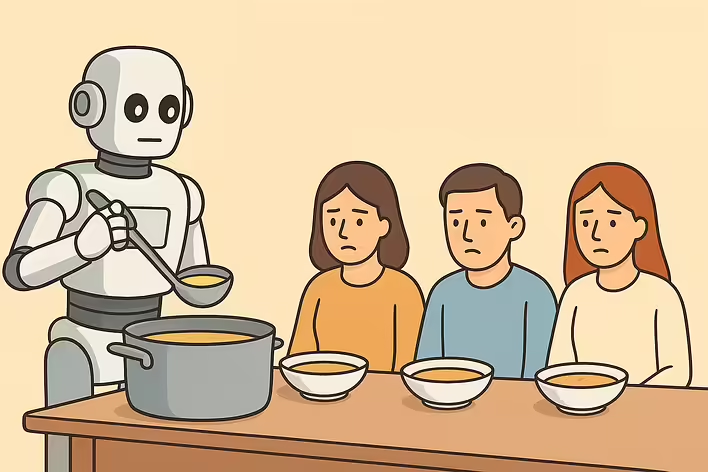
The cover features a typical image that can be called AI slop. Interestingly, AI often uses the same patterns (colors, style, etc.). Most likely, you have already seen images drawn (generated in this style).
Like it?React
🧵
This post doesn't have any additions from the author yet.