
Table of contentsClick link to navigate to the desired location
This content has been automatically translated from Ukrainian.
I took the plunge for the first time to travel abroad with my cat, and I’ll be honest - it was quite an adventure. The cat, like any other pet, didn’t quite understand what a trip was, and I worried about him more than myself. But after gathering all the necessary documents, I realized that this journey wouldn’t be so complicated if I prepared properly. So I’ll share my experience of crossing the border into Poland with a cat - this might be useful for those planning to travel with pets.
Preparation for the trip: documents and chip
I'll start by saying that the cat needed to be microchipped. This was one of the first important steps, as crossing the border is impossible without a microchip. We went to the veterinarian, where they quickly implanted the chip according to the international standard ISO 11784. This procedure was relatively calm for the cat - just a few seconds of discomfort, and it was all done. Now, at any border, his information can be scanned.
Veterinary passport and vaccination
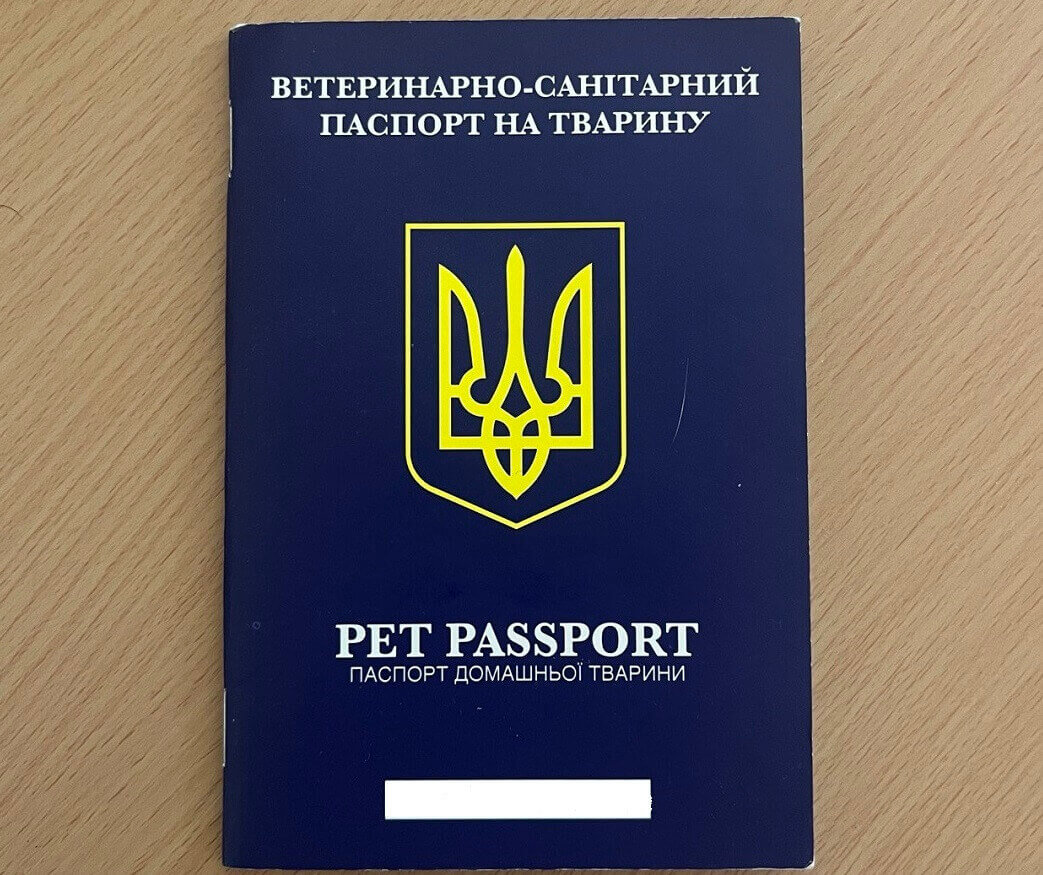
The next important step was obtaining a international veterinary passport. If you don’t have this document yet, any veterinary center can issue it for you, where all the health data of the cat, including vaccinations, will be recorded.
By the way, about vaccinations. The most important was the rabies vaccination. This is a mandatory requirement for crossing the border into EU countries, and the vaccination must be done no later than 21 days before the trip. I specifically kept track of this deadline to avoid unpleasant surprises at the border. All other vaccinations were also recorded in the passport. Just in case, I took a passport photo; this is not a mandatory requirement, but it all depends on the mood of the border service.
Antibody titers against the rabies virus - this is another requirement for some EU countries, including Poland.
What are antibody titers?
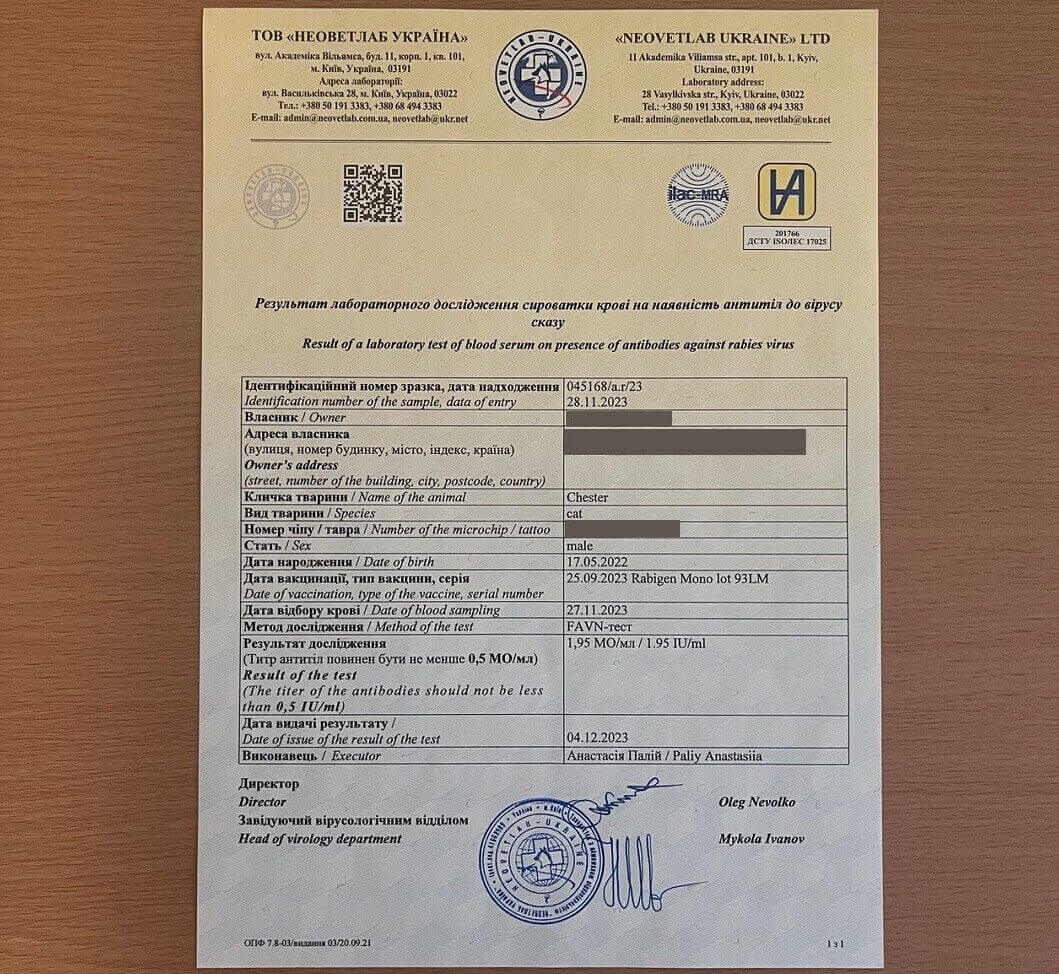
Antibody titers are a blood test that confirms that your cat's body has produced enough antibodies to protect against the rabies virus after vaccination. This test is done to ensure that the vaccination is effective.
The antibody titer test must be done no earlier than 30 days after the rabies vaccination, but no later than 3 months before the trip. This gives confidence that the vaccination was successful and your pet is protected. Without confirmation of antibody titers, some countries may not allow crossing the border or may require quarantine for the animal upon arrival.
To conduct this test, you need to go to a licensed veterinary clinic that is authorized to take blood samples for such analysis. The blood test for antibody titers is conducted in laboratories approved by the European Union, and the results are recorded in the veterinary passport.
Veterinary certificate (form 1)
When all the main documents were ready, a few days before departure, I visited the veterinarian to obtain a veterinary certificate (form 1). This document confirms that the cat is healthy and can travel. The veterinarian reviewed my documents (the presence of the animal was not mandatory) and issued me the veterinary certificate.
International veterinary certificate for the animal.
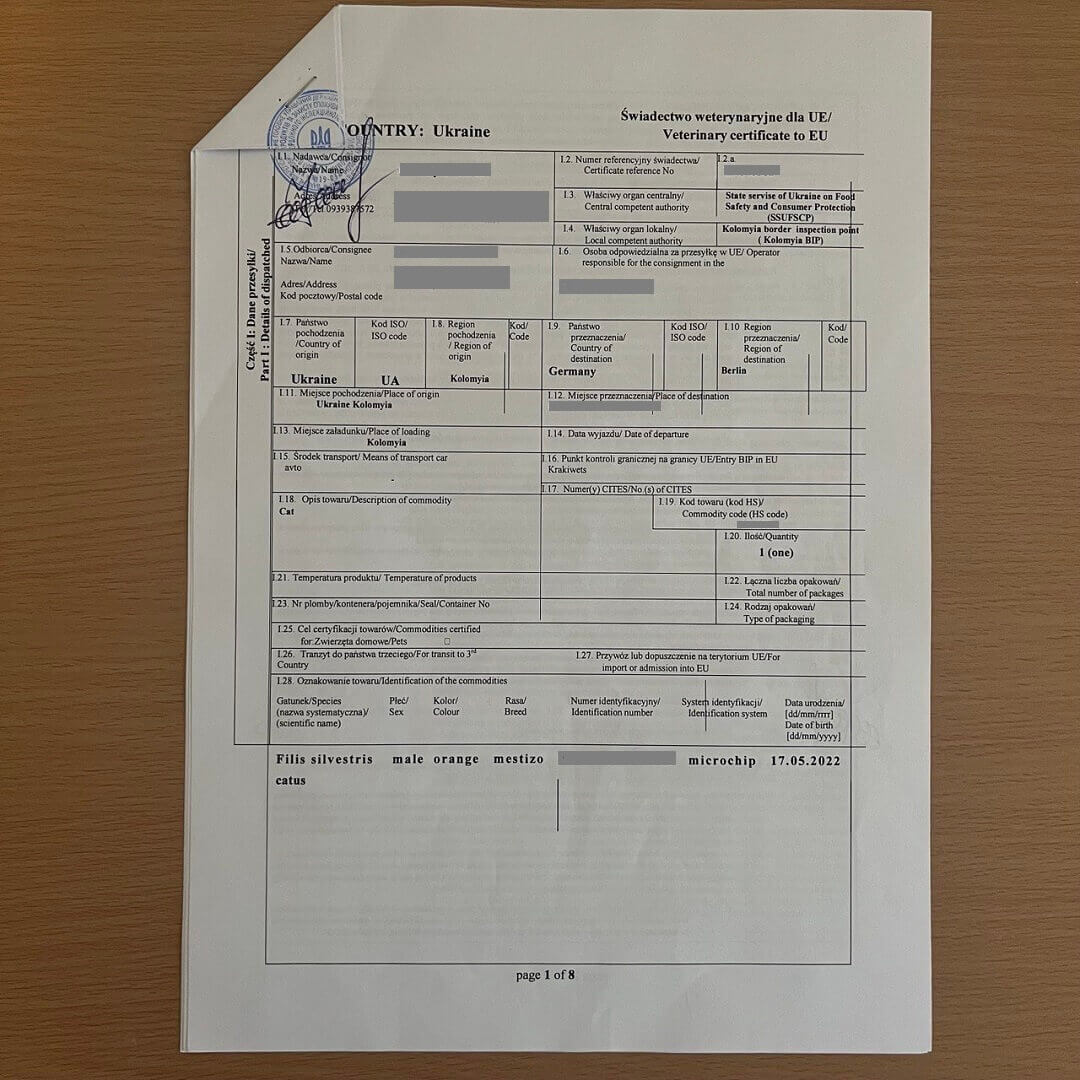
With the veterinary certificate (form 1), I headed to the border inspection control department. There, I exchanged form 1 for an international veterinary certificate for the animal. Although it is said that you exchange form 1 when crossing the border, there isn’t a veterinarian sitting there 24 hours a day. It’s better to have all the necessary documents for the animal ready in advance.
Crossing the border
The day of travel arrived. We took the bus, and of course, the cat was in his carrier. As soon as we approached the border, I was a bit nervous about whether everything would go smoothly. I was told that I was missing one document (Health Certificate), but this is not a mandatory document. At the Polish border, the border guards asked to present the documents for the cat. I showed the veterinary passport, international veterinary certificate, and certificate of the antibody titer against the rabies virus. There were no questions or problems since all the documents were correctly prepared, and we were able to continue our journey.
How the cat handled the trip
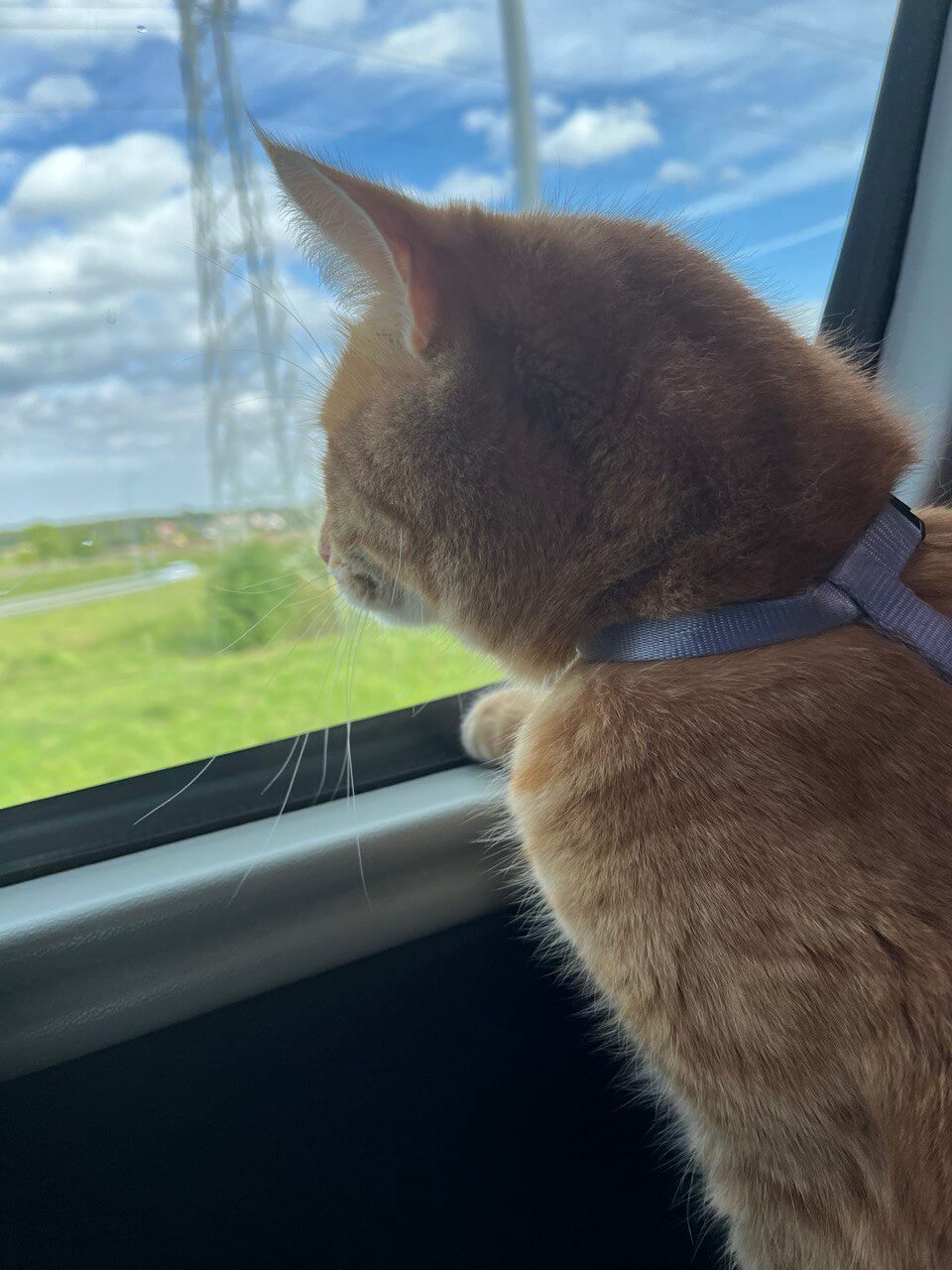
For my cat, this was his first long trip. We traveled for 30 hours to Berlin (to avoid unnecessary stress, I gave him a calming agent a couple of hours before departure). I was worried about how he would behave, whether he would be comfortable sitting in the container, and how he would go to the bathroom. I took a litter box, pads, food, and water with me. While we were traveling to the border, he sat in the container. During the border crossing, he was a bit scared, but overall he behaved calmly. After crossing the border, I put a harness on him and placed him next to me in the seat (according to the carrier's rules, I had to buy two seats). Throughout the trip, he behaved calmly, ate food, slept, and looked out the window. He didn’t want to go to the bathroom. He only went for the first time when we arrived in Berlin.

Crossing the border into Poland with a cat turned out to be easier than I expected, provided that all the documents were prepared in advance. The main thing is to follow all the requirements: vaccinations, microchipping, titer certificate, international veterinary certificate.
Now, after this trip, I am ready to set off with my furry friend to any country, knowing that properly prepared documents are the key to a smooth border crossing.
This post doesn't have any additions from the author yet.