This content has been automatically translated from Ukrainian.
Have you ever encountered words like "chan" or "kun" in comments or memes? If so, congratulations - you are already familiar with the internet culture that connects people from different corners of the world through anime, manga, and memes. But how did these Japanese words become part of global internet slang, and what do they actually mean?
The Japanese Roots of "chan" and "kun"
In the Japanese language, there are many suffixes used after people's names. These suffixes hold significant meaning in communication and express a certain level of politeness or closeness.
- "Chan" (ちゃん) - is a suffix often used to address girls or children. It conveys a sense of tenderness, affection, or endearment. For example, if there is a girl named Yuki, she might be affectionately called "Yuki-chan." However, this suffix can also be used for pets or in an informal atmosphere among very close friends. Thus, "chan" is a kind of expression of tenderness and intimacy.
- "Kun" (君) - is another popular suffix, most commonly used for boys. It is used by friends or elders who share a certain level of trust and informality in their relationships. For example, a boy named Takashi might be called "Takashi-kun." This suffix is used to indicate that you are on a level of closeness with that person, but it does not carry the same softness as "chan."
How "chan" and "kun" Entered Internet Culture?
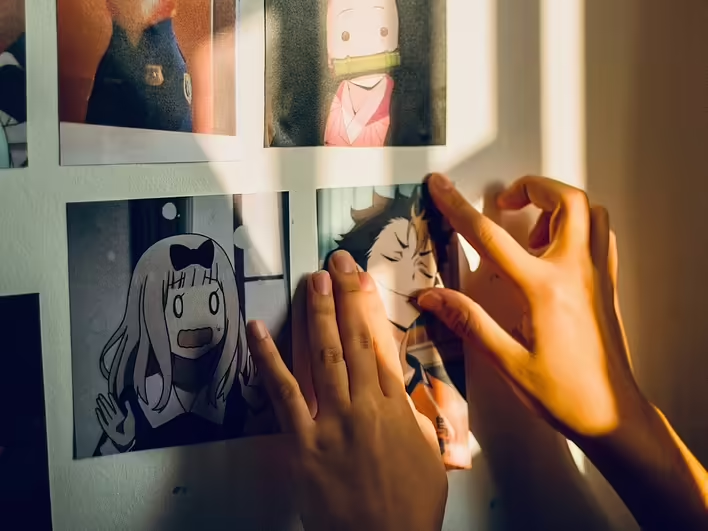
If you are a fan of anime or manga, you have definitely seen how these suffixes are actively used by characters. However, over time, "chan" and "kun" ceased to be just suffixes and transformed into standalone words that internet users adapted to their needs.
In the world of memes, "chan" and "kun" have become archetypes. For example, "chan" represents the typical anime girl, cute, modest, and sometimes a bit naive. She always has big eyes, rosy cheeks, and often seems a bit idealized. She symbolizes a certain image that becomes a meme in the anime fan culture.
"Kun," in turn, often represents the boy from anime, the typical romantic hero or attractive young man. He may be a bit shy, sometimes not very confident, but this only makes him even more appealing in this context.
The Role of "chan" and "kun" in the Ukrainian Internet Space
With the spread of anime in Ukraine, there is also an increasing use of "chan" and "kun." In social networks, forums, and fan chats, you can often see these terms used not only for discussing anime but also as part of internet humor or even in everyday jokes. For example, you might see comments like: "Did you find your chan?" or "Look for your kun."
Interestingly, in the Ukrainian internet, these words have a much broader meaning than just an anime context. They have become universal for describing certain types of relationships or behavior. They are often found in combination with other slang or meme expressions, making them even more universal. Thus, even if a person does not watch anime, they can still use these terms, as they have become part of global internet culture.
The Paradox of Popularity: Linguistic Borrowing Without Contextual Knowledge
Interestingly, many people who use "chan" or "kun" may not know about their Japanese origins. They simply perceive these terms as part of internet slang and often use them without considering the original context. This is a kind of phenomenon: when a borrowed word transcends its native environment and begins to live a separate life in a new culture.
Like it?React
🧵
This post doesn't have any additions from the author yet.