This content has been automatically translated from Ukrainian.
Buying a used car is traditionally associated with risk: technical malfunctions, hidden defects, and an opaque service history. In behavioral economics, this is referred to as "information asymmetry," where the seller knows more about the product than the buyer. To reduce this imbalance, a warranty mechanism is used — it acts as a guarantor of honesty and certainty in the quality of the vehicle. Buyers are increasingly paying attention to used cars in the Khmelnytskyi region, as more and more sellers offer such cars with accompanying warranty commitments — this significantly increases the level of trust in the purchase.
What experience from past decades shows
In the 1970s, economist George Akerlof described the phenomenon of the "market for lemons": without warranties, buyers rely on the average quality of cars, and sellers of quality vehicles cannot get a fair price, so the market becomes filled with "lemons" — cars with defects. The introduction of warranties and inspections changed the situation: today, certified sellers demonstrate the service history, openly disclose all known malfunctions, and provide warranties on quality cars to show confidence in the product.
How we choose between two similar cars
Imagine a typical situation: a buyer has a choice between two identical cars — both of the same year, mileage, and model. But one comes with a 12-month warranty, while the other has no obligations. Even if the first option is slightly more expensive, it appears more attractive. Why? Because the likelihood of unexpected repair costs significantly decreases. In this case, used cars with a warranty provide a sense of security — not just financial, but also psychological.
What conditions build trust in the seller
A warranty is not just a marketing ploy, but a whole set of practices that ensure quality:
- Clear coverage: the buyer must know which components of the car — engine, transmission, electronics — are included in the warranty.
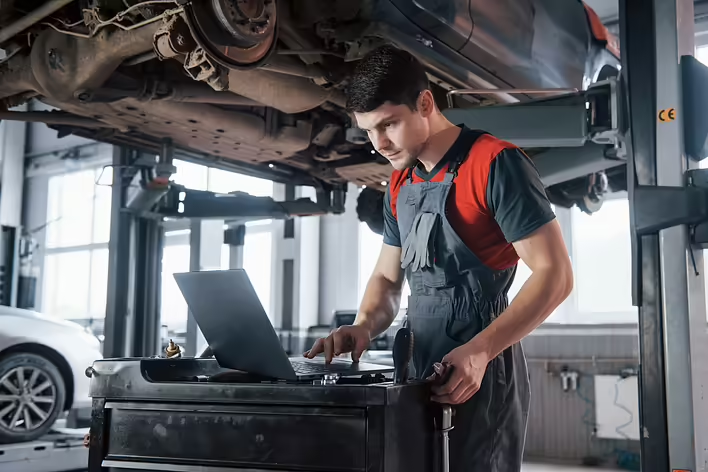
- Standardized pre-sale inspection: the technical diagnosis must be transparent and documented.
- Return or exchange option: even a short-term option significantly reduces anxiety.
- Open service history: if there is complete documentation of maintenance, the buyer better understands the condition of the car.
Warranty as a psychological tool of trust
In practice, a warranty serves as a signal of quality. It says: "We are so confident in our product that we are willing to take responsibility after the sale." For the buyer, this is a key marker of safety. That is why a warranty can transform a one-time transaction into a long-term relationship, where trust plays a central role. In a world where uncertainty hinders decisions, a warranty becomes that point of support that allows one to move forward with confidence.
Like it?React
🧵
This post doesn't have any additions from the author yet.