This content has been automatically translated from Ukrainian.
Every Ukrainian family has faced the problem of accumulating old electronics. Countless devices that were once at the peak of technology are gathering dust in closets, on balconies, and in garages: Soviet televisions, rotary phones, early computers, cassette recorders. Most people consider this ordinary trash, unaware of the true value of such technology. In fact, your "electronic scrap" can become a source of significant income, as it contains precious metals and rare components that are highly valued in the secondary raw materials market.
The modern economy is increasingly leaning towards the principles of circularity, where the waste of one production becomes the raw material for another. The electronics industry is no exception - old radio parts contain a significant amount of gold, silver, platinum, and palladium, which are actively used in new production. Understanding the value of old technology can not only bring you extra money but also help contribute to environmental preservation.
Hidden Treasures in Ordinary Household Appliances
Many will be surprised to learn how many precious metals are contained in ordinary household appliances. Gold was used to coat contacts due to its resistance to oxidation, silver for high-quality connections, and platinum and palladium in catalysts and special components. Appliances produced in the Soviet era were particularly rich in precious metals, as the issue of saving on materials was not so pressing.
The most valuable items in your home may include:
- Rotary landline phones - contain silver contacts in the rotary dial and bells
- Soviet televisions and radios - rich in vacuum tubes with silver electrodes
- Old computers - motherboards with gold contacts for processors and memory slots
- Measuring instruments - oscilloscopes and generators with high-precision components
- Recorders and players - contain quality capacitors and resistors
- Soviet-era electronic watches - often have gold-plated circuits
Particular attention should be paid to vacuum tubes, especially those produced before and after the war. Some rare specimens can cost hundreds of dollars each among collectors and radio enthusiasts. Even ordinary 6P3S or 6N2P tubes have a stable market value due to their unique sound characteristics.
Soviet Electronics: A Gold Mine for Smart Owners
The period from 1960 to 1990 is considered the "golden age" of the Soviet electronics industry in terms of precious metal content. At that time, the USSR had its own gold and platinum deposits, so it did not skimp on the quality of components. This makes Soviet technology particularly attractive to recyclers and collectors.
The most valuable categories of Soviet electronics include:
- Military and space technology - the highest quality materials were used without cost restrictions
- Scientific instruments - high-precision measuring devices with unique components
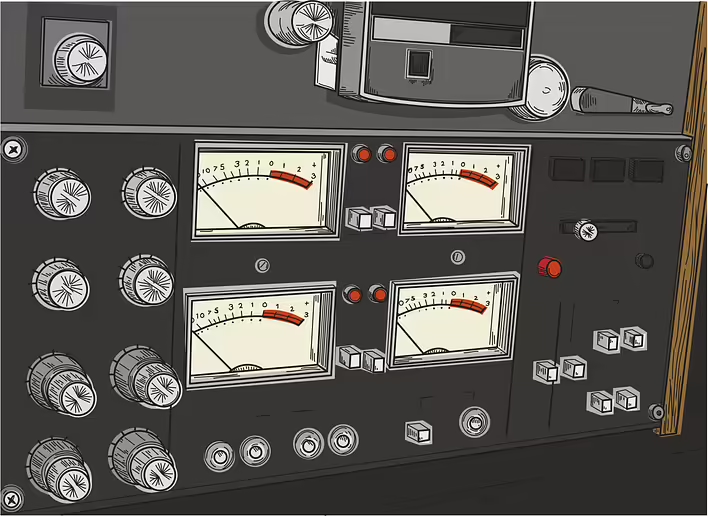
- Professional radio equipment - studio tape recorders, radio stations, amplifiers
- Computing technology - early computers and programmable calculators
- Automotive electronics - ignition systems and radios for cars
Special attention should be paid to factory brands: products from the "Electron," "Quartz," "Ruby," and other leading enterprises in the industry traditionally featured high-quality components. Even ordinary K50-35 capacitors or KT315 transistors from these factories can have a decent market value.
Modern Technology: What to Keep from Decommissioned Equipment
Do not think that only antique technology has value. Modern electronic devices also contain precious metals, although in smaller quantities due to miniaturization and material savings. However, the production volumes of modern technology are so large that the total amount of valuable materials remains significant.
The most promising types of modern technology for recycling include:
- Mobile phones and smartphones - contain gold, silver, and rare earth metals in compact form
- Laptops and tablets - processors, RAM, and motherboards with precious coatings
- Servers and workstations - professional equipment with a large number of quality components
- Telecommunication equipment - routers, switches, modems with reliable connections
- Medical equipment - high-precision devices with quality electronics
- Industrial controllers - automation systems with durable components
It is important to remember that even non-working technology can have significant value. The key is the materials from which the components are made, not their functionality. Sometimes a broken smartphone is worth more than a working one due to the rare elements in its composition.
How to Properly Assess and Prepare Technology for Sale
Successfully selling old technology requires some preparation and knowledge. First of all, you need to learn to recognize the most valuable components and classify them correctly. This will allow you to get the maximum value for your stock of electronics.
The main stages of preparation include:
- Inventory - compile a complete list of all available technology, noting brands and models
- Sorting - divide devices by type, year of manufacture, and country of production
- Documenting - take quality photographs of each item from different angles
- Research - study information about the rarity and value of specific models
- Cleaning - carefully clean devices of dust and dirt for a better appearance
- Packaging - prepare reliable packaging for safe transportation
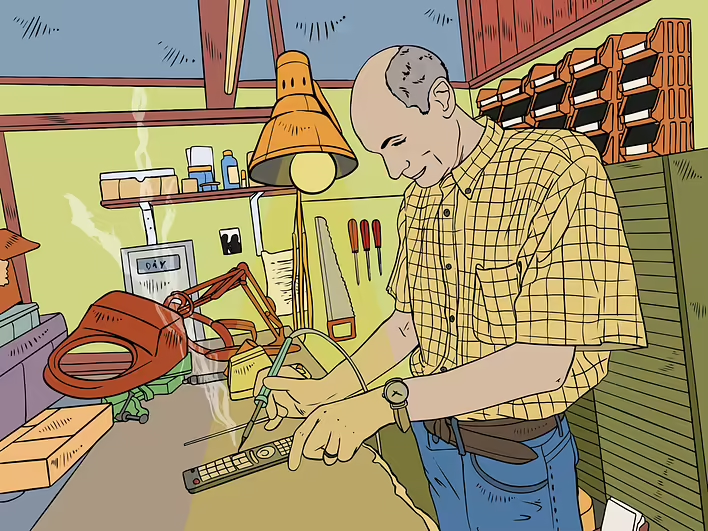
Do not attempt to disassemble complex technology on your own - this can reduce its value. Professional recyclers have specialized equipment for safely dismantling components. Your task is to keep the devices in as original condition as possible.
The company Purchase REK specializes in professional assessment and procurement of radio parts and radio electronic components, from Soviet rarities to modern elements. Experienced specialists can accurately determine the value of your radio parts and offer the best terms of cooperation.
Practical Tips for Maximizing Profit
Maximizing income from selling old technology requires a strategic approach. It is important not only to know what to sell but also when and to whom to sell it. The market for radio parts has its peculiarities and seasonal fluctuations that can be used to your advantage.
Useful recommendations for successful sales include:
- Study the market - keep track of price changes for different types of components and devices
- Accumulate batches - large volumes of technology are usually valued higher than individual items
- Keep documents - passports, schematics, and instructions increase the value of retro technology
- Network with collectors - some rare devices are more expensive to sell to private individuals
- Utilize seasonality - demand for electronics increases before the New Year holidays
- Diversify channels - do not rely solely on one method of sales
Remember that patience is often rewarded. Rare specimens are better not to sell in haste - their value can significantly increase over time. On the other hand, mass models are better sold immediately while they are still in demand.
Your Path to Profitable Recycling
Turning old technology into a source of income is not only an opportunity to improve your financial situation but also a way to contribute to the preservation of natural resources. Every device sold for recycling means less waste in landfills and more valuable materials returned to the production cycle.
Ukrainians have a unique opportunity to take advantage of the legacy of the Soviet electronics industry. Technology from that time is characterized by a high content of precious metals and today has a stable demand in the international market. At the same time, the development of modern technologies creates a constant need for rare earth elements and special alloys.
The main thing is to start taking action. Review your stock of old technology, study the market, and consult professionals for advice. Perhaps your "electronic scrap" will become a pleasant surprise for the family budget. In a world where resources are becoming increasingly expensive, smart waste management is turning into a profitable business.
Like it?React
🧵
This post doesn't have any additions from the author yet.