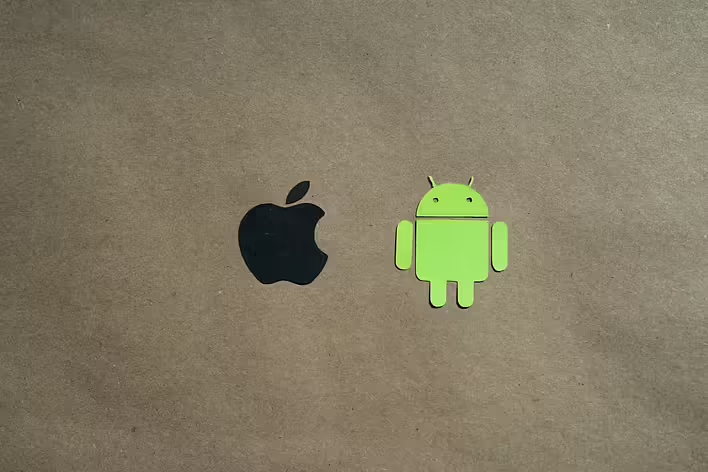
The world of smartphones has been revolving around two giants for over fifteen years — Android and iOS. The choice between them has long ceased to be just a technical question — it is a choice of ecosystem, usage style, and even a certain philosophy. Some value the freedom of customization and a wide selection of devices, while others appreciate stability, security, and thoughtful integration. If you are looking for a new smartphone, it is worth checking out Computer Universe — a space of modern technology where models from both platforms are presented, and you can choose an option that suits your needs.
Brief History of Android
Android appeared in 2008 after the company Android Inc. was acquired by Google. The first commercial smartphone on this system — HTC Dream — opened a new era of mobile technology. The main idea of Android was openness: manufacturers could adapt the system to their own devices, change the interface, and add features. This allowed Android to quickly become the most widely used mobile OS in the world.
Today, Android is installed on smartphones from various brands — from budget to flagship models. This gives users a wide choice of prices, designs, and technical specifications.
Pros of Android:
a wide selection of devices and price categories;
flexible interface customization;
the ability to install apps from various sources;
integration with Google services.
Cons of Android:
varying quality of optimization depending on the manufacturer;
not all devices receive long-term updates;
potentially higher security risks due to the system's openness.
Brief History of iOS
iOS was introduced in 2007 along with the first iPhone, created by Apple. Initially, the system was called iPhone OS, but later it received its modern name. From the very first days, iOS focused on stability, ease of use, and quality control. Apple creates both the software and the "hardware," so the ecosystem works in maximum harmony.
iOS is available exclusively on Apple devices, ensuring high optimization and quick updates even for older models.
Pros of iOS:
stable and smooth operation;
long-term update support;
high level of security;
close integration with the Apple ecosystem (Mac, iPad, Apple Watch).
Cons of iOS:
limited customization options;
higher average device prices;
closed system with stricter app installation rules.
What to Choose?
Android is often chosen by those who love to experiment: changing launchers, icons, widgets, and deeply customizing the system. It is an option for those who want maximum variability and are not afraid to delve into the details themselves.
iOS, on the other hand, is suitable for those who value predictability and simplicity. Everything works "out of the box," and the user does not need to spend time on customization. High optimization allows even models several years old to remain fast and relevant.
There is no definitive answer. If flexibility, a wide selection of models, and an affordable price are important — Android will be an excellent solution. However, if you are looking for stability, long-term support, and a premium user experience — iOS may be the better choice.
In any case, the modern market offers a multitude of options. The main thing is to determine your needs: camera, battery life, performance, design, or integration with other devices. And regardless of which system you choose, the smartphone should be convenient for you.