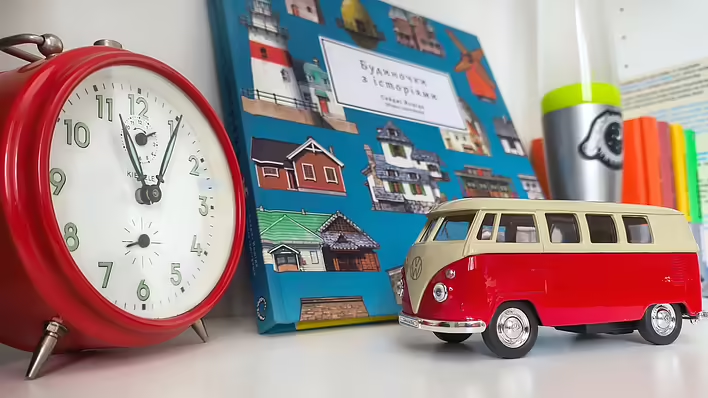
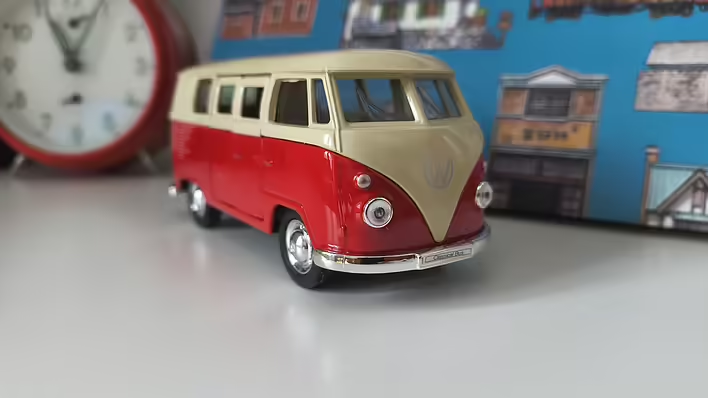
There are cars that even those far from the automotive world can recognize. The Volkswagen T1 has become just that — a compact microbus with rounded shapes, a V-shaped front, and a split windshield. In miniature, it looks no less charismatic. Scale models accurately reproduce the characteristic proportions, contrasting two-tone body, and simple yet warm aesthetics of the mid-20th century.
Even a small copy of this car evokes a sense of travel — as if you are about to set off along the ocean or to a music festival.
How the legendary Transporter appeared
The Volkswagen T1 appeared in 1950 in Germany as a practical commercial vehicle. It was created based on the technical solutions of the "Beetle" — a simple, reliable, and affordable car. The model was named Transporter and was initially used for transporting goods and workers.
However, very quickly the T1 transcended its purely utilitarian purpose. Thanks to its capacity, economy, and simplicity of design, it became popular among small businesses, delivery services, and even tourists.
A true cultural breakthrough occurred in the 1960s. In the USA and Western Europe, the Volkswagen T1 became the favorite transport of youth movements. It was painted in bright colors, adorned with flowers and peace symbols. It was then that the bus finally transformed into a symbol of freedom, travel, and an alternative lifestyle.
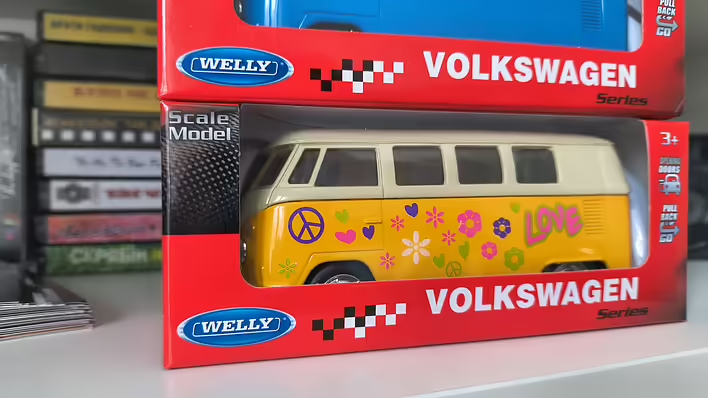
Today, yellow versions with flowers and the word "Love" are not just a design, but a direct reference to the hippie era, festivals, and the spirit of the open road.
той самий жовтий бус
Why scale models are still popular
Miniature versions of the Volkswagen T1 attract several generations at once. For children, it is a bright toy with an unusual shape. For adults — nostalgia and an aesthetic object.
Brands like Welly create affordable metal models with good detailing: opening doors, rubber wheels, and a neat interior. The most common scales are 1:24, 1:32, or 1:34, which allows models to be stored on shelves without taking up too much space.
Such copies do not claim museum accuracy, but they wonderfully convey the spirit of the original.
модель в упаковці
Collectible value and the phenomenon of nostalgia
Original Volkswagen T1s have long become classics and are valued in the retro market. Miniature versions, in turn, have become a separate segment of collecting. Rare colors, limited editions, or themed variants with historical decorations are particularly popular.
However, the main value of such models lies not only in their potential worth but in the emotion they evoke. They serve as materialized nostalgia: a small object that preserves the spirit of a great story.
The design of the Volkswagen T1 is timeless. Its rounded lines, friendly "facial expression," and simplicity of form remain relevant even more than 70 years after the model's debut.
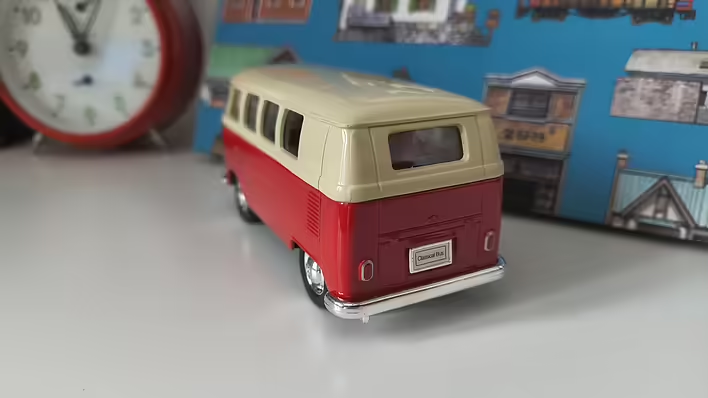
1963 T1 Bus
1963 T1 Bus
A miniature copy of this bus is more than just a toy. It is a piece of automotive culture, a symbol of an era, and a reminder that sometimes the smallest things hold the biggest stories.
Model series: more than one "bus"
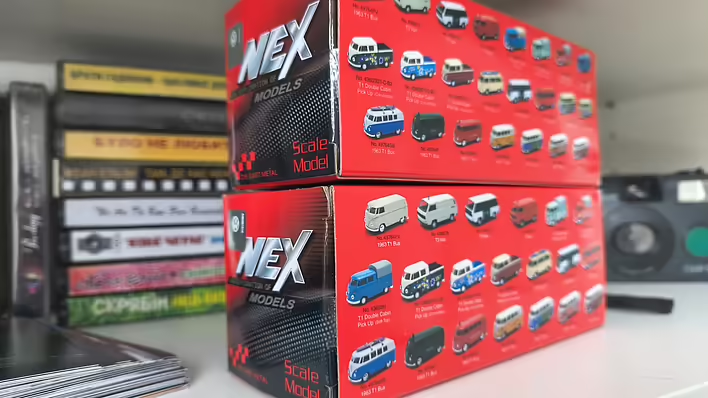
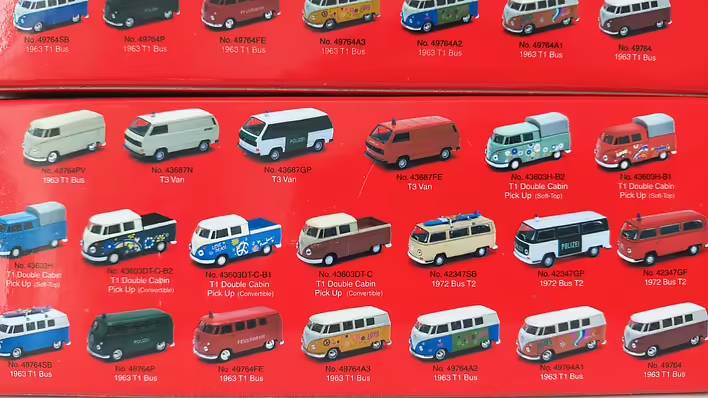
зворотний бік упаковки
On the packaging, it is clear that this is not a single model, but an entire series dedicated to various versions of the classic Volkswagen T1 and even subsequent generations. The manufacturer Welly offers several body and design variants — significantly expanding interest for collectors.
The lineup includes:
classic 1963 T1 Bus in various colors;
versions with thematic prints in the style of the 1960s — with flowers, peace signs, and the word "Love";
service modifications — police (Polizei) and fire department (Feuerwehr);
pickup versions T1 Double Cabin Pick Up (including with a soft top);
even models of the later T2 generation from 1972;
as well as T3 Van — a more "angular" evolution of the legendary bus.
Interestingly, the series encompasses not only the romanticized hippie image but also utilitarian versions that remind of the vehicle's original purpose — to be a working machine. Thus, the collection reflects the full evolution of the model: from commercial transport to a cultural symbol.
For collectors, this means the opportunity to gather not just different colors but different roles of the same car in history. And for those who buy one model "for the soul," even a single bright version already looks like a standalone art object on the shelf.