A belt (sometimes referred to as a "pasik") in the context of audio technology is a thin elastic strap that transmits rotational motion from the motor to the mechanism of a turntable, cassette deck, or CD drive. The stability of speed, correct activation of mechanisms, and overall reliability of the device depend on the quality and condition of the belt. In vinyl players, the belt maintains the speed of the disc; in cassette decks, it is responsible for pulling the tape; and in CD drives, it often ensures the movement of the tray.
It is possible to understand that the belt needs to be replaced by several typical symptoms. If the sound starts to "float," an unstable tone is heard, or the speed periodically drops, this is a sign of belt stretching. In cassette decks, normal tape pulling may disappear: the cassette spins only partially, stops without reason, or rewinding works very slowly. When the belt is completely worn out, the mechanism may not start at all, and the motor will buzz without visible movement of parts. Often, old belts become sticky or crumble - this also indicates that their lifespan is exhausted.
Belts are made from various types of rubber, but for audio technology, EPDM or silicone materials are usually used. EPDM rubber is more similar to the original belts of old devices and holds its shape well, while silicone options sometimes have better elasticity and durability. It is important to find the correct diameter and thickness: even a slight deviation can affect speed or create additional noise. If you do not know the exact size, measure the old belt in a relaxed state or calculate the circumference.
To find the appropriate belt online in English, search for phrases like "turntable belt," "cassette deck belt," "drive belt," "flat belt," "square belt," or "rubber belt for [model]." If you are selecting a strap by size, add to your query "XX mm diameter belt" or "YY mm flat belt width." For specific models, a query like "[brand model] belt replacement" works well. It is important to consider that different manufacturers used different profiles of belts: flat for players, square or round for cassette deck mechanisms, and thin round for CD trays.
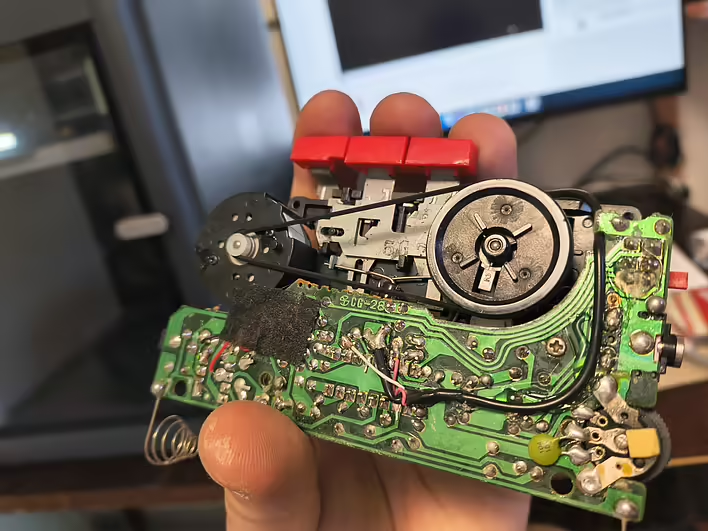
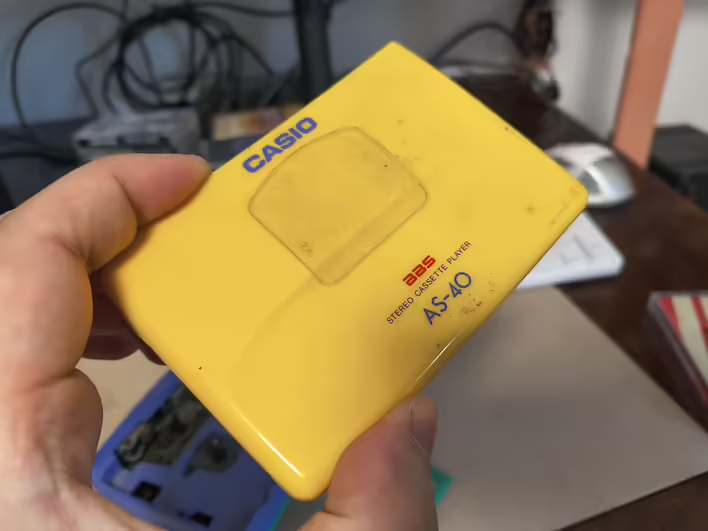
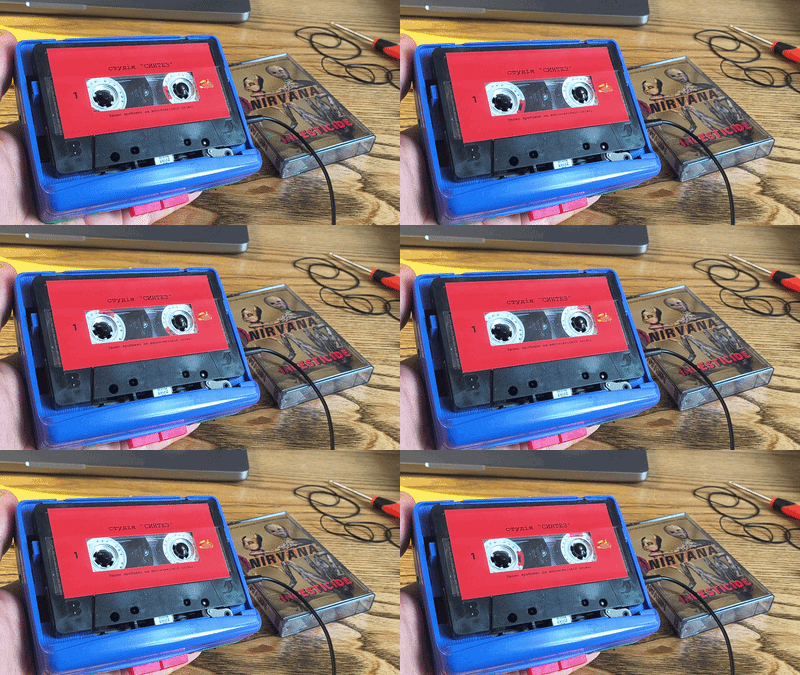
Personally, I have seen several Ukrainian online stores with a large selection of belts. Currently, I will be selecting and ordering one for my player. I am trying to revive a CASIO AS-40 that I bought at an auction for a couple of hryvnias.
In conclusion, replacing the belt is a simple (depending on the model and design) procedure, but it significantly affects the operation of audio technology. Timely replacement ensures stable speed, clear sound, and long operation of the mechanism, especially if you choose quality rubber and the correctly selected size. If the device starts to behave abnormally, and the mechanics produce strange sounds or "slips," often a new belt is all that is needed to bring the equipment back to life.