This content has been automatically translated from Ukrainian.
If you are interested in photography, you have probably heard of concepts such as full frame and crop sensor. They refer to the camera sensor – its "heart," which captures images. But what does this mean in practice? How does the sensor size affect image quality, and is it worth paying extra for full frame? Let's find out.
What is a matrix and sensor in a camera?
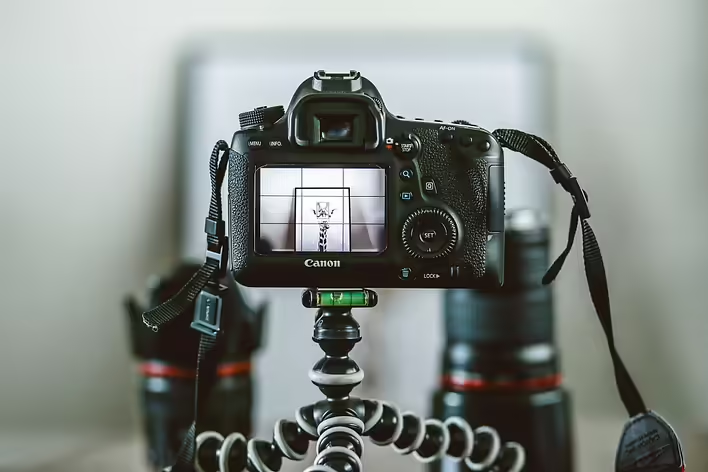
The sensor (matrix) is the digital "film" of the camera
When we talk about digital cameras, instead of traditional film, a sensor (matrix) is used – an electronic component that converts light into a digital signal. It is responsible for image quality, colors, detail, and noise levels.
The sensor consists of pixels (photodiodes) that capture light. The larger the sensor, the more physical pixels can be placed on its surface, resulting in higher detail and better performance in low light.
Two main types of sensors are used in cameras: CMOS and CCD. Most modern cameras operate on CMOS sensors because they are more economical and faster.
What is the difference between a "crop sensor" and a "full frame"?
1. Sensor size
The main difference is the physical size of the sensor.
- Full Frame – has a size of 36×24 mm, which corresponds to the classic 35mm film frame.
- Crop sensor (APS-C, Micro 4/3, and others) – is smaller in size. For example, APS-C is on average 23×15 mm, while Micro 4/3 is 17×13 mm.
2. Crop factor
Since the crop sensor is smaller, it captures a smaller portion of the image that the lens provides. This is called the crop factor.
- Full Frame → crop factor 1.0 (no change)
- APS-C → crop factor 1.5 (Sony, Nikon) or 1.6 (Canon)
- Micro 4/3 → crop factor 2.0
What does this mean? For example, if you mount a 50mm lens on a camera with an APS-C sensor (crop factor 1.5), the field of view will correspond to 75mm (50×1.5). This means the frame will be more "zoomed in" compared to full frame.
This is good for portrait or sports photography (without additional costs for long telephoto lenses). But for landscapes or wide-angle shots, this can be a downside.
3. Depth of field and background blur (bokeh)
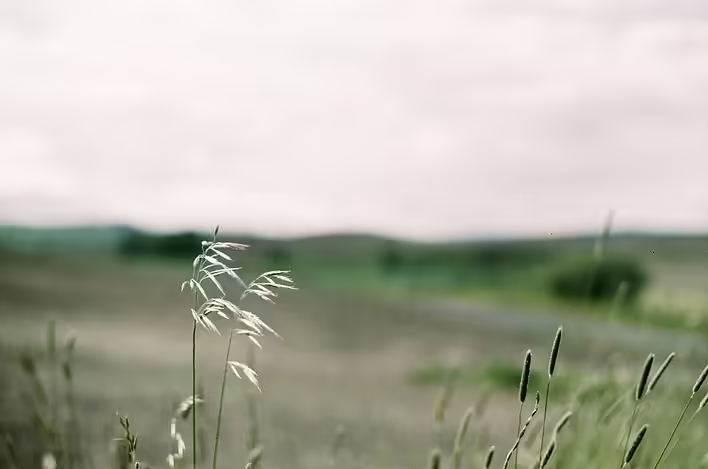
Full frame has a larger physical sensor, which provides more natural background blur (bokeh), especially at the same aperture. This is important for portrait photography.
On a crop camera, to achieve the same blur, you need to use faster lenses. For example, if on full frame a 50mm f/1.8 gives good bokeh, then on APS-C you would need to use approximately 35mm f/1.4 for a similar effect.
4. Image quality in low light
The larger the sensor, the more light it collects. This means:
- Less digital noise at high ISO.
- Better color reproduction and dynamic range.
Full Frame always wins here, especially for night photography.
5. Size and weight of the camera
- Crop cameras are lighter and more compact, which is convenient for travel.
- Full Frame cameras are heavier and more expensive, but provide better quality.
What to choose: full frame or crop?
Choose full frame if: ✅ You are engaged in professional photography, shooting advertising, portraits, or landscapes.✅ Image quality in low light is important.✅ You want maximum background blur (good bokeh).✅ You are ready to invest more in the camera and lenses.
Choose a crop camera if:✅ You need a lightweight, compact camera for travel or daily shooting.✅ You are just starting out and don’t want to overpay.✅ You shoot video – crop cameras often have good stabilization.✅ You need additional "zoom" without expensive telephoto lenses (sports, wildlife).
If you are a beginner, a crop sensor is the perfect option to start: compact, budget-friendly, versatile. But if you strive for professional quality, full frame will open up significantly more opportunities for you.
Like it?React
🧵
This post doesn't have any additions from the author yet.