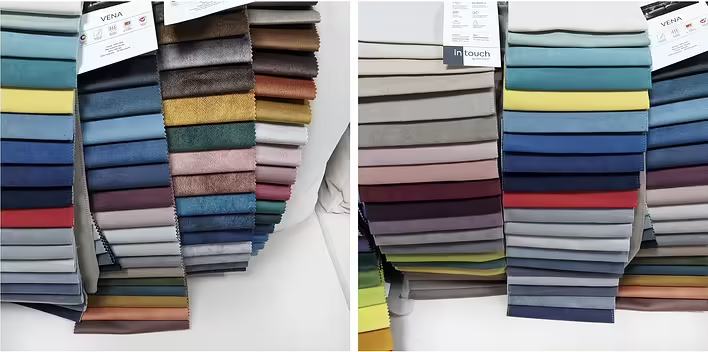
"Anti-claw" is an informal name for the fabric used for making furniture upholstery, as well as, in some cases, for clothing or accessories. The fabric is resistant to stains and damage, making it popular for use in high-traffic areas or in homes with pets.
The main characteristics are:
Resistance to pet hair — the fabric has a texture that prevents hair from sticking to its surface.
Easy to care for — usually, anti-claw is easy to clean and does not require special care.
Long lifespan — it is durable, so it slowly loses its properties.
Anti-claw is usually made from synthetic or blended materials, such as polyester or nylon, and has a characteristic texture resembling velvet or microfiber.
The density of anti-claw fabric is usually measured in grams per square meter (g/m²), and it can vary depending on the manufacturer and type of fabric. On average, the density can range from 250 g/m² to 450 g/m².
A fabric with higher density will be more wear-resistant, strong, and durable, making it ideal for upholstery or making covers that are subjected to high loads. At the same time, a fabric with lower density may be softer and more comfortable, but likely less resistant to damage.
If you are choosing anti-claw for a specific purpose, such as for furniture or pet covers, it is recommended to choose a fabric with medium or high density for better wear resistance.
It is also important to consider the color of your pet's fur when choosing furniture. This way, the fur will be less noticeable, helping to maintain the visual effect of cleanliness between cleanings.