This content has been automatically translated from Ukrainian.
When discussing utopias and dystopias, George Orwell, Margaret Atwood, or Aldous Huxley are most often mentioned. Their novels have become classics of the genre and have significantly shaped the modern understanding of literature that explores possible futures.
However, Ukrainian writers have also repeatedly addressed these themes — albeit in their own way.
While classical European utopia mostly aimed to depict an ideal society, Ukrainian literature more often posed entirely different questions. How to preserve freedom? What happens to a person under the pressure of the state? Can a noble idea turn into an instrument of violence?
That is why there are significantly more dystopias among Ukrainian works than classical utopias.
Why are there so few utopias in Ukrainian literature
This is not a coincidence.
The European utopian tradition began to form in the XVI–XVII centuries, when thinkers tried to imagine an ideal state. In Ukraine, however, literature developed for a long time under entirely different historical conditions.
Wars, the struggle for statehood, bans on the Ukrainian language, censorship, political persecution, and life under totalitarian regimes forced writers to think much more often about the dangers of power than about creating a flawless world.
That is why in Ukrainian literature of the 20th and 21st centuries, dystopian motifs occur much more frequently. Through them, authors reflect on historical experiences, explore the nature of power, and warn about threats that may await society in the future.
Ukrainian dystopias worth reading
“Kaharlyk” — Oleg Shynkarenko
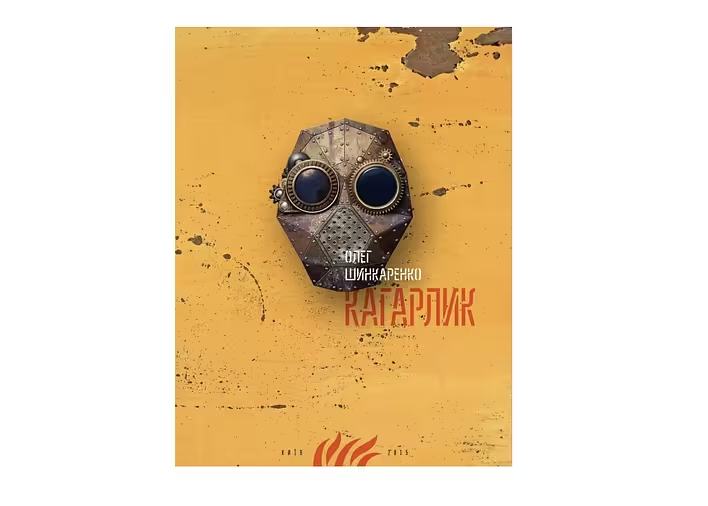
This novel is often called one of the brightest Ukrainian dystopias of the 21st century.
The events unfold in a future Ukraine, where total control, censorship, and manipulation have become a normal part of life. The author combines political satire, absurdity, and fantasy, creating a world that seems both unreal and disturbingly recognizable.
Like the classic dystopias of Orwell or Zamyatin, the novel explores the relationship between man and state, freedom and control.
“Masha, or Post-Fascism” — Yaroslav Melnyk
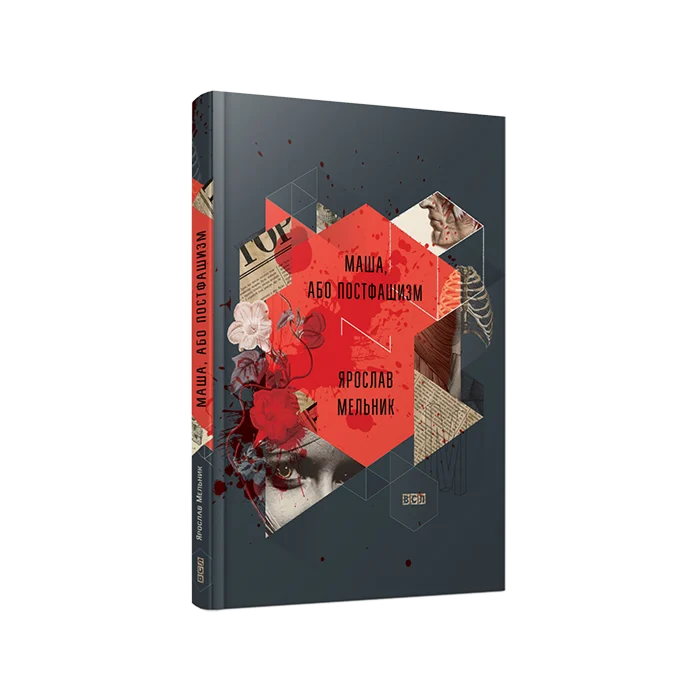
Yaroslav Melnyk's novel combines dystopia, social science fiction, and a philosophical parable.
The events take place in a world where society lives by harsh rules that most people have long stopped questioning. Through the story of the main character, the author explores the nature of power, freedom, morality, and human indifference.
That is why this novel is often compared to the most famous European dystopias.
“Distant Space” — Yaroslav Melnyk
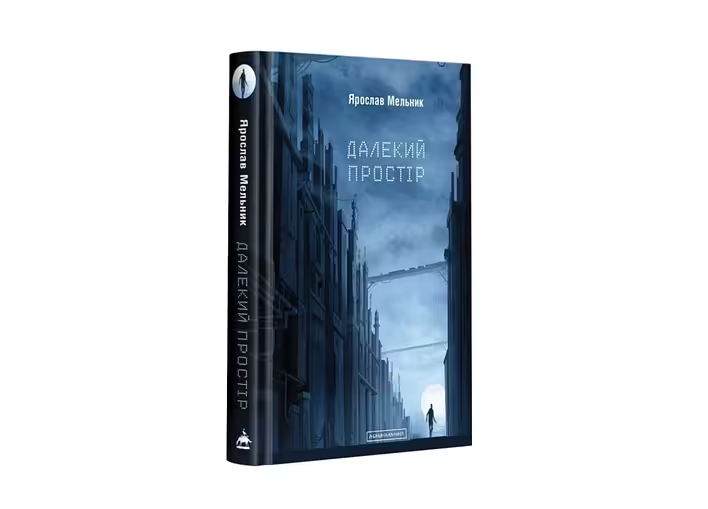
Yaroslav Melnyk's novel is considered one of the brightest examples of modern Ukrainian dystopia. The author creates a world where most people are born blind and do not even suspect that there is another way to perceive reality. When the main character unexpectedly gains sight, he begins to see not only the surrounding world but also the mechanisms of power, self-deception, and social control.
Through an unusual fantastic idea, the novel explores themes of freedom, truth, and human choice. That is why “Distant Space” is often called one of the most original Ukrainian dystopian works of the early 21st century.
“The Wolf's Ark” — Pavlo Derev'yanko
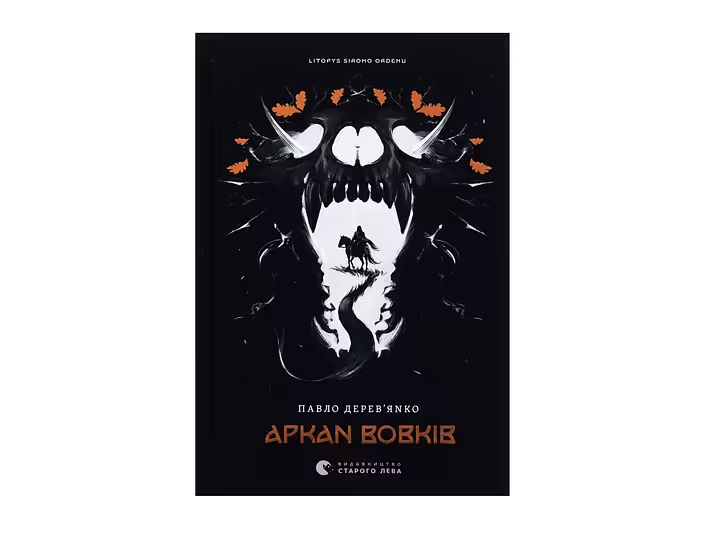
Although this work is difficult to call a classic dystopia, it contains expressive dystopian motifs.
The novel combines dark fantasy, alternative history, and political science fiction. Although it is not customary to call it a classic dystopia, some motifs of the work resonate with this genre, primarily through the exploration of the nature of power, violence, and social order.
“Rivne / Rovno” — Oleksandr Irvanets
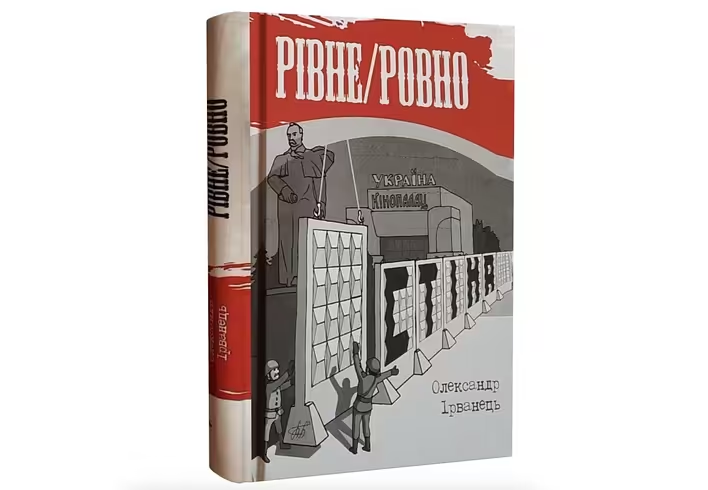
This is one of the most interesting examples of modern Ukrainian alternative history.
Although the novel is not a classic dystopia, it actively employs certain artistic techniques characteristic of this genre. The author creates an alternative version of history, exploring issues of power, national memory, and identity.
It is this combination of alternative history, political science fiction, and dystopian motifs that makes this work particularly interesting for readers who enjoy unconventional artistic experiments.
Ukrainian utopias: a rare but important genre
If dystopias appear relatively often in Ukrainian literature, the situation with classical utopias is quite different.
The reason is simple: utopia implies a belief in the possibility of building an almost flawless society. Ukrainian history, filled with wars, struggles for independence, repression, and social upheavals, rarely left writers space for such optimism.
Therefore, most Ukrainian authors who addressed the theme of the future created not ideal worlds, but complex and contradictory models of society, where alongside hope, new challenges and moral dilemmas always existed.
Ukrainian writers often used utopia not as a separate genre but as an artistic tool.
The image of an ideal society became a reason to reflect on questions that remain relevant today.
What is more important — freedom or equality?
Can everyone be made happy?
Does the state have the right to determine how a person should live?
That is why even works that begin as utopias often gradually demonstrate how difficult it is to achieve absolute harmony.
“The Solar Machine” — Volodymyr Vynnychenko
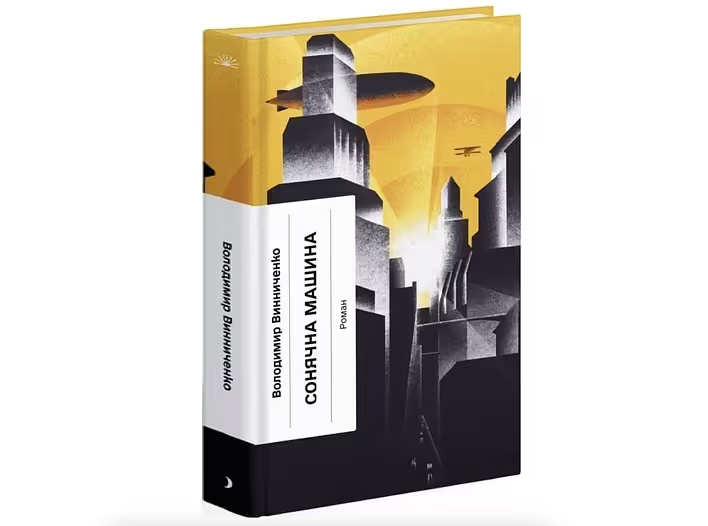
The most famous Ukrainian work containing expressive utopian motifs is undoubtedly the novel “The Solar Machine”, published in 1928.
At the center of the plot is a revolutionary invention capable of producing almost unlimited amounts of energy. Such technology could potentially rid humanity of poverty, change the economy, and make life fairer.
At first glance, the novel resembles a classic utopia. However, Vynnychenko does not offer the reader simple answers. He shows that even the most outstanding scientific discovery alone cannot change human nature or eliminate all social conflicts.
This genre ambiguity is what makes the novel relevant today. It combines elements of science fiction, social utopia, and critical reflection on social changes.
Why Ukrainian authors more often turn to dystopia
After the dramatic events of the 20th century, belief in a flawless future has largely given way to caution.
The Holodomor, World War II, political repressions, Soviet censorship, and the prolonged struggle for independence have left a deep mark on the works of Ukrainian writers.
Because of this, modern Ukrainian literature much more frequently explores the dangers of authoritarianism, manipulation, information control, and the loss of personal freedom than attempts to depict a flawless world.
In this, Ukrainian authors resonate with the global tradition of dystopia, but at the same time rely on their own historical experience.
Utopias and dystopias are not just fantasies about the future.
Through fictional states, new technologies, or alternative histories, writers explore quite real problems.
That is why the novels of Volodymyr Vynnychenko, Oleg Shynkarenko, Yaroslav Melnyk, and other Ukrainian authors remain relevant regardless of the time they were written.
Like it?React
🧵
This post doesn't have any additions from the author yet.