This content has been automatically translated from Ukrainian.
Engineering systems of industrial, commercial, and residential facilities operate stably only under controlled power supply parameters. Voltage fluctuations, dips, phase shifts, or phase loss lead to overheating of motors, automation failures, breakdowns of electronic modules, and power units.
The absence of a well-thought-out electrical protection system turns any energy-dependent process into a zone of constant risk with costly downtimes and unpredictable breakdowns. A rational scheme is built through the use of voltage control relays, motor protection devices, power limiters, as well as timers, photo relays, and other control elements that consistently monitor critical parameters.
As practice shows in the implementation of solutions based on Novatek Electro, the effectiveness of protection is determined by the correct selection of functions according to the network configuration, types of loads, starting currents, and operating conditions, rather than just the labeling of equipment. Optimally configured devices respond instantly to dangerous deviations, disconnect sensitive consumers until parameters are normalized, and prevent overheating of cables, accelerated aging of insulation, and destruction of contact groups.
This approach ensures predictable operation of pumping stations, fans, compressors, lighting lines, automation systems, and helps maintain critical processes within a safe range even under the challenging conditions of the Ukrainian energy system. As a result, the electrical infrastructure of the facility transitions from a reactive model to a preventive one, where risks are reduced at the stage of deviation occurrence.
Key Types of Protection Devices: Functions in Real Conditions
In modern facilities, electrical protection is not limited to a single universal device – specialized solutions are used that monitor specific sections of the circuit. During the design phase, nominal currents, the nature of starts, types of consumers, environmental conditions, event logging requirements, and the level of responsibility of the node are taken into account. A balanced combination of devices forms a multi-level barrier that keeps the network within a working corridor without excessive false triggers.
- voltage and phase control relays that monitor overvoltage, undervoltage, phase shift, phase loss, and disconnect the circuit if necessary, protecting single-phase and three-phase consumers;
- motor protection units with current, asymmetry, start time, interruption, or jamming control that reduce the risk of overheating windings and mechanical damage;
- power limiters that keep the total load within a specified range, preventing circuit breakers from tripping during peak moments;
- programmable time relays, astronomical timers, and photo relays that control lighting, pumps, and ventilation systems according to schedules, illumination levels, or specified scenarios;
- parameters recorders of the power grid capable of recording voltage, current, emergency events, creating a database for technical analysis and planning upgrades.
This set of devices easily integrates into standard panel solutions, does not require a complete replacement of the existing infrastructure, and allows for system scaling as the load increases. Competent adjustment of thresholds, time delays, and triggering algorithms enhances the reliability of technological processes, reduces the number of emergency situations, and simplifies incident diagnostics.
Intelligent Automation of Energy Systems: Monitoring, Remote Access, Analytics
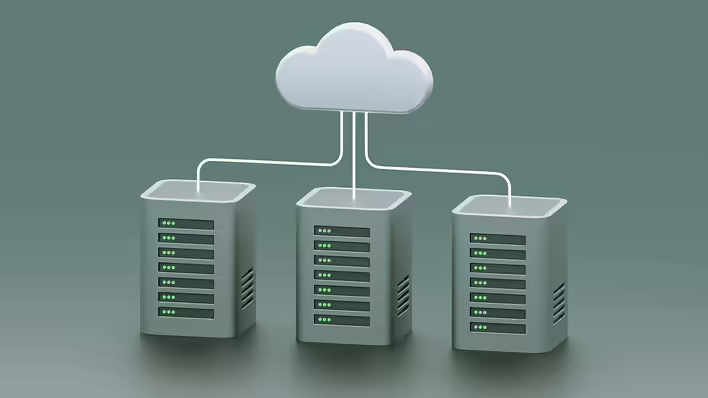
A new level of development of protection means combines the power part with digital monitoring and analysis services. Devices equipped with Modbus, Ethernet, GSM, or Wi-Fi interfaces transmit readings to a unified information environment, where specialists can see the state of the network, load dynamics, and frequency of emergency events. This format of operation is especially important for distributed facilities – agricultural complexes, logistics hubs, urban infrastructure, where physical access to panels is complicated or requires significant resources.
Real-time monitoring allows for quick adjustments to settings, identification of problematic areas, prevention of recurring failures, and using data as an argument during planning for reconstruction or changes in the power supply scheme.
Accumulated event logs and load trends help assess the quality of electricity supply, optimize equipment operation schedules, and reduce unproductive consumption. Intelligent automation transforms the protection system into a tool for enhancing energy efficiency and technological resilience of the facility, which is particularly relevant in Ukrainian conditions, where the reliability of power supply directly affects the competitiveness of businesses and the continuity of critical services.
Like it?React
🧵
This post doesn't have any additions from the author yet.