Table of contentsClick link to navigate to the desired location
This content has been automatically translated from Ukrainian.
Historic center: more than tourist routes
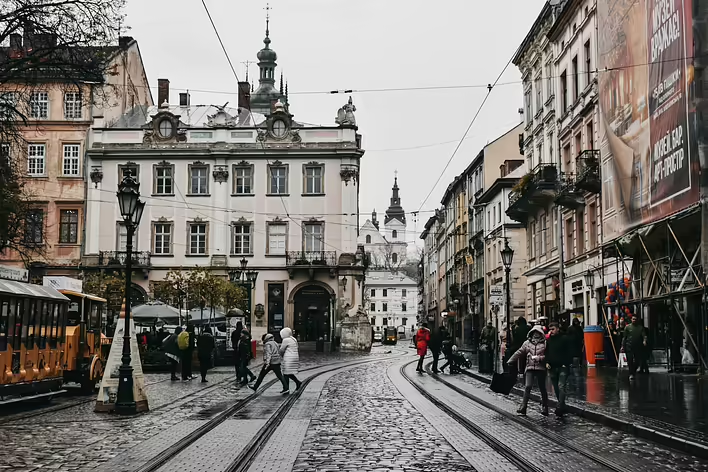
Lviv is often called Ukrainian Prague or Vienna, and this comparison has solid grounds. The historic city center — is a living textbook of European architecture, where Gothic cathedrals are adjacent to Renaissance palaces, and baroque facades complement classicist buildings. Many travelers choose car rental in Lviv to be able not only to explore the city, but also to go to the surroundings, where no less interesting historical objects are located.
Rynok Square — is the heart of Lviv, but the real treasures of the city are hidden in its quiet alleys. Ruska Street leads to the oldest churches of the city, where you can see unique frescoes of the XIV-XV centuries. The Armenian quarter tells the story of one of the most influential communities of medieval Lviv.
Architectural gems outside of tourist routes
Lviv architecture is not limited to the city center. The area of Lychakivska Street is famous for its villas of the late 19th and early 20th centuries. Here you can see examples of Lviv modernism — of a unique architectural style that combined European trends with local traditions.
The cemetery on Lychakov — is not just a necropolis, but a real open-air museum. Ancient tombstones tell the stories of famous Lviv residents: writers, artists, public figures. A walk through the cemetery — is a journey through the eras and cultures that shaped the face of the city.
The Lviv railway station, built at the beginning of the 20th century, demonstrates the majesty of Austro-Hungarian architecture. Its facade and interiors still impress with the details of the decoration and the scale of the idea.
Surroundings of Lviv: castles and palaces
Lviv Oblast is rich in historical monuments located within a radius of 50-100 kilometers from the city. Olesky Castle, where King Jan Sobieski was born, is today a museum with an interesting exposition. Zolochiv Castle impresses with its Renaissance courtyard and collection of ancient furniture.
The Pidhoretsky Palace is called the "Ukrainian Versailles" for its luxurious architecture and the park that surrounds it. Restoration work returned the palace to its original beauty, and today it welcomes visitors all year round.
A trip to these castles by car allows you to make your own route, combining visits to several objects in one day. The roads to the castles pass through picturesque villages where you can stay for lunch in family restaurants. More detailed information about the rental can be found on https://leocar.com.ua/.
Gastronomic map of Lviv
The Lviv culinary tradition was formed under the influence of various cultures: Polish, Austrian, Jewish, Armenian. Today, the city offers a unique gastronomic mosaic, where authentic recipes are combined with modern culinary trends.
Lviv cafes — is a separate story. "Lviv coffee" is not just a drink, but a cultural phenomenon. Each coffee shop has its own legend, its own way of making coffee and a unique atmosphere. From the historical "Vienna Coffee Shop" to modern speciality establishments, — Lviv will satisfy every taste.
Cultural life: theaters, museums, festivals
Lviv — is not only an open-air museum, but also a living cultural organism. The Lviv Opera — is one of the most beautiful in Europe, its repertoire includes both classical productions and modern performances.
The Museum of Folk Architecture and Life in Shevchenkivskyi Grove introduces the traditional life of different regions of Ukraine. Here you can see real wooden churches, residential buildings, farm buildings from all over the country.
The festival life of Lviv does not subside during the year: from classical music to jazz, from theater performances to film screenings. Participation in festivals allows you to feel the modern pulse of the city, get to know its creative community.
This post doesn't have any additions from the author yet.