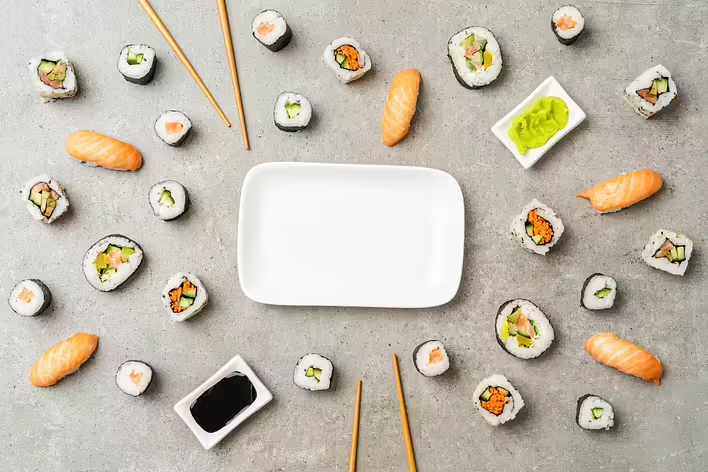
Wasabi is a spicy green condiment that most of us associate with sushi. It has a sharp aroma that quickly "hits" the nose and just as quickly fades away. However, what we are used to seeing alongside rolls is almost never real wasabi.
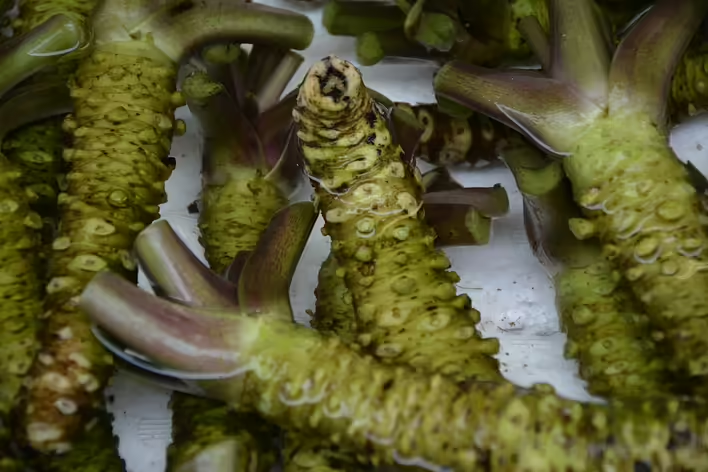
True wasabi is a plant Wasabia japonica (or Eutrema japonicum) that naturally grows in Japan. It is cultivated in mountainous regions with clean flowing water and a stable cool temperature. The rhizome of this plant is grated on a special grater to obtain a paste.
The taste of natural wasabi differs from the familiar "pungent hit." It is milder, fresher, with herbal notes and a slight sweetness. The spiciness manifests quickly but does not burn for long, like chili.
Wasabi has been used in Japan for over a thousand years. Initially, it was valued not only for its taste but also for its antiseptic properties. Since sushi and sashimi are made with raw fish, the spicy condiment helped reduce the risk of bacterial contamination.
With the development of sushi culture, wasabi became an integral part of the presentation. In traditional Japanese restaurants, it is added directly between the rice and fish—in small amounts to enhance the flavor rather than overpower it.
Growing wasabi is complex and expensive. The plant grows slowly—up to three years until full maturity. It requires specific conditions: flowing mountain water and a stable climate. Because of this, true wasabi is costly and rarely exported in large quantities.
Even in Japan, not all restaurants use natural root—often mixtures or powders are used.
In most establishments in Ukraine (and beyond), what is served is not real wasabi, but its imitation. Usually, this is a mixture of:
horseradish;
mustard powder;
coloring (to give a bright green color);
sometimes a small amount of real wasabi in powder form.
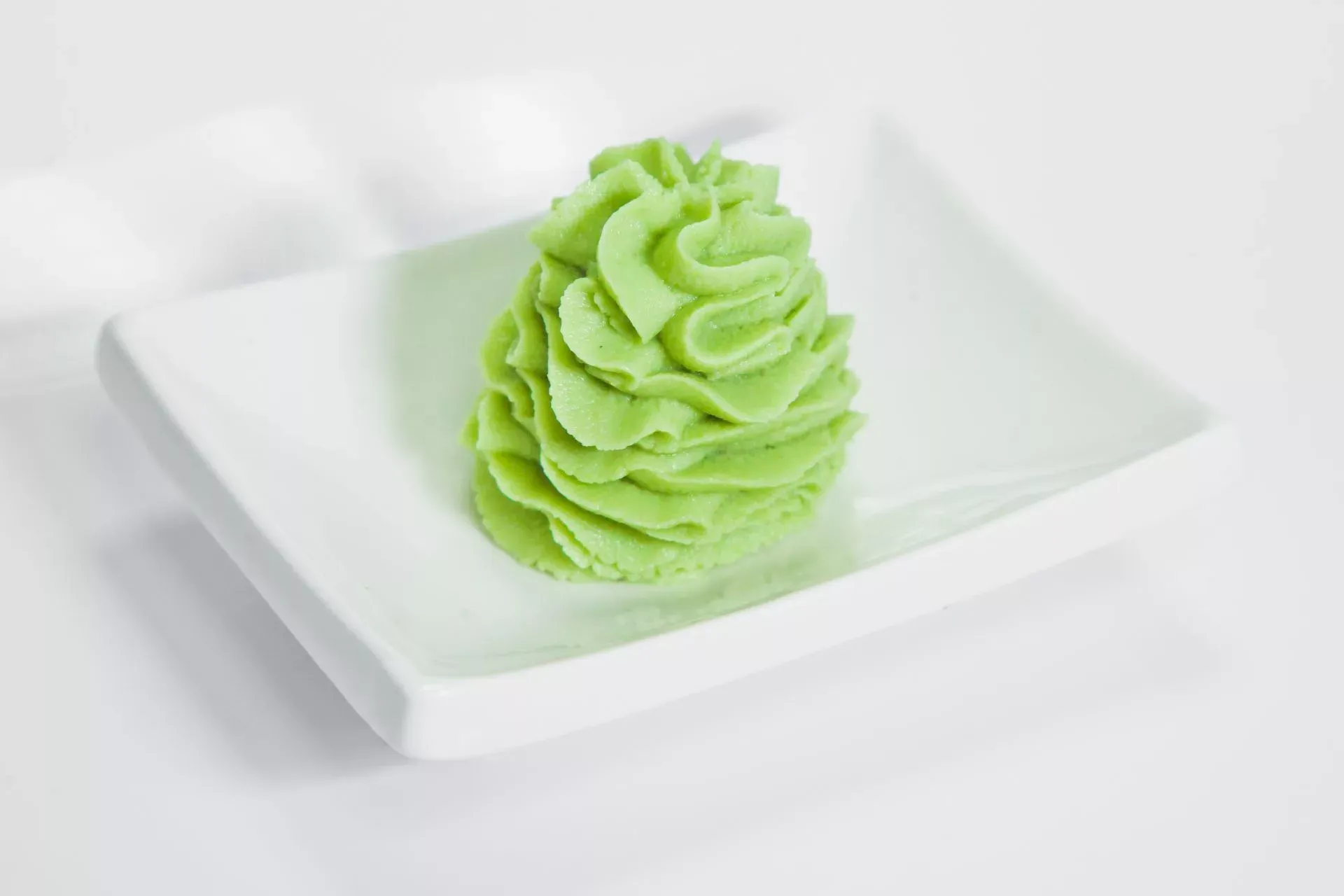
The base is primarily horseradish—it provides the characteristic sharp "nose" heat. This paste is cheaper to produce, stable in storage, and has a familiar sharp effect.
In fact, we are eating green horseradish with mustard, styled as wasabi. True wasabi is more delicate, complex, with an herbal aroma. The imitation is sharper, more aggressive, with a longer burn. Most people don’t even know the difference because they are used to the bright spiciness of "pseudo-wasabi."
Sometimes, real wasabi root can be found in premium Japanese restaurants or ordered from specialty stores. But this is more of an exception. Due to the high price and short shelf life, the natural product remains a rarity.
Wasabi is an example of how a traditional ingredient from a local culture has transformed into a global symbol of Japanese cuisine. However, the green paste next to the rolls is, in most cases, an adapted version created for the mass market. And although it is not authentic, it has shaped our perception of the "spicy taste of sushi."