This content has been automatically translated from Ukrainian.
Hazelnut and filbert are words that are often used as synonyms. Indeed, they are very close in meaning. However, there is an important difference between them regarding origin, cultivation, and characteristics of the fruits.
What is hazelnut
Hazelnut is the common name for shrubs and small trees of the genus Corylus. In Ukraine, the most common hazelnut is the common hazel (Corylus avellana), which grows in forests, on forest edges, in ravines, and parks. This is a wild plant that is well adapted to the local climate.
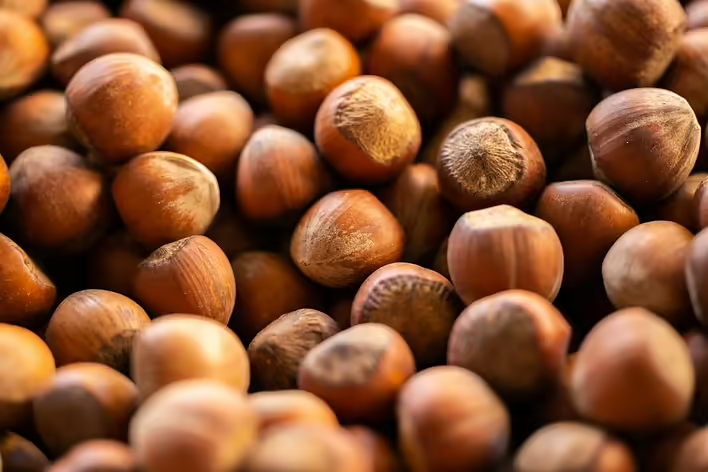
The fruits of the hazelnut are small nuts with a hard shell, usually gathered in clusters. They have a characteristic aroma and a slightly sweet taste, but in size and yield, they are inferior to cultivated varieties. Wild hazelnut less frequently produces large fruits, and their shape may be less uniform.
What is filbert
Filbert is the cultivated, selectively bred variety of hazelnut that is grown on an industrial scale. So botanically, filbert is also hazelnut, but specifically selected and improved by humans.
Filbert varieties differ in larger fruits, thinner shells, more stable yields, and better taste qualities. It is filbert that is most often sold in stores — in the shell or shelled. It is actively used in the confectionery industry: for chocolate, pastes (for example, nut creams), desserts, and baked goods.
What is the difference between hazelnut and filbert
Hazelnut is the name of a plant that can grow in the wild or be cultivated by humans. Filbert is the cultivated varieties of hazelnut created for obtaining larger and tastier nuts. The difference between them lies primarily in the degree of selection and growing conditions, rather than in fundamentally different species.
Hazelnut is a wild shrub or a general botanical name. Filbert is a cultivated form of hazelnut, bred for cultivation and obtaining a quality harvest.
To simplify: every filbert is a hazelnut, but not every hazelnut is a filbert in the agricultural sense.
There are also practical differences. Filbert is usually:
- larger in size;
- has a thinner shell;
- is easier to shell;
- yields a more stable and abundant harvest.
Wild hazelnut, on the other hand, is hardier, less demanding of conditions, and can grow without care.
The taste of wild hazelnut and filbert is similar — it is a familiar rich nutty aroma. However, cultivated varieties often have a more pronounced sweetness and a softer kernel texture. That is why the confectionery industry prefers filbert.
So, when you eat a filbert in chocolate — it is essentially a cultivated hazelnut, grown specifically to be tastier, larger, and more convenient to use.
Like it?React
🧵
This post doesn't have any additions from the author yet.