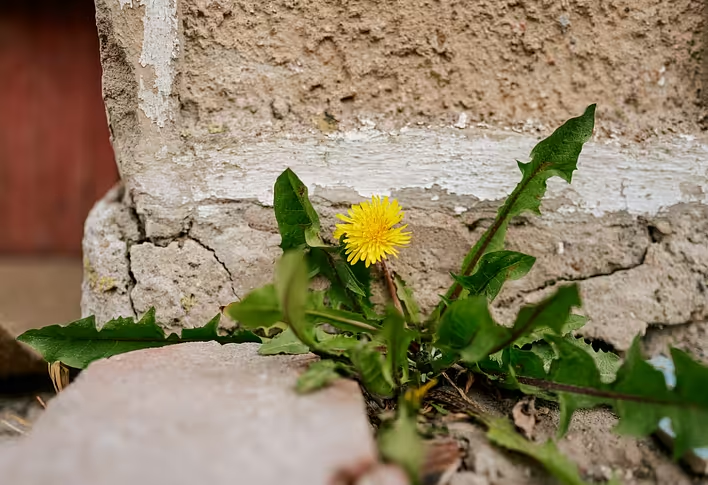
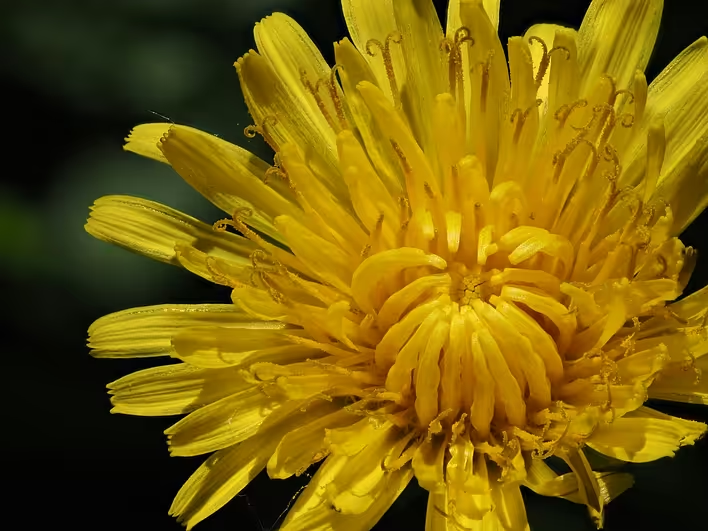
Dandelion is one of those plants that most people consider an ordinary weed. But if you take a closer look, it transforms into a symbol of warmth, childhood, and simple joys. It is from these yellow flowers that one of the most romantic homemade drinks is made — dandelion wine. It not only has a delicate aroma and soft taste but also carries a whole history of traditions, memories, and even literary images.
What is dandelion wine
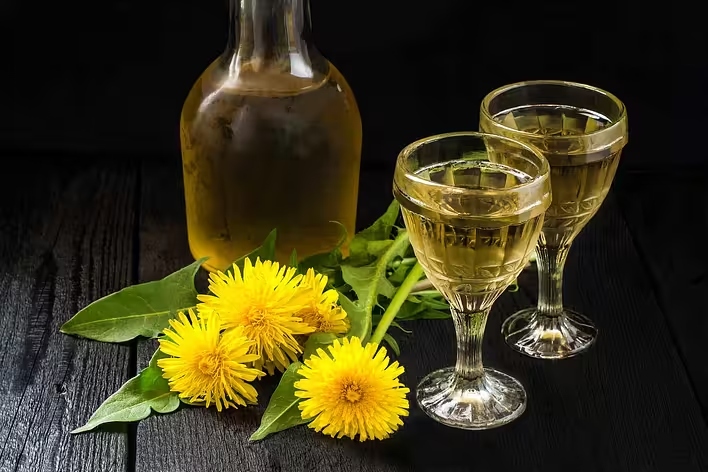
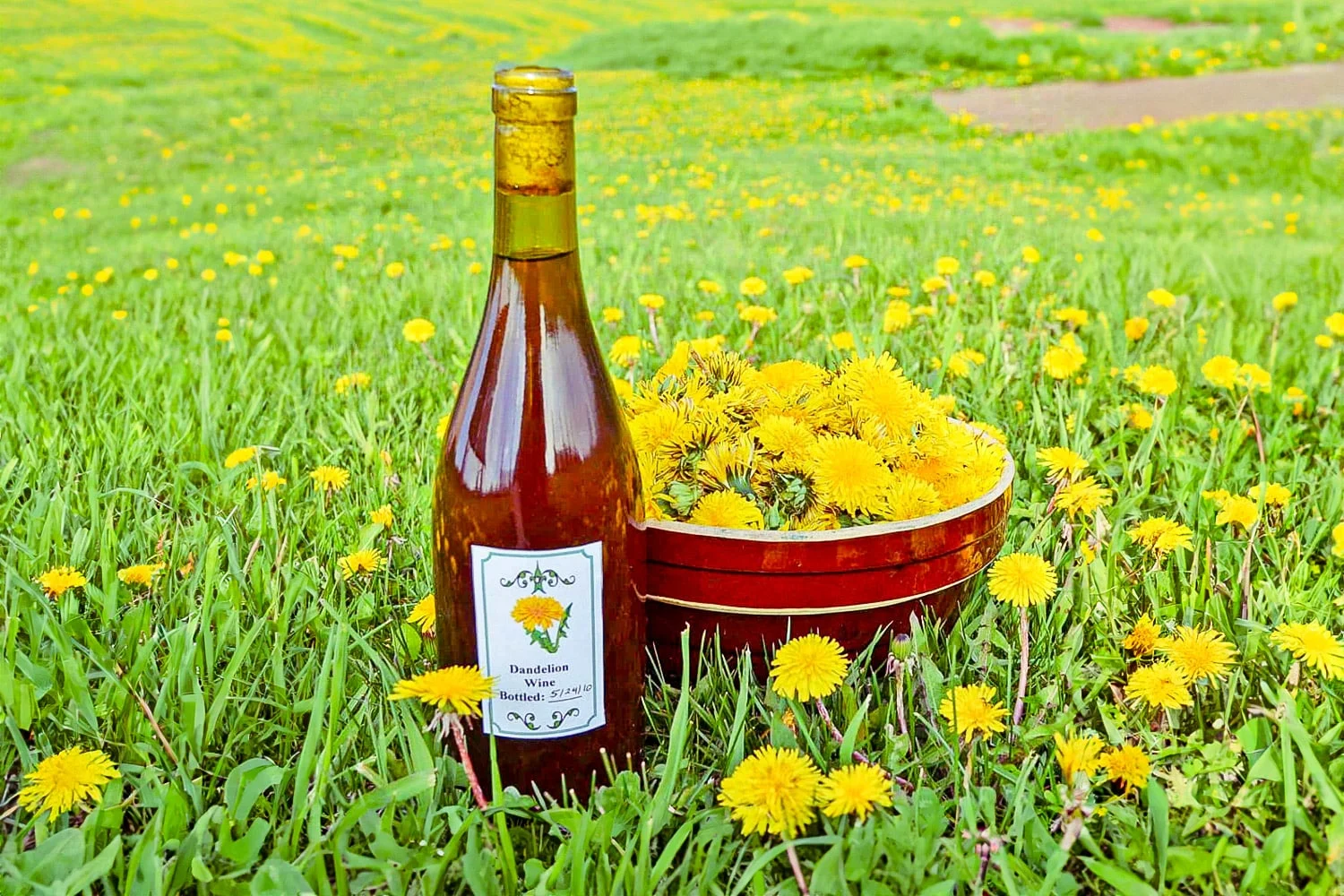
Dandelion wine is a low-alcohol beverage made from dandelion petals (lat. Taraxacum). Unlike grape wine, it does not use classic grape juice — the base consists of flowers, sugar, water, and often citrus fruits for flavor balance.
The drink has a golden color, sometimes with honey hues, a light floral aroma, and a soft, slightly herbal note. Its taste is often described as something between honey wine and herbal infusion.
How it is made
The process of making dandelion wine is quite simple but requires patience — just like any homemade winemaking.
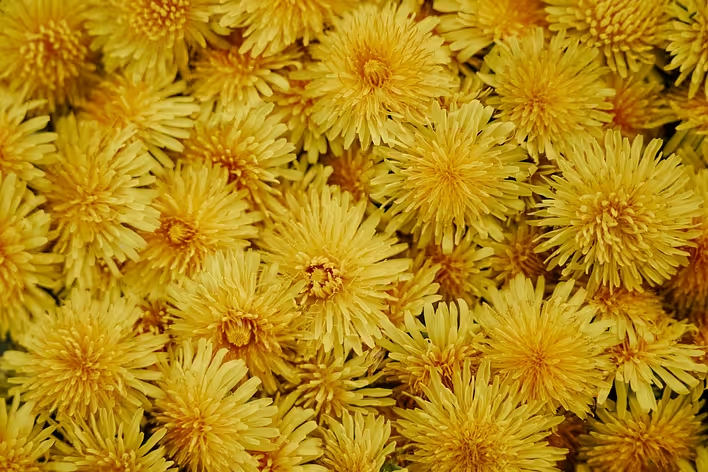
First, fresh dandelion flowers dandelion are collected, usually in dry sunny weather. It is important to use only yellow petals, without the green parts, which can add bitterness. Next, the flowers are poured with hot water and left to steep for a few days.
After that, the infusion is strained, sugar, lemon or orange is added, sometimes raisins as a source of natural yeast. The mixture is left to ferment — the fermentation process can last from a few weeks to a few months. Eventually, the wine is bottled and aged to deepen and harmonize the flavor.
This is a craft beverage, and its recipe is often passed down in families, changing depending on the region and personal preferences.
Where and when it appeared
Dandelion wine has ancient roots in the folk cuisine of Europe, especially in Great Britain and France. There, it was prepared as a seasonal drink in spring when dandelions bloom abundantly.
In rural communities, it was a way to utilize available natural resources — essentially, free raw materials. Dandelion wine was often considered not only tasty but also beneficial: it was attributed with mild tonic properties.
Over time, the tradition spread to other countries, including the USA, where home winemaking became part of the culture.
Dandelion wine in culture
This drink holds a special place due to the novel Dandelion Wine by American writer Ray Bradbury. In this book, dandelion wine is not just a drink but a symbol of preserved moments of happiness.
In the novel, it is made as a way to “preserve summer” — each bottle becomes a kind of time capsule that holds the scents, light, and feelings of warm days. This metaphor is what made the drink famous far beyond the culinary world.
After the book's release, interest in dandelion wine grew: many readers wanted to recreate this symbolic drink in real life.
Taste and modernity
Today, dandelion wine remains a niche product. It is rarely found in mass retail, but it is popular among enthusiasts of homemade preserves and natural beverages.
Its taste depends on the recipe: some make it sweeter and more like dessert wine, while others prefer it light and fresh. Ginger, mint, or spices are often added to give the drink individuality.
This wine is not about luxury or status — it is about simplicity, attention to detail, and the ability to find beauty in the everyday.
Dandelion wine is an example of how an ordinary plant can transform into something more. It combines culinary tradition, seasonality, and even the philosophy of the moment.
Perhaps that is why this drink is so often associated with nostalgia. It reminds us that even the shortest summer can be preserved — if you know how.