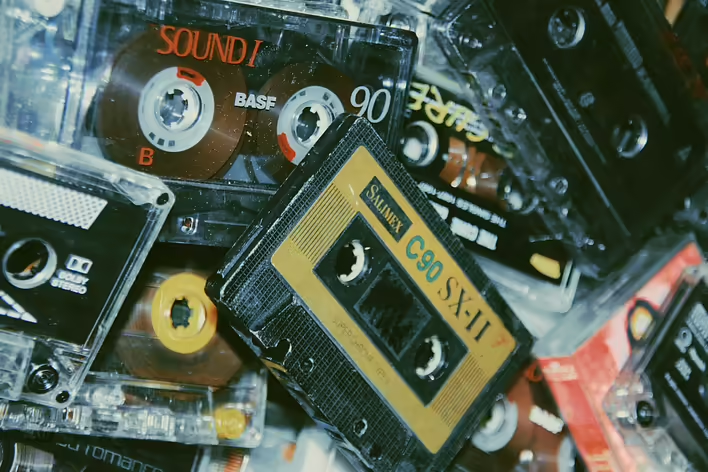
Today, cassettes seem like something from the past - nostalgia for the 80s and 90s and a bit of the 00s. But behind this seemingly simple technology lies the true magic of physics and electronics.
How does the tape in a cassette work?
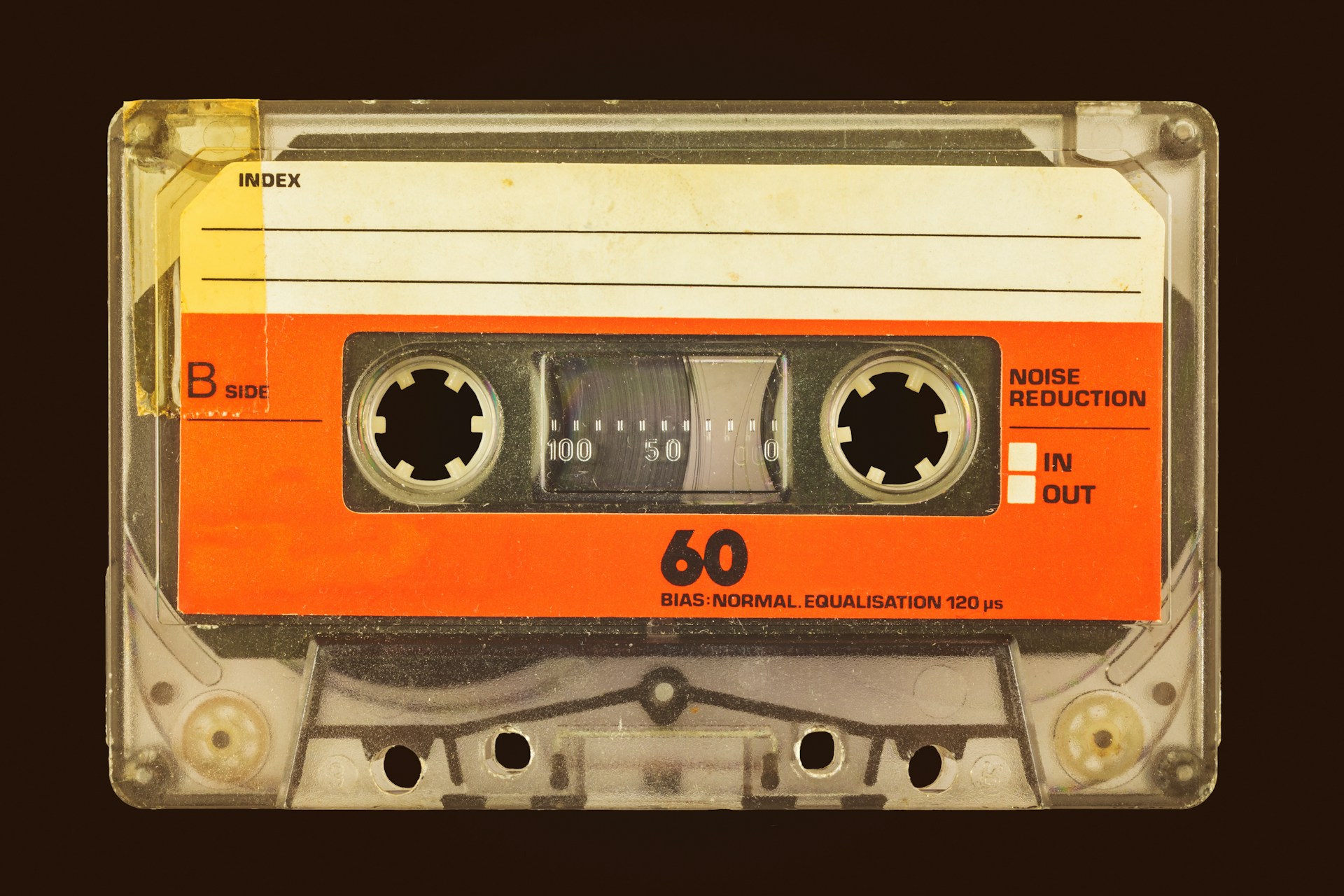
Inside the plastic box is a long magnetic tape. It looks like a dark shiny strip, but it is actually coated with a layer of ferromagnetic particles (metal oxides). These particles can be "magnetized," and they are what store the sound.
How sound is recorded
A microphone or sound source converts air vibrations (sound) into an alternating electrical signal.
The recording head in the tape recorder creates a magnetic field that changes synchronously with this signal.
As the tape passes by the head, its particles "orient" under the influence of the field - an invisible "imprint" of the wave is formed.
As a result, a magnetic trace is stored on the tape that replicates the shape of the sound vibrations.
In fact, a cassette is an analog "map" of sound in the form of changes in magnetic fields.
How and why does a cassette "play"?
When the tape moves past the playback head, the magnetic changes on the tape are converted back into an electrical signal.
This signal is amplified in the player’s circuits.
Finally, it reaches the speakers or headphones, and we hear the music again.
Interestingly, the head actually "reads" the invisible magnetic code embedded in the tape's particles.
Why can a cassette be erased and re-recorded?
The same tape particles can be magnetized again and again. If a new signal is applied to the recording head (and sometimes additionally "erased" with a constant field), the old recording disappears, and a new one is stored over it.
A cassette is an example of how complex physical processes have been embodied in a compact and convenient form. No files or hard drives - just a thin tape, a bit of magnetism, and mechanics that moves the tape smoothly.
It’s no wonder that today cassettes are making a comeback as a retro culture element: they have warmth and a sense of "live" sound that no digital format can convey.
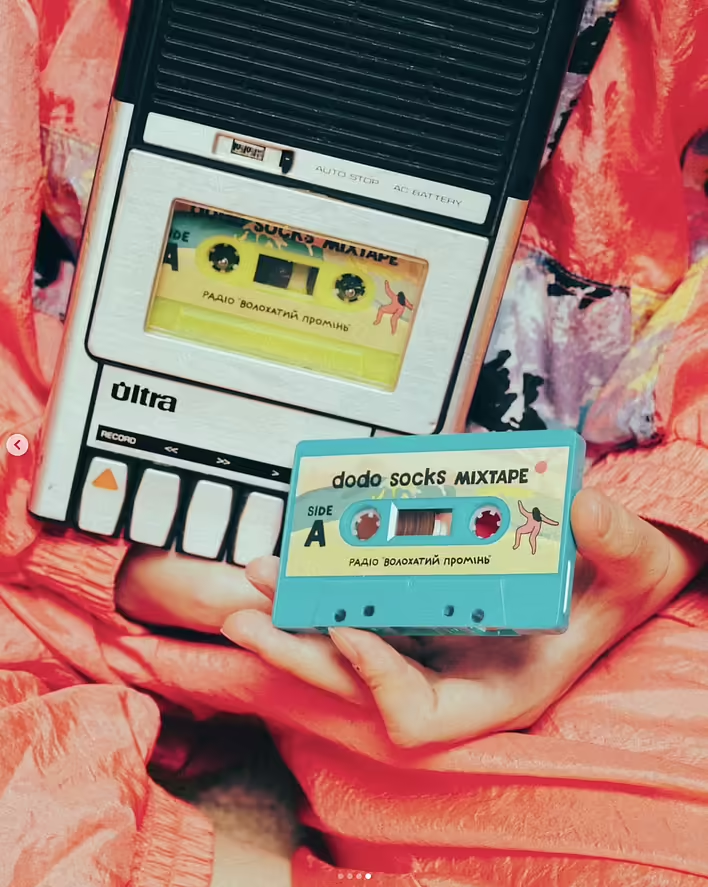
Nostalgia plays a big role in modern pop culture. Recently, I saw in my bubble the release of a tape cassette by Dodo Socks (https://www.instagram.com/dodosocks/). A nice marketing move, aesthetic content, and just a cool thing to keep as an interesting cultural artifact that in 30 years can be looked back on with a tear in the eye.
Share this post
Cite post
Select and copy the required citation standard:
This post doesn't have any additions from the author yet.