This content has been automatically translated from Ukrainian.
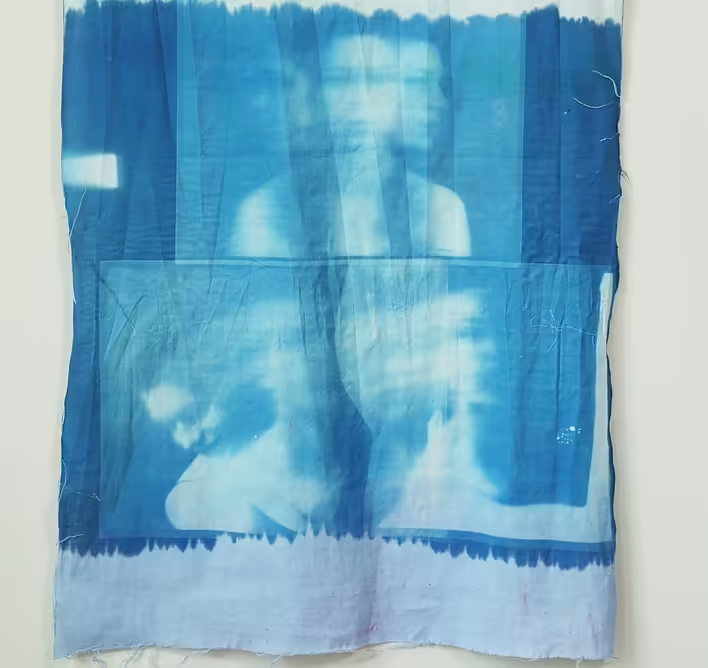
In the age of digital technology, when images can be obtained instantly, antique printing methods gain special significance. They take us back to an era when photography was a true art form, and each print was a unique result of the interaction of light, chemistry, and craftsmanship. These techniques have been used since the 19th century and are experiencing a true revival among analog photography enthusiasts today.
Let's dive into the world of antique photographic processes that still enchant with their aesthetics.
Albumen Print – Photography on Egg White
In the mid-19th century, the most popular method of creating photographs was the albumen print, developed in 1850 by Louis Désiré Blanquart-Evrard. It used egg white (albumen), which gave images a glossy sheen and high detail.
How was the albumen print created?
- The paper was coated with egg white mixed with salt.
- After drying, it was immersed in a silver nitrate solution for light sensitivity.
- A negative was placed on top and exposed to sunlight.
Features of the method:
- Glossy surface resembling a varnished painting
- Very sharp image with a warm brown or golden tint
- Used for portraits and artistic photography
Platinum Print – The Aristocratic Luxury of Photography
Platinum print is one of the most expensive yet refined methods of photographic printing. It was popular in the late 19th to early 20th century and was used by great photographers such as Edward Weston and Alfred Stieglitz.
Why is platinum printing so valuable?
- Unmatched detail – platinum penetrates the paper, creating soft shadow transitions
- High archival quality – platinum prints do not fade or yellow
- Unique matte texture – without the characteristic sheen of silver photographs
The process of creating platinum prints:
- The paper is coated with a mixture of platinum and palladium salts.
- Contact-exposed with a negative under ultraviolet light.
- Developed in a special solution – the image appears in deep gray-black or brown tones.
Disadvantages: the process is expensive and labor-intensive, but the result is a true work of art.
Gum Bichromate Print – When Photography Becomes Painting
This experimental method was popularized by pictorialist photographers in the late 19th century. It allowed for the creation of an effect similar to watercolor or pastel painting.
How does gum bichromate printing work?
- The paper is coated with a mixture of gum arabic, pigment, and potassium dichromate.
- Exposed under a negative in sunlight or UV lamp.
- Washed with water – the undissolved rubber emulsion remains, forming the image.
Why is this interesting?
- Artistic softness of tones – an effect similar to a drawing
- Ability to print color photographs
- Each print is unique
Van Dyke Print – Vintage Sepia
This process is based on the use of iron and silver salts, which give a characteristic brown ("sepia") tint.
How is a Van Dyke print created?
- The paper is soaked in ammonium iron citrate and silver
- Exposed to sunlight with a negative
- Washed in water and fixed with a sodium thiosulfate solution
What is interesting about this method?
- Warm, soft sepia tones
- Simple technology, easy to replicate at home
- True retro effect
Why Experiment with Antique Printing Methods?
- Uniqueness: Each print is unique – there are no two absolutely identical results.
- Artistic approach: It is more than just photography – it is manual labor that combines craft and creativity.
- Vintage aesthetics: Tones, textures, and effects that cannot be reproduced digitally.
- Alternative approach to photography: A return to the roots, when each shot mattered.
Antique printing methods offer a chance to experience photography in a completely different way, creating images that look as if they have come to us from the past, yet remain timeless.
Like it?React
🧵
This post doesn't have any additions from the author yet.