This content has been automatically translated from Ukrainian.
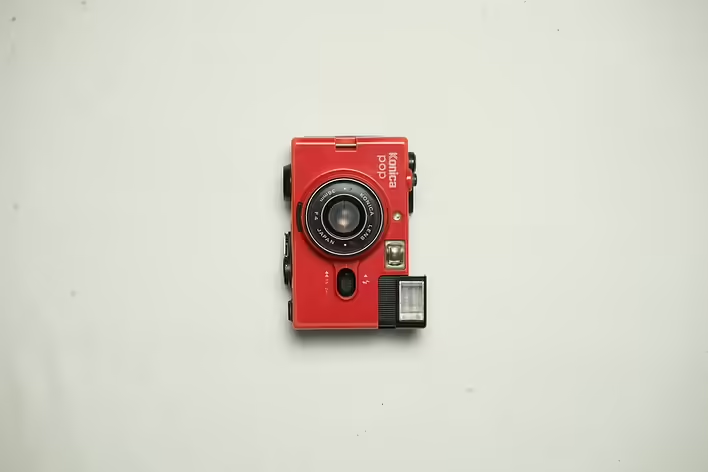
If you lived in the 19th century and wanted to take a photo, you would have to spend a lot of time and effort. The first cameras worked with glass plates, were bulky, complicated to use, and required almost laboratory conditions for developing images. But everything changed when the first film camera appeared.
George Eastman and Kodak. The Birth of a New Era
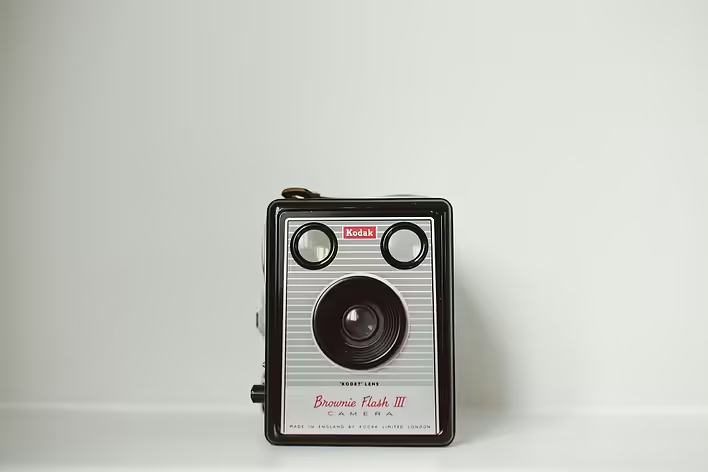
The year 1888 was revolutionary in photography thanks to American inventor George Eastman. He created the first commercial film camera, named Kodak. The main innovation was that instead of heavy and fragile glass plates, it used roll film. This made photography accessible not only to professionals but also to ordinary people.
The first Kodak had a simple operating principle: the user bought a camera already loaded with film for 100 shots. After use, it had to be sent to the Kodak factory, where the film was developed, photos were printed, and new film was loaded. The company's slogan was simple and clear: "You press the button – we do the rest."
What Was Before Kodak? The Predecessors of Film Cameras
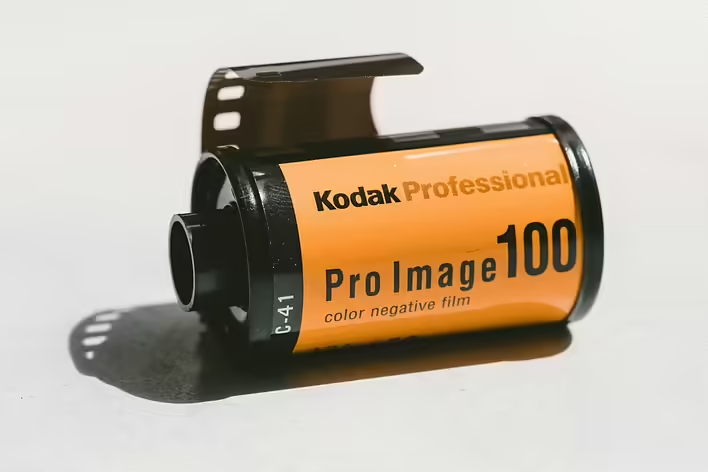
Before Kodak appeared, photographers used the daguerreotype and collodion processes, which required significant time to create an image. In 1871, Richard Leach Maddox developed dry plates, which greatly simplified the process, but the real breakthrough came with the invention of film.
In 1885, Eastman began experimenting with creating roll film on a paper base, and in 1889 he improved it by making it from nitrocellulose. This marked the beginning of the era of film photography.
The Impact of Film Cameras on the World
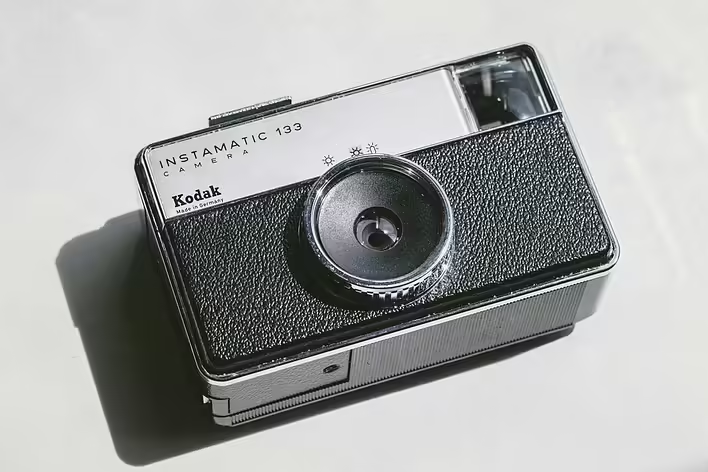
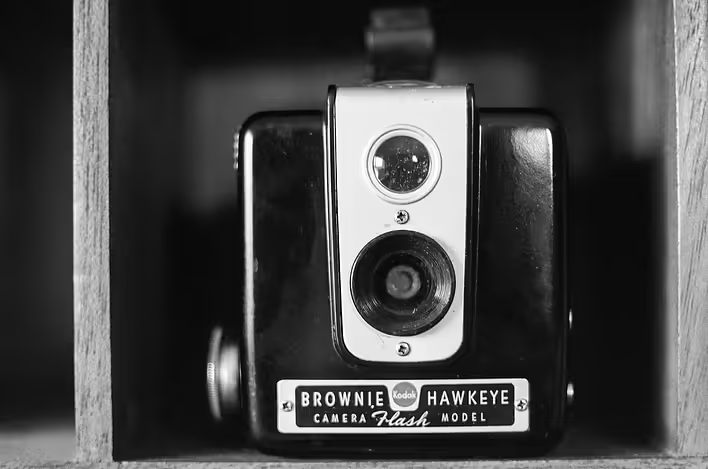
The invention of Kodak initiated mass photography. If previously photography was a luxury available only to the wealthy or professionals, now anyone could buy a camera. In the 20th century, the development of photographic technology led to the emergence of compact models, such as the legendary Leica (1925) and the mass-produced Kodak Brownie, which solidified the popularity of film photography.
Like it?React
🧵
This post doesn't have any additions from the author yet.