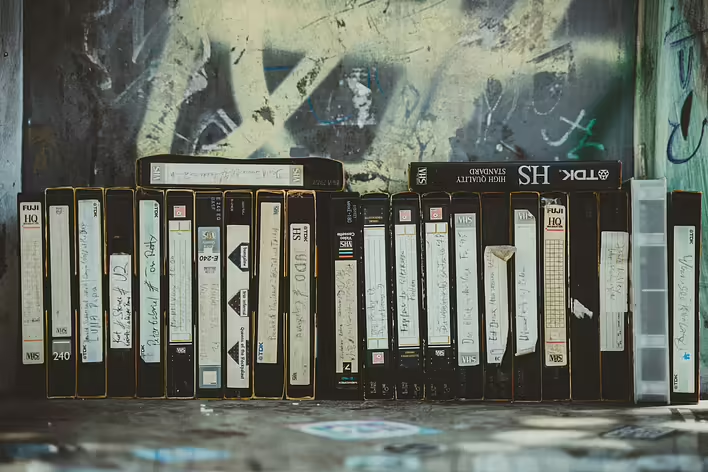
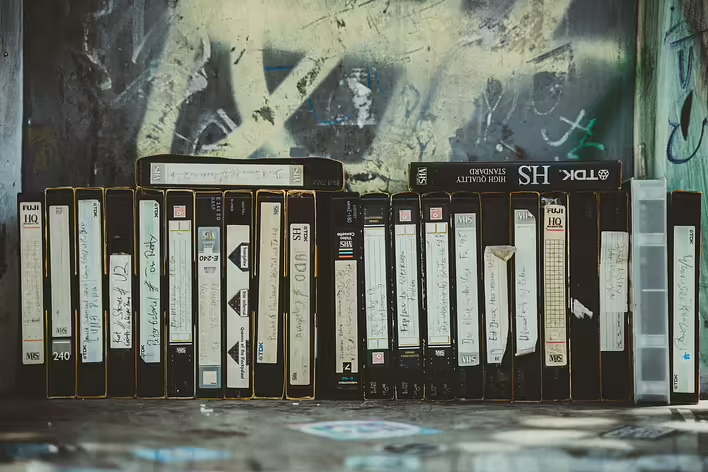
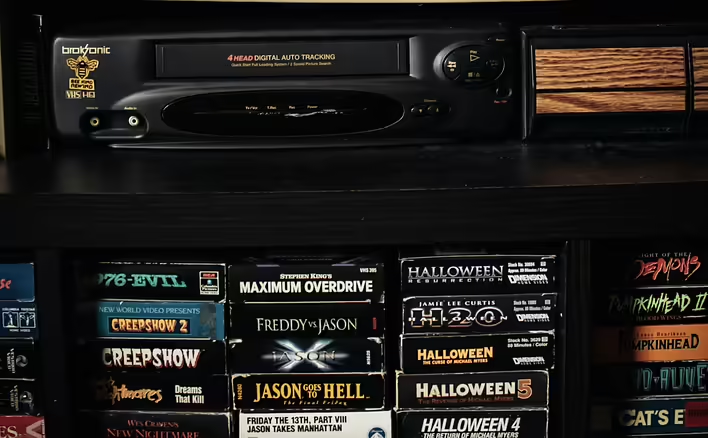
In the 90s and early 2000s, we watched cartoons, movies, and weddings specifically from tapes. For many people, the word "videotape" automatically equals "VHS". But were all tapes really in VHS format? Let's find out.
What does VHS mean?
VHS (Video Home System) is a standard for videotapes created by the Japanese company JVC in 1976. The format was designed specifically for home use: simple, inexpensive, and compatible with almost any VCR.
It was thanks to VHS that video rentals became widespread, and every family had a shelf with recorded movies.
Why do we call all tapes VHS?
Because VHS at its time defeated all competitors - it became the most widespread format in the world. People hardly saw other options, so the word "tape" = "VHS". It's like now with diapers or photocopiers - the brand became a generic name.
What other formats were there?
Not all tapes were VHS. Here are a few popular (or not so popular) alternatives:
Betamax (Sony) - higher quality, but lost to VHS due to more expensive equipment and shorter recording time.
Video 2000 (Philips/Grundig) - an interesting format, but rare and more complicated.
VHS-C - small compact tapes for camcorders (they could be watched in a regular VCR with an adapter).
MiniDV - a digital format for camcorders of the 2000s.
So VHS is just one of the formats, simply the most popular.
Why did VHS win?
longer recording time (up to 4–6 hours with tape stretching);
cheaper VCRs and tapes;
openness of the format - many companies could produce equipment;
demand from video rentals for large tapes with long movies.
As a result, VHS became effectively the standard of home video for 25 years. VHS is not just a "videotape", but one of the formats that once became so dominant that people began to call all tapes that way. But in reality, there were many other, less known standards.