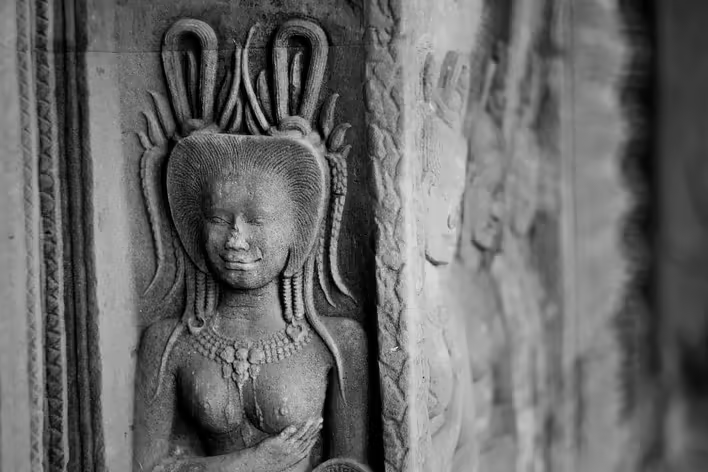
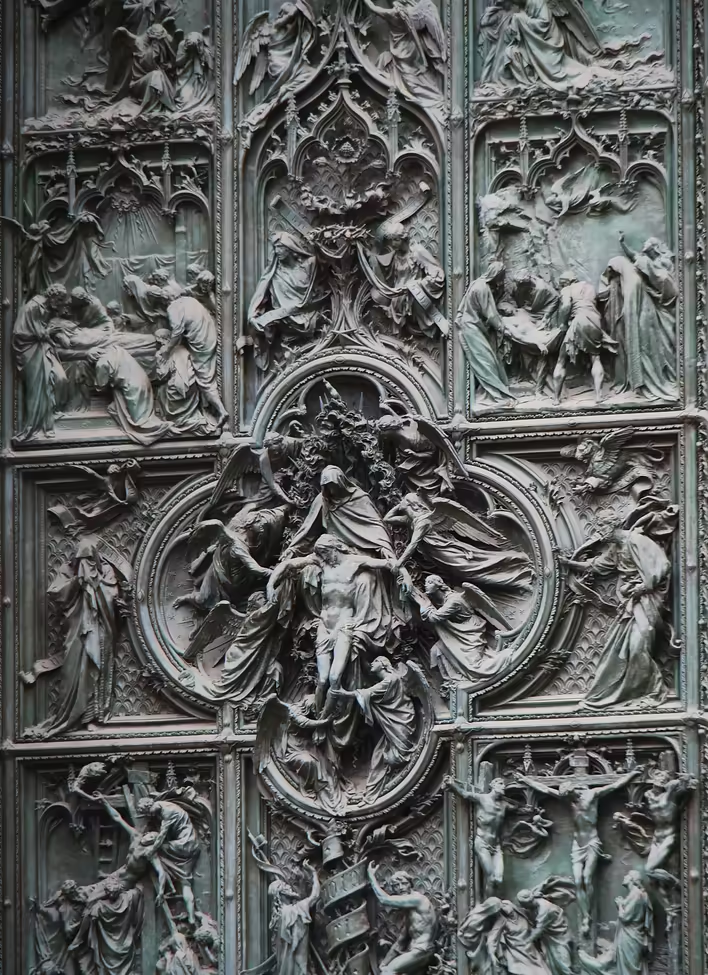
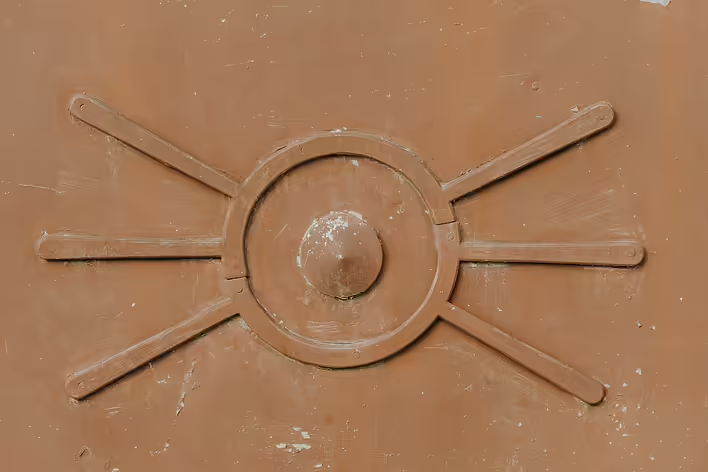
Bas-relief (from the French bas-relief, meaning "low relief") is a type of relief art where the image stands out from the background only partially, rather than fully, as in full-length sculpture. In other words, bas-relief is a "flat sculpture," where forms slightly emerge from the plane of the wall or panel, creating a play of light and shadow.
Bas-reliefs are used to decorate the facades of buildings, monuments, the interiors of temples, museums, and even coins. Due to the shallow depth of the relief, such works are easier to mount on walls and convey volumetric images without the need for large space.
Technically, bas-relief can be low (bas-relief) — when the projections are minimal, or high (relief / haut-relief) - when the elements of the relief are almost separated from the background. Most often, artists combine different depths to create perspective and dynamics in the composition.
Bas-reliefs have been present in art since ancient times - from Egyptian temples and Assyrian palaces to Renaissance and modern works. They allow the artist to convey stories, battle scenes, mythological subjects, or portraits, using minimal material but maximum expressiveness.