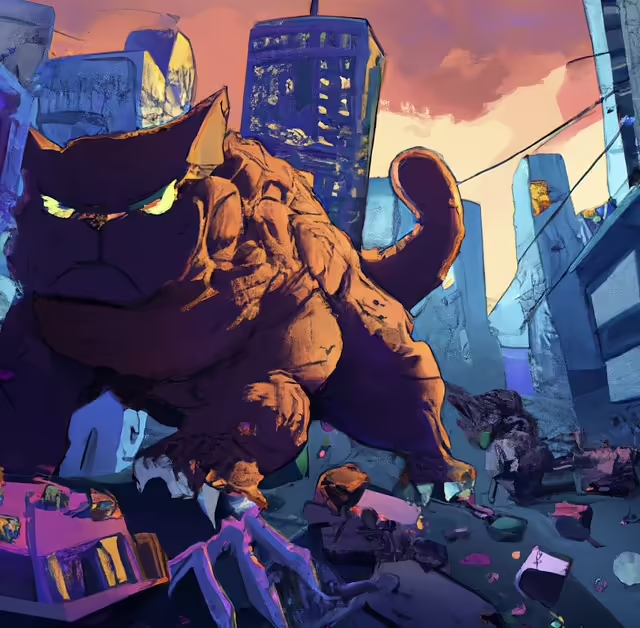
Kaiju is a term used in Japanese culture to describe enormous animals or monsters. The word literally translates to "Strange Beast," and is often used to describe gigantic monsters that attack cities or are in conflict with other gigantic monsters.
Кіт Кайдзю
The kaiju genre emerged in Japan in the mid-1950s, after the release of the first Godzilla film in 1954 (by Toho). This film became a major success and launched an entire genre of films focused on gigantic monsters attacking cities or battling other monsters.
Kaiju became popular because they represent universal themes of conflict, destruction, and renewal. They also became symbols of the atomic age, reflecting fears associated with nuclear energy and its consequences.
The most famous kaiju in cinematic history is undoubtedly Godzilla. This enormous monster, who has appeared in over 30 films since his debut in 1954, has become an iconic symbol of Japanese cinema and pop culture as a whole.
The main characteristics of kaiju are their enormous size, often so large that they can destroy buildings and the infrastructure of cities. Kaiju are often depicted as monsters that cause chaos. In some cases, they may have supernatural or science-fiction characteristics.
Over time, kaiju have evolved from simple monsters to more complex symbols that can represent various themes and ideas. The technical aspects of depicting kaiju have also developed, from primitive suits and models to modern computer graphics techniques.
Images of kaiju destroying cities are a powerful visual symbol that reflects their immense size and power. They also serve as a metaphor for the conflict between humanity and nature, technology versus nature.
Although the term "kaiju" originates from Japan, the concept of gigantic monsters attacking cities or being in conflict with other monsters is common across many cultures. In Western cinema, for example, films like "King Kong" and "Pacific Rim" also include elements of the kaiju genre.
While many kaiju are depicted as hostile creatures, there are some that are presented in a more friendly light. For example, in some films, Godzilla is portrayed as a protector of humanity against other kaiju. Another well-known friendly kaiju is Mothra, a giant butterfly often depicted as a guardian of the earth.
The term originated in the 20th century, but the idea of large monsters attacking people or their settlements is present in many cultures. Enormous creatures such as dragons, krakens, or cyclopes often appear in the mythology and folklore of many peoples.