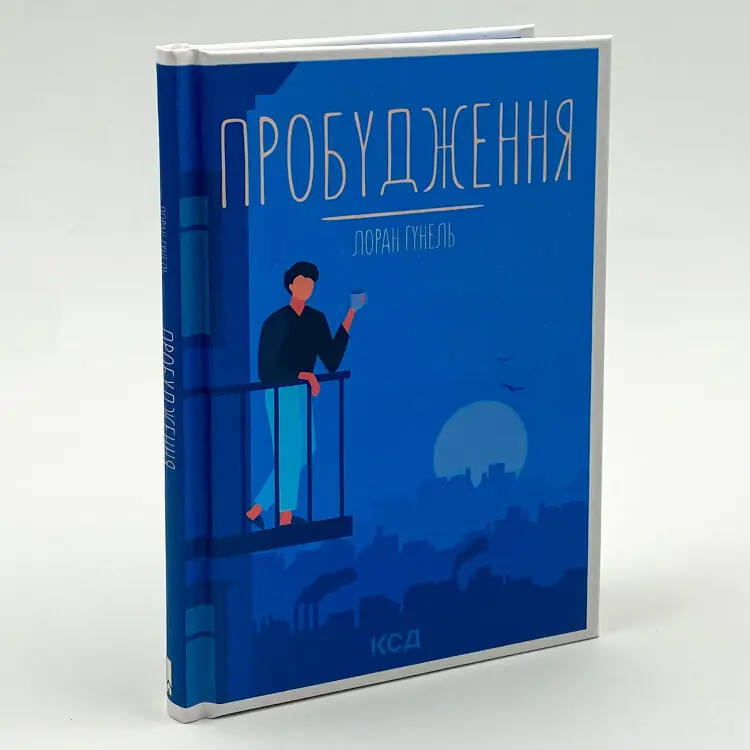
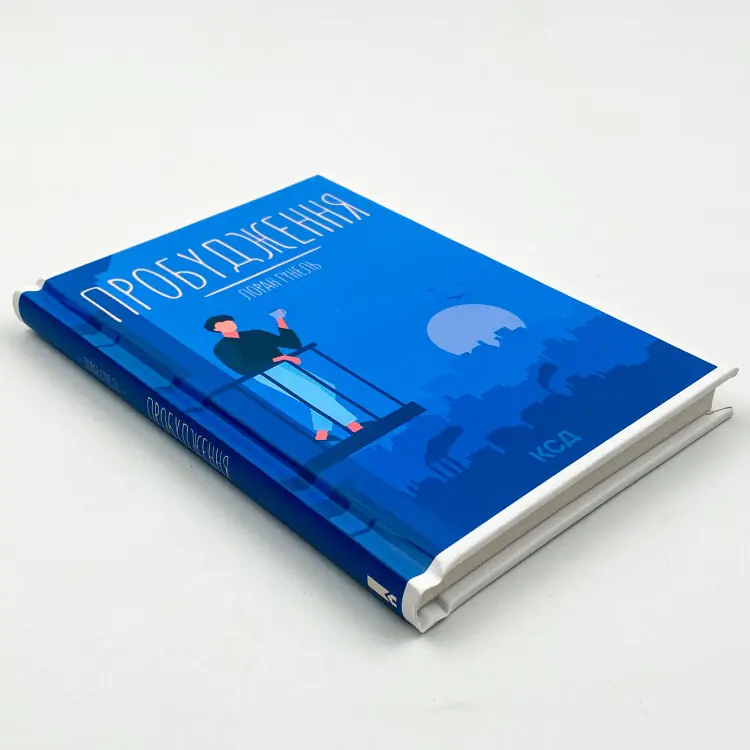
I promised myself. Well, honestly, I did! No more new books until I tackle that architectural monument that proudly towers by my bed. I held out for what seems like three days. Then I got my hands on “Awakening” by Laurent Gounelle, and that’s it – the stack can wait another month, I’m absolutely indifferent now. And you know why? Because this book made me stop and really think.
A psychological dystopia that is read in one breath, and after the last page, it lingers in your mind for a long time – that’s how I would describe my impressions. I mostly read it in the evening when my body had officially closed the shift, and it seemed that my brain was only working on "scanning text with my eyes." But it was precisely when I was least prepared for intellectual somersaults that it caught me. I truly found myself reading slower than usual. I kept stopping and thinking: "Wait, this is not just about the book." And it wasn’t that annoying “reading diagonally” — no, it was a conscious slowing down to digest what I had just read.
Mechanisms That Make You Think
In the book, the main character lives peacefully, trusting those who "know better," and follows all the new rules without any questions. And I sat there, reading and thinking about how many times I had done the same, simply because it was more convenient not to think. This is a direct reflection on my own actions that the book provokes. By the way, Gounelle surprises me every time. This is not the first book of his that I’ve read, and how differently he "hits" each time! I won’t elaborate on this now; perhaps there will be a separate post someday.
But what struck me the most was the main character's friend. The one who tries from afar to reach him and show how the mechanism of persuasion through fear works. And here it’s important: not through morality, not through some abstract "they are bad" — but through a specific technology of influence. At first, it’s "temporarily," then "for safety," and then suddenly it turns out that the number one enemy is something completely mundane, something you never even thought to fear. This moment made me put the book down, go make tea, because I needed at least a minute to think not about the plot, but about my own observations.
And while the tea was brewing, I caught myself thinking that lately I’ve been reading a lot of such things – about how consciousness is structured, why we believe in what we believe, and who profits from it. On my desk, there’s almost a separate shelf forming: something artistic, and next to it – something popular-scientific on the same topic. As if I’m subconsciously collecting evidence for some internal discussion. Maybe it’s just an age when suddenly you want to figure things out, or maybe it’s just a coincidence in book choices, who knows.
Why You Should Reflect on “Awakening”
Here, I must warn you, there will be light spoilers. If you plan to read it yourself, you can skip this part, although I still recommend finishing it — the conclusions are worth it.
"Someone benefits from the panic and fear that have engulfed people," — this phrase, as if ripped from a news feed, sounds very poignant in the book.
I do have one downside, but it seems insignificant to me: at times, the dialogues read a bit like a lecture wrapped in fiction. That is, you understand that something is being explained to you through the character, not through the plot. But this didn’t turn me off at all. Why? Because the topic itself is so relevant (hello to everyone who has been living in the news feed for the past few years!) that I was willing to forgive a bit of didacticism for such content.
Another point that resonated throughout the book: how naturally the transition from "this is just temporary, for your safety" to a new round of restrictions occurs when the previous threat suddenly "closes." You read and think: "Come on, this is obvious! I would have noticed that immediately." And then you catch yourself in real life missing something similar just because it’s easier not to argue. It’s that feeling of déjà vu, you know, when you see a pattern that you’ve already seen in your own life or in the news feed, and it’s a bit frightening.
Overall, the book reads quickly. It scares just enough to make you think, not to brush everything off and go watch a series (although... why not, you can do both). My rating here is purely subjective – for some, this book may seem too "on the nose" with its message. But I’m fine when the message isn’t hidden behind three layers of metaphors.
How about you – read anything by Gounelle before? Because now I suspect I’ll go looking for the rest of his books, and my to-be-read list has officially lost this battle.