This content has been automatically translated from Ukrainian.
In recent years, the word pick me has firmly established itself in internet slang. It can be seen in comments under TikTok videos, posts on X (Twitter), memes on Reddit, or discussions on Instagram. It describes female bloggers, heroines from series, anime characters, and even acquaintances. However, despite the popularity of this term, its meaning is often misunderstood.
Some believe that a Pick Me Girl is any girl who loves football, computer games, or cars. Others are convinced that it refers to anyone who wants to please men. In reality, neither of these interpretations corresponds to the original meaning of the term.
Briefly about Pick Me Girl:
What is a Pick Me Girl?
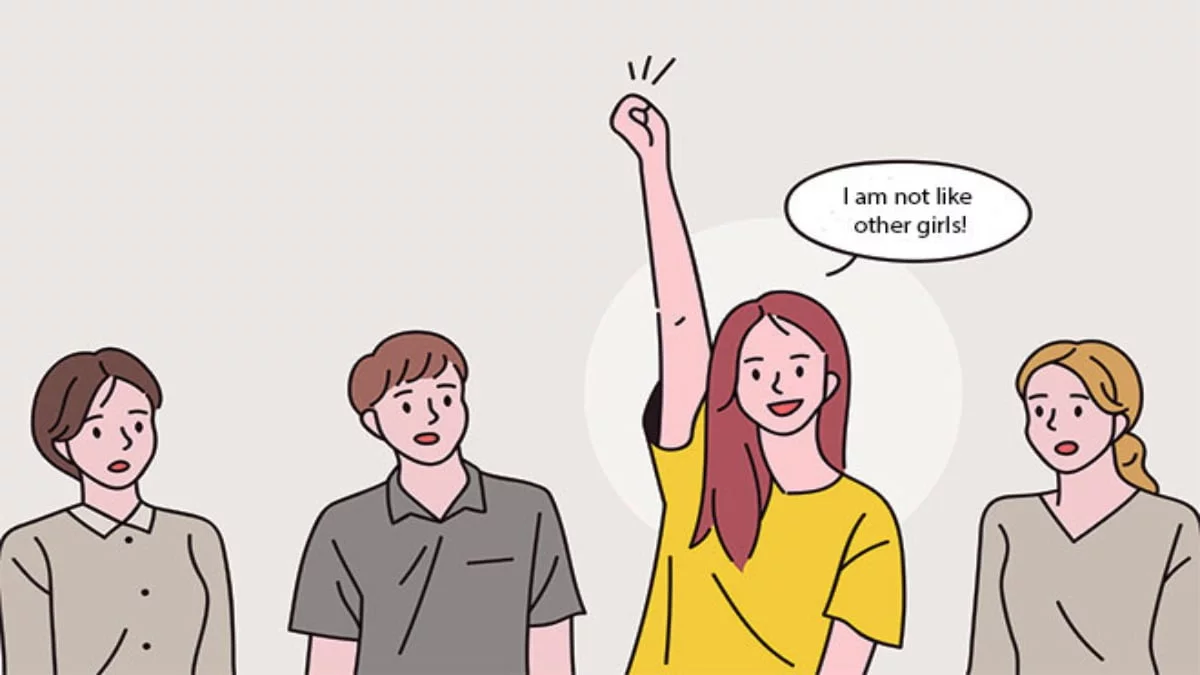
Pick Me Girl (literally — “choose me”) is a modern internet term used to describe a girl or woman who seeks approval or attention, most often from men, emphasizing her own “exceptionality” and contrasting herself with other women.
The key feature is not the desire to be liked — this is a natural human need. The essence of the term lies elsewhere: a person builds their image through the belief that they are better than others because they are “not like everyone else.”
For example, there is a fundamental difference between the following statements:
“I love video games.”
and
“I love video games. Unlike most girls who are only interested in makeup and shopping.”
In the first case, the person is simply talking about their hobby. In the second, they use stereotypes about other women to emphasize their own exceptionality.
That is why a Pick Me Girl is not about interests, clothing style, or lifestyle. It is about a way of self-presentation.
Why is the word “пікмі” often used incorrectly today?
The popularity of the term has led to its meaning gradually becoming diluted.
Today, in social networks, one can find comments like:
- “Loves Formula 1? Typical pick me.”
- “Plays Counter-Strike? Pick Me Girl.”
- “Doesn't wear makeup? One hundred percent pick me.”
In fact, such conclusions have no basis.
A girl can genuinely be interested in cars, programming, history, fishing, football, or anime and never compare herself to other women or try to attract attention through such comparisons.
That is why more and more researchers of digital culture note that the term Pick Me Girl is increasingly used as a universal label for any girl who seems “not like that.” As a result, the term is gradually distancing itself from its original meaning.
It is important to remember this, as atypical interests do not make a person a pick me. What matters is not the hobby itself, but how a person talks about themselves and whether they try to elevate their own value through the devaluation of others.
Where did the term Pick Me Girl come from?
The history of the term Pick Me Girl is much more interesting than it may seem at first glance. Today, it is primarily associated with TikTok, but in fact, the path of this expression began long before the advent of short videos and went through several stages before it acquired its modern meaning.
From a popular line to a new meaning
In 2005, the phrase that is now known even to people distant from this TV show was spoken in the series Grey's Anatomy. In a scene that became iconic among fans, Meredith Grey addresses Derek Shepherd with the words:
Pick me. Choose me. Love me.
In Ukrainian, this can be conveyed as:
“Choose me. Pick me. Love me.”
Over time, this line turned into a meme and was often used online as a symbol of a desperate plea for reciprocity. However, it is important to understand that it did not yet mean what is today implied by the concept of Pick Me Girl.
In the series itself, it was an emotional moment related to romantic relationships. Meredith did not contrast herself with other women and did not try to prove that she was better than them. That is why considering this scene as the moment of birth of the modern term would be inaccurate.
How the word changed its meaning
The expression pick me acquired new meaning about ten years later when it began to be actively used by users of English-speaking Twitter.
A special role in this was played by the Black Twitter community — an informal network of African American users that has long been considered one of the main sources of modern internet slang. It was there that the word pick me began to be used as an ironic designation for women who seek male approval, emphasizing their own “exceptionality” and distancing themselves from other women.
In 2016, the hashtag #TweetLikeAPickMe gained widespread attention. Users published humorous posts from the perspective of fictional characters who constantly emphasized that they were “not like other girls,” “don’t like drama,” “understand men better,” or “never act like typical women.”
It was during this period that the term gradually acquired the meaning that is used today.
TikTok made Pick Me Girl a global meme
Although the modern meaning of the word was formed in Twitter, it was TikTok that brought it true popularity.
Starting around 2020, the platform was filled with short comedic videos in which creators mocked typical pick me behavior. In such videos, the heroine usually demonstratively emphasized that she was “not like others,” devalued female interests, or tried in every way to present herself as “perfect” in the eyes of men.
Thanks to TikTok's algorithms, these videos quickly went viral. The term ceased to be understood only by a narrow circle of Twitter users and, within a few years, turned into one of the most well-known slang expressions of modern internet.
Why do people become Pick Me Girls?
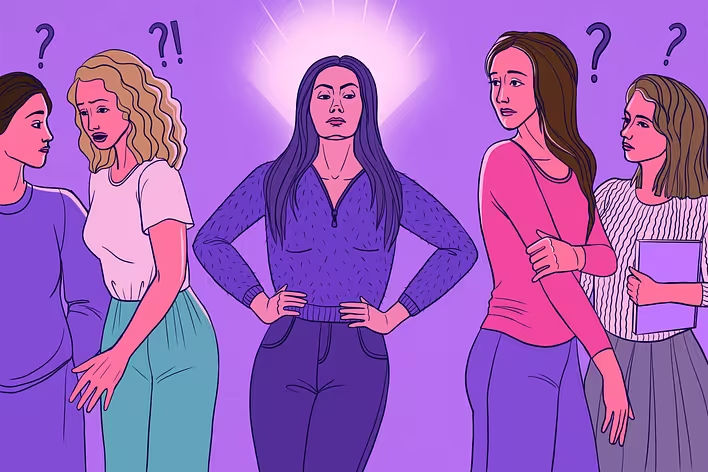
When someone is called a Pick Me Girl on social media, it often sounds like mockery or criticism. Because of this, it is easy to get the impression that such behavior is a conscious manipulation or a desire to attract attention at any cost. In reality, it is much more complicated.
Psychologists and cultural researchers emphasize: Pick Me Girl is not a personality type and not a psychological diagnosis, but a way of interacting with the environment that is shaped by various factors. It can be influenced by upbringing, social environment, popular culture, personal life experiences, and even social media algorithms.
That is why behind the outwardly similar behavior of different people can lie completely different reasons.
The desire to be accepted
The desire to please others is one of the basic human needs. It is important for us to feel support, respect, and belonging to a certain community. This desire becomes especially strong during adolescence and youth when a person is just forming their self-image.
The problem arises when approval begins to seem like the only way to feel one's own value.
In such a situation, a person may unconsciously seek a way to stand out among others. The simplest path is not the development of one's own strengths, but the creation of an image of a person who supposedly differs favorably from the “rest.”
This is often where statements like “I’m not like other girls” come from. Their goal is not so much to tell about oneself as to emphasize one’s own uniqueness.
The influence of popular culture
The idea of being “not like everyone else” appeared long before TikTok.
In movies, series, and romantic comedies over the years, similar plots have been seen. The main character falls in love not with the most popular girl but with one who supposedly differs from others. She is not interested in fashion, does not like shopping, listens to “correct” music, plays video games, or watches football.
Such characters were often created as a contrast to the image of the “typical girl.” Meanwhile, other female characters often remained superficial or caricatured.
Similar plots did not create the phenomenon of Pick Me Girl, but they have long supported the idea that a woman becomes more interesting only when she distances herself from other women.
Internalized misogyny: when stereotypes start to seem true
During discussions about Pick Me Girl, the concept of internalized misogyny (internalized misogyny) is often mentioned. Despite the complicated name, its essence is quite simple.
It refers to a situation where a person begins to perceive widespread negative stereotypes about women as something natural. For example, they may sincerely believe that “women are too emotional,” “can’t be friends,” “only love gossip,” or “are only interested in appearance.”
If such beliefs become entrenched, a person often tries to distance themselves as much as possible from everything associated with femininity. That is why one can sometimes see demonstrative devaluation of cosmetics, romantic films, fashion, or other interests traditionally considered feminine.
At the same time, it is important not to exaggerate the role of this concept. Not every Pick Me Girl demonstrates internalized misogyny, and not every manifestation of internalized misogyny relates to pick me behavior. These phenomena can intersect but are not identical.
Social media exacerbate the problem
The algorithms of modern platforms encourage anything that attracts attention. The more emotional the statement or sharper the conflict, the greater the chances it will go viral.
That is why demonstrative statements like “all girls are the same” or “I’m not like them” often receive significantly more reactions than a calm story about one’s own interests.
As a result, social media do not create pick me behavior but can make it more noticeable and even amplify it, as algorithms reward content that sparks discussions and controversies.
It is important not to oversimplify
Despite the popularity of this term, it would be a mistake to explain any similar behavior solely as a desire for attention.
Behind similar words can lie insecurity, attempts to find one’s place among peers, the influence of family upbringing, or even poorly articulated thoughts. Sometimes a person simply repeats widespread stereotypes without thinking about their content.
That is why Pick Me Girl should be viewed as a description of a certain behavior model, rather than as a characteristic of personality in general. This approach allows for a better understanding of the reasons behind the phenomenon while avoiding hasty labels.
How does Pick Me Girl differ from a girl with unusual interests?
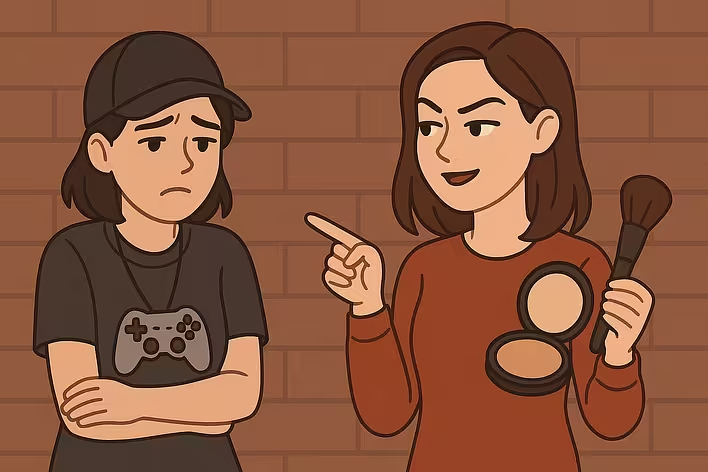
Perhaps the most disputes arise around this question. In social networks, the word “пікмі” is used so often indiscriminately that it is sometimes applied to any girl who has unusual hobbies or does not fit someone’s notions of “typical femininity.”
Loves football? Pick me.
Plays video games? Pick me.
Interested in cars? Pick me.
In reality, this approach has nothing to do with what the term originally meant.
Hobbies do not define a person
One of the main mistakes is the belief that there are “female” and “male” hobbies.
The modern world has long shown that people’s interests are almost independent of gender. Women work as mechanics and pilots, men engage in clothing design or floristry. Some are passionate about cosmetics, others about astrophysics. Some enjoy romantic movies, while others prefer motorsports.
None of these hobbies in themselves say anything about a person’s character.
A girl can genuinely be interested in Minecraft, Formula 1, the history of medieval Japan, or collecting vinyl records. This only means that these things bring her joy.
The problem begins in a completely different place.
Context is everything
Let’s imagine two similar situations.
The first girl says:
“I love watching Formula 1. I started getting interested in it a few years ago.”
The second says:
“I love Formula 1. Unlike most girls, I’m interested in something smarter than cosmetics.”
Both are talking about the same sport.
But the meaning of these statements is completely different.
In the first case, the person is simply talking about themselves.
In the second, they use their own interest as proof that they are supposedly better than others.
This difference is key.
Pick Me Girl is defined not by interests but by the way a person presents them.
Why the label “пікмі” can also be unfair
Paradoxically, today the term Pick Me Girl sometimes starts to function in the same way as the stereotypes it was meant to criticize.
Imagine a situation: a girl says that she collects model airplanes or is interested in programming.
Someone immediately responds:
“Typical Pick Me Girl.”
In fact, the person receives a label simply because their interests seem unusual to someone.
As a result, a strange situation arises. If women were previously criticized for being “too feminine,” now they are sometimes criticized for being “not feminine enough.” In both cases, the assessment is based not on the actual behavior of the person but on someone’s expectations.
That is why more and more researchers of digital culture urge caution in using the word “пікмі”. It can be appropriate when describing a specific behavior model, but it easily turns into another universal label if applied without context.
Is Pick Me Girl a psychological term?
Despite the fact that the term Pick Me Girl is often found in articles, videos, and even journalistic materials today, it is important to understand: it is not a psychological term and not an official concept used by professionals to describe a person’s character or mental state.
First and foremost, it is an element of modern internet slang. It originated in social networks and is used to describe a certain behavior model, not to assess character or assign any “diagnosis.”
This means that a psychologist cannot define a person as a “Pick Me Girl” just as there are no diagnoses of “toxic person,” “red flag,” or “gaslighter.” All these words help describe specific phenomena or models of interaction between people but do not belong to official psychological terminology.
Why is this important?
In social networks, any popular term quickly begins to live its own life. People use it more and more often, and gradually the impression forms that it has a clear scientific definition.
With Pick Me Girl, this is exactly what happened.
Today, one can see posts where a person is labeled as a pick me after one video or even one phrase. However, such an assessment has nothing to do with psychological analysis. We do not know the person’s motives, life experiences, or circumstances that influenced their behavior.
That is why psychologists usually avoid categorical conclusions based solely on isolated episodes. A person’s behavior is almost always much more complex than it may seem from a short video or a few social media posts.
Behavior does not equal personality
Another common mistake is that a particular behavior model is perceived as a complete description of a person.
In reality, anyone can misspeak, repeat a common stereotype, or try to make a better impression on new acquaintances. This does not mean that such a person always behaves the same way or that their entire personality is reduced to one internet label.
That is why it is more accurate to say not “she is a Pick Me Girl”, but “her behavior in this situation resembles what is called pick me behavior online”.
At first glance, the difference seems insignificant, but in fact, it is fundamental. In the first case, the label becomes a characteristic of the person, while in the second, it describes only a specific way of interaction.
Is there a Pick Me Boy?
Although social media often talk about Pick Me Girl, over time, a similar term has emerged — Pick Me Boy.
It refers to a guy who also seeks approval or attention, demonstrating that he is “not like other men.” To do this, he may constantly emphasize his own exceptionality, criticize other men, or deliberately create the image of the “ideal.”
As with Pick Me Girl, it is not about being polite, attentive, or respectful of others. All these traits are positive.
The problem arises when respect or kindness turns into a tool for self-promotion. For example, if a person constantly emphasizes that all other men are unworthy, and he alone deserves attention because he is “better than them.”
This way of self-presentation is what led to the emergence of the term Pick Me Boy.
At the same time, this expression is used much less frequently than Pick Me Girl and has not yet gained such popularity.
Like it?React
🧵
This post doesn't have any additions from the author yet.