Table of contentsClick link to navigate to the desired location
This content has been automatically translated from Ukrainian.
If you have ever heard the word "therian" and imagined something mystical or related to animals, then you are already on the right path. Therians are not only an interesting subculture but also a philosophy of life for those who feel a special connection to the animal world. This phenomenon attracts the attention of both psychologists and sociologists, and raises many questions for people who are learning about this community for the first time.
Who are therians?
Therians are people who believe they have an "inner animal" or a spiritual connection with a specific animal. This identification can be spiritual, psychological, or symbolic. They do not believe they are physically animals, but rather feel like them on emotional and mental levels.
This worldview may include:
- A strong affinity with a specific animal, such as a wolf, eagle, or even a shark.
- A feeling that their behavior or character resembles a particular animal.
- An experience of "mental transformation," where they imagine themselves as that animal to better understand its essence.
How does it work?
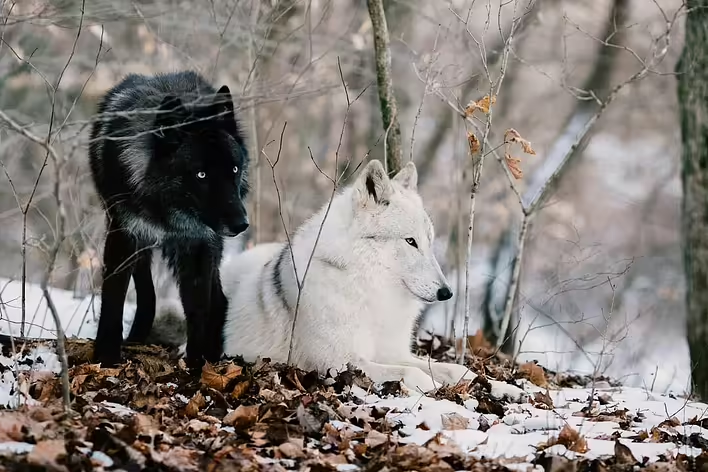
For therians, the connection with the animal can be very deep. It may manifest in feelings, behaviors, or even dreams, where a person feels like an animal. For example, a therian who feels a connection with a wolf may say that sometimes the "pack instinct" or the desire to run in open spaces becomes extremely strong for them.
For many, being a therian is part of their identity, and they are not just interested in animals but strive to live in harmony with this "animal" aspect of themselves.
Types of therians
- Classical therians – those who feel a connection with a real animal that exists or existed in nature (e.g., wolves, tigers, eagles).
- Mythical therians – those who identify with mythical creatures, such as dragons or griffins.
- Primitive therians – people who feel like not a specific animal but simply an "ancient being" or part of the wild.
Where did this subculture come from?
Therianthropy as a phenomenon has a long history that roots back to shamanic rituals and spiritual practices. In many cultures, people believed that their ancestors or souls were connected to animals. In its modern form, the therian subculture began to take shape in the late 20th century due to the development of the internet. The first therian communities emerged on forums and platforms where people shared their feelings and found like-minded individuals.
How are therians different from furries?
Therians are often confused with members of another popular subculture – furries. However, these communities have significant differences.
- Furries – are mostly fans of anthropomorphic animals in art or pop culture. They enjoy creating characters or transforming into them through costumes.
- Therians – are people who feel a deep inner connection with a real or mythical animal, often without the use of costumes or personas.
How do therians live in society?
Most therians do not openly express their identity, as they fear judgment or misunderstanding. However, there are several important aspects in their lives:
- Self-acceptance. For many therians, identifying with an animal helps them better understand their strengths and weaknesses.
- Harmony with nature. Therians often feel a close connection to nature, enjoy being outdoors, and care about ecology.
- Communication in communities. Thanks to the internet, therians have the opportunity to communicate with people who understand them, which reduces feelings of isolation.
Why is this important?
Therians are a vivid example of how modern culture intersects with ancient beliefs and the natural desire of people to be part of something greater. They remind us of our connections to nature and that the inner world of each person is unique and deserves respect.
So the next time you hear about therians, know: this is not just a subculture, but a deep self-expression and an attempt to find harmony between the human and the animal.
This post doesn't have any additions from the author yet.