Wheel alignment angles (WAA) are technical parameters that determine the geometric position of the wheels relative to the road surface and the vehicle body. These values include:
camber — the tilt of the wheel in the vertical plane when viewed from the front;
toe — the difference in distances between the front and rear points of the wheels on one axle;
caster — the tilt of the wheel's pivot axis when viewed from the side;
the angle of the transverse tilt of the pivot axis (KPI).
Each manufacturer sets specific values for these parameters for particular car models, documenting them in the technical documentation. Properly adjusted angles ensure optimal tire contact with the road surface, contribute to predictable handling, and minimize wear on the vehicle's suspension components.
When Adjustment of Angles is Necessary
Diagnosis of violations can be made based on several characteristic signs. The car drifts to the side while driving on a flat road without steering input, requiring constant trajectory correction. The steering wheel is in an indirect position during straight-line movement or returns to a neutral position unevenly after turns. Tires show uneven tread wear, especially noticeable on the edges of the tread.
Technical symptoms include:
increased fuel consumption by 5–15%;
decreased braking efficiency;
increased gaps between tires and wheel arches;
vibration at certain speeds;
unusual sounds when turning the steering wheel.
After impacts with obstacles, suspension repairs, replacement of its components, or after 15,000–20,000 km of travel, a mandatory check of WAA is recommended even in the absence of obvious signs of geometry violation, as initial deviations may be unnoticed by the driver but lead to accelerated wear of suspension components.
How Wheel Alignment Angles are Adjusted
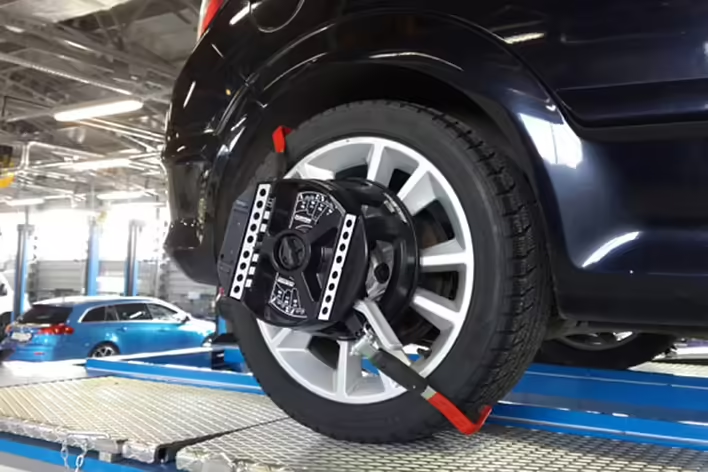
The process of adjusting WAA requires precise equipment and qualified specialists. Before the procedure, a thorough inspection of the suspension and steering components for wear or damage is conducted. Professional "alignment," which can be performed at a service station https://oiler.pro/ua-ua/sto/razval-shojdenie/, begins with placing the car on a special stand with rotating platforms, after which high-precision electronic sensors are mounted on the wheels to measure the current parameters. Compensation for wheel runout allows for the elimination of measurement errors.
Upon detection of deviations from factory specifications, technical specialists sequentially perform:
Adjustment of camber using eccentric bolts or shifting the upper strut mounts.
Setting toe by changing the length of the tie rods.
Adjusting caster where possible in the suspension design.
Precise final adjustment with control measurement.
After the adjustment is completed, a test drive is conducted to assess the vehicle's handling and the absence of drift to the side. For modern vehicles with electronic driver assistance systems, additional calibration of sensors using diagnostic equipment may be required.