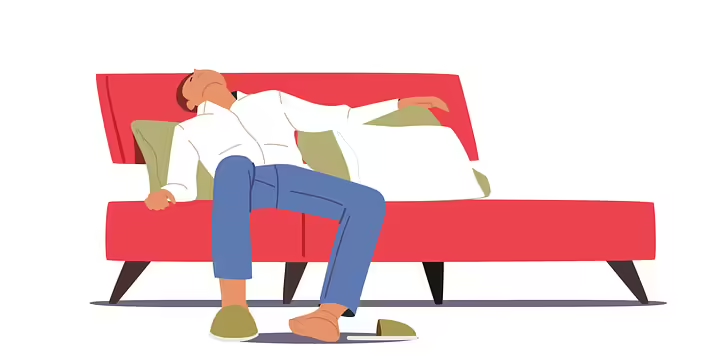
The concept of «lin» is associated with negative traits: irresponsibility, weakness and lack of ambition. However, from a scientific point of view, such behavior is a much more complex psychophysiological phenomenon.
Neurobiology of laziness: how our brain works
Our brain has evolved to be as efficient as possible. It was critical to survival to save energy rather than waste it on unnecessary action. This program, embedded in our nervous system, is still working.
At the center of the brain is a reward system regulated by dopamine. This neurotransmitter is responsible for motivation, satisfaction and a sense of expectation. When we perform a pleasure task, the brain produces dopamine, which motivates us to repeat this action. However, if the task has no obvious reward, dopamine levels remain low. This leads to a decrease in motivation, and we feel what we call laziness.
In addition, the prefrontal cortex is responsible for executive functions such as planning, decision-making, and self-control. This part of the brain requires a significant amount of energy. When the brain experiences cognitive overload or stress, the prefrontal cortex may function less efficiently. Instead of overcoming difficulties, the brain seems to «disconnect» to save resources. From the outside it looks like apathy or laziness.
Psychological reasons for inaction
From a psychological point of view, laziness is often a reaction to internal conflicts, fears and emotional exhaustion. Many people avoid activism because they are afraid of failing, disappointing themselves or others. Instead of taking risks and possibly not achieving the ideal result, they choose inaction. Such behavior is a form of self-defense that allows you to avoid negative emotions.
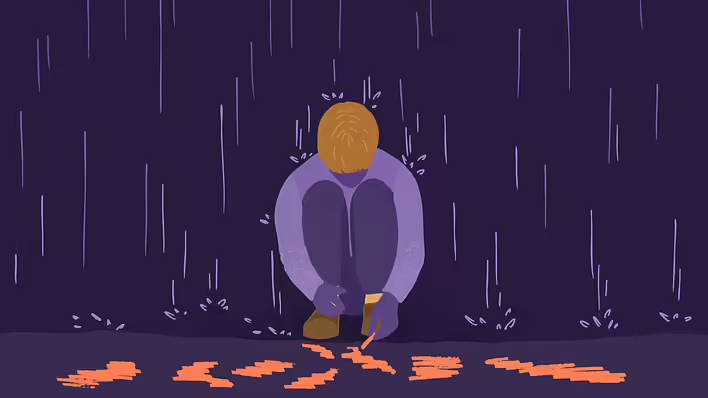
Also, psychologist Martin Seligman coined the term «learned helplessness». This condition occurs when a person, after a series of failures, loses faith in his ability to control his own life and simply stops trying. This behavior mimics laziness, when in fact it is the result of despair.
Moreover, modern life with its high demands and constant pressure causes emotional and physical exhaustion, or burnout. This is not only a professional, but also a psychological problem that causes apathy, cynicism and a complete lack of motivation. In this case, «lin» — is not a conscious choice, but a signal from the body about complete depletion of resources.
Sociology: Context and norms
Sociologists emphasize that the concept of «lin» is socially determined and differs depending on the culture. What is considered inaction in one society may be the norm or even a sign of wisdom in another.
The so-called «productivity culture» is overly focused on continuous growth and success. In such a context, any inaction is perceived negatively. People feel pressure to be constantly busy, which leads to chronic stress and, as a result, apathy, which is often confused with laziness.
It is important to note that this mentality is common in capitalist systems, but its manifestations vary. For example, in the countries of East Asia, in particular, in Japan, it is strengthened by collectivist traditions. At the same time, in many European countries, thanks to cultural values that value the balance between work and personal life, this mentality is balanced.
In addition, modern economic models and social structures sometimes force a person to perform, in his opinion, meaningless tasks. When work or training does not correspond to personal values, internal motivation is lost. This is not laziness, but a refusal to take actions that do not make sense to a person.
Instead of perceiving laziness as a character flaw, it is advisable to consider it as a potential indicator of deep psychophysiological and socio-cultural factors. Such inaction can be a signal that indicates the need for adequate rest, a reassessment of strategies for achieving goals, a review of personal priorities, or, if necessary, to seek professional psychological help.