This content has been automatically translated from Ukrainian.
I want to tell you about a word that has no exact equivalent in the Ukrainian language, the word — Waldeinsamkeit.
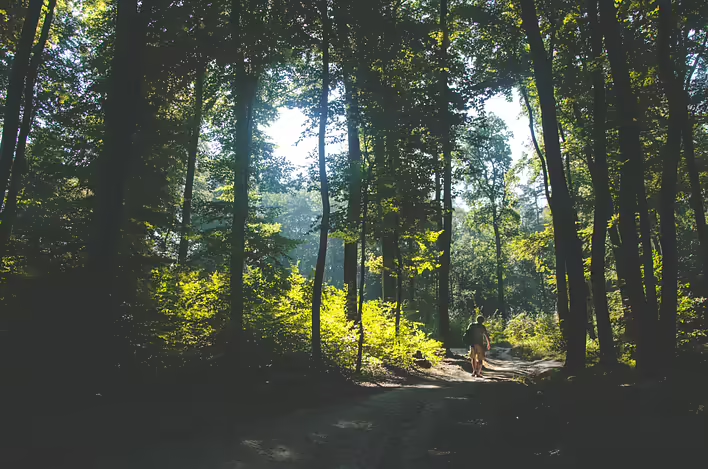
Waldeinsamkeit (in German: "solitude in the forest") — is a German word that describes not just the physical presence in the forest, but a state of conscious solitude, tranquility, and deep connection with nature. This term gained particular popularity during the era of German Romanticism, when artists and philosophers sought to idealize nature as a source of inspiration, inner peace, and authenticity.
Linguistic and Cultural Origin
The word Waldeinsamkeit combines "Wald" (forest) and "Einsamkeit" (solitude). And unlike the usual negative connotation of "solitude" as a feeling of isolation, here it takes on a positive, even meditative meaning. It indicates a deliberate choice to be alone, but not to feel abandoned. It is a solitude that fills rather than empties. In German culture, the forest has always held a special, often mystical significance — it is a place where one can detach from civilization and find truth, beauty, or meet oneself.
Psychological and Therapeutic Aspect
The concept of Waldeinsamkeit closely intersects with the modern idea of ecotherapy and the Japanese practice of shinrin-yoku ("forest bathing"). Scientific research confirms that spending time in the forest has a significant positive impact on a person's psychological state. In particular, it has been proven that:
- The aromatic substances released by trees (phytoncides), when inhaled, reduce the level of the stress hormone cortisol.
- Regular walks in the forest contribute to a decrease in anxiety and depressive states, and improve concentration.
- The natural environment helps the brain rest from the constant informational and visual overloads typical of urban life. The absence of artificial noise and chaotic stimuli promotes the recovery of the nervous system.
Like it?React
🧵
This post doesn't have any additions from the author yet.