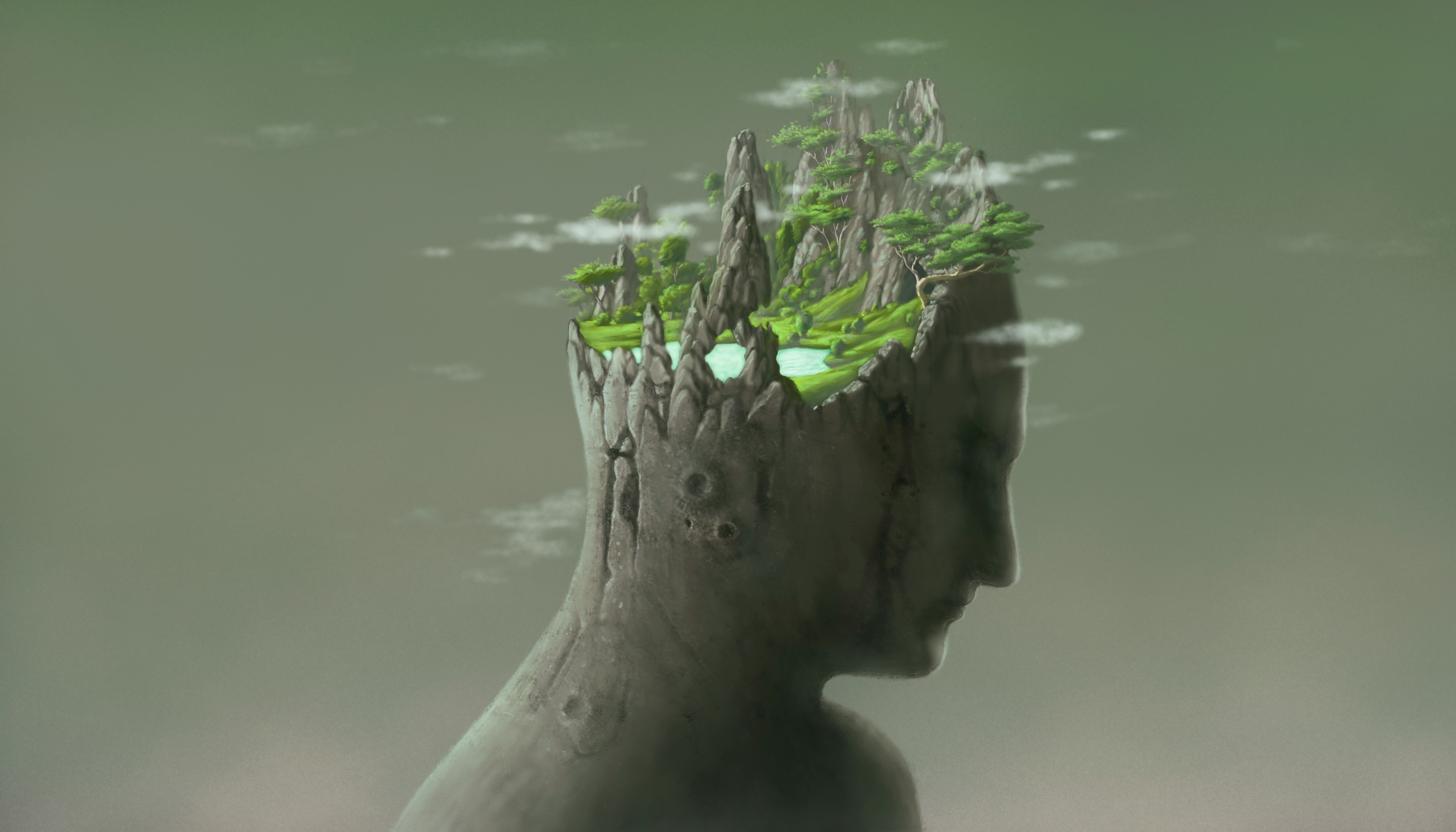
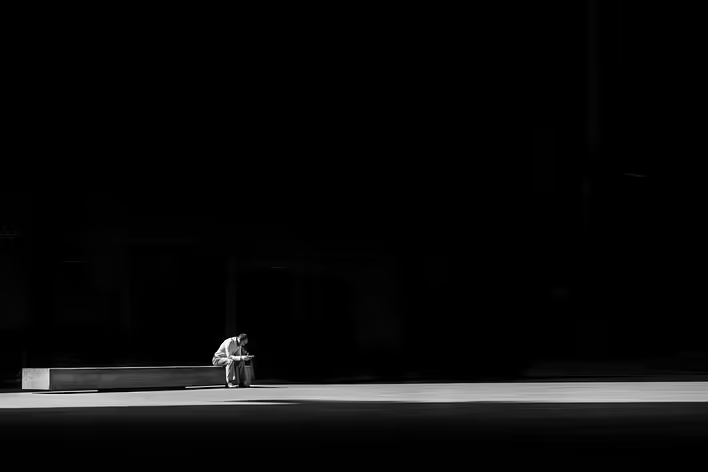
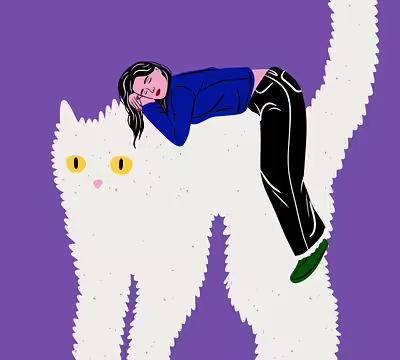
Escapism is a psychological mechanism that involves a conscious or subconscious desire of a person to distance themselves from real problems, responsibilities, or negative emotions. It is an escape from reality that can manifest in various forms—from harmless hobbies to destructive addictions.
Escapism allows one to temporarily transport themselves to another, more pleasant or manageable world to avoid stress. However, if it becomes the only way to respond to difficulties, it can become a problem.
The term originates from the English word "escape." Its emergence is closely linked to the criticism of culture and society at the end of the 19th and the beginning of the 20th century.
History of the term
The concept was first used in the biography of poet John Keats to describe his desire to immerse himself in the world of art and poetry, distancing himself from harsh reality. However, the term gained widespread usage later, along with the development of mass culture—film, radio, and cheap books. Sociologists and philosophers began to discuss how these new forms of entertainment affect society, questioning whether they are merely tools for escaping reality.
Use of the term today
Today, the term "escapism" is used in various fields. In psychology, escapism is viewed as a mechanism of psychological defense. It is a way in which a person unconsciously avoids stress, trauma, or problems by immersing themselves in more pleasant activities. Psychologists study when escapism is healthy (as a means of relaxation) and when it becomes a pathology (as an addiction).
Sociologists investigate how social changes can intensify escapism in society. For example, the rise in popularity of online games and social networks is seen as a form of mass escapism from the realities of everyday life.
Philosophers discuss the moral aspects of escapism. Some believe it is a natural mechanism that helps a person take a break from life's difficulties, while others criticize it as a refusal of responsibility and a withdrawal from active participation in public life.
In art and literature, the term is used to describe works that create imaginary worlds that differ from reality. For example, fantasy and science fiction are often considered escapist genres. Literary critics analyze whether such art helps expand consciousness or merely distracts from important issues.
Types of escapism can be classified based on where or how a person escapes from reality. The main types can be divided into positive and negative.
Positive types of escapism
These types are healthy and help restore energy without harming life.
Creative escapism — is immersion in creativity: drawing, music, writing, dancing, crafting.
Intellectual escapism — is escape into the world of knowledge: reading books, learning languages, watching scientific documentaries, solving puzzles.
Physical escapism — is changing the environment or engaging in active activities that help distract. This includes traveling, hiking, sports, yoga.
Social escapism — is immersion in social interactions that differ from the everyday. For example, attending parties, meeting new people.
Negative types of escapism
These types become addictions and destroy a person's life.
Chemical escapism — is escape through psychoactive substances such as alcohol, drugs, or even excessive consumption of medications. This is the most dangerous type, as it leads to addiction and has serious health consequences.
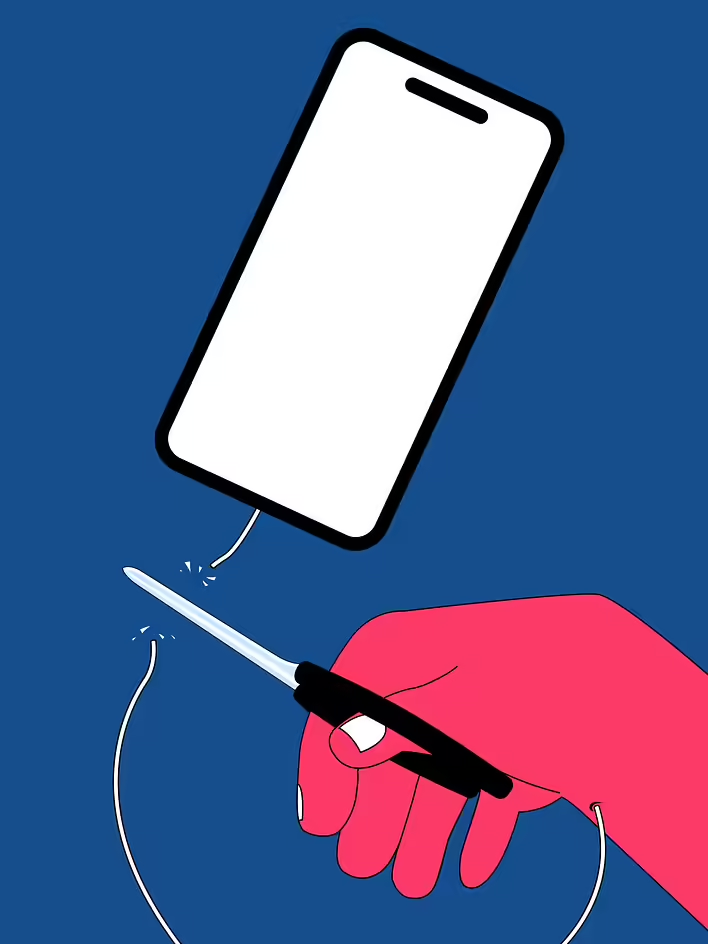
Digital escapism — is excessive immersion in video games, social networks, virtual worlds, or the Internet in general.
Behavioral escapism — is an addiction to certain behaviors that help avoid reality. For example, workaholism (when a person escapes from family problems by immersing themselves in work), shopping addiction (compulsive buying), or gambling addiction.
Emotional escapism — is the constant search for new relationships to avoid addressing issues in existing ones, or fantasizing about an ideal life instead of building it.
The main difference between positive and negative escapism is the consequences. Positive escapism helps one recover and return to reality with renewed strength, while negative escapism makes a person dependent and hinders them from living fully.
Philosophers and writers associated with the concept of escapism
Philosophers, sociologists, and writers have interpreted the escape from reality in various ways.
Thomas More
In his work "Utopia" (1516), he created an idealized, non-existent island where a perfect social order prevails. He wrote it during a time of deep social upheaval and injustice in England. His idealized island was a direct contrast to the realities where people suffered from poverty and harsh laws.
Jean-Jacques Rousseau
In Rousseau's philosophy, the idea of "returning to nature" was a reaction to the harsh social norms and constraints of the Enlightenment, which he believed distanced people from their true essence. He argued that humanity, in developing civilization, lost its natural innocence and happiness. His call for a life unburdened by social conventions can be seen as a philosophical escape from the complexities of the modern world.
Karl Marx
Marx's concept of "religion as the opium of the people" arose in the context of the industrial revolution when workers lived in terrible conditions. He argued that religion serves as a means of distraction for the oppressed masses from their suffering in the real world. Instead of fighting for their rights, people seek solace in the promises of an afterlife.
Aldous Huxley
In the dystopian novel "Brave New World" (1932), Huxley depicted a society in which people consciously consume the drug "soma" to escape from emotions and problems. This is one of the most famous literary examples of escapism, showing how society can use artificial means to control emotions and avoid conflicts.
History shows that people have always sought ways to step away from cruelty and problems.