Sushi and rolls have long become one of the favorite dishes of Ukrainians. In the menu Sushi Master, you can find dozens of their variations — from classic rolls with salmon to modern combinations with eel, shrimp, avocado, or spicy sauce. Despite such diversity, most items are prepared with the same basic ingredients, which are combined in different ways.
The right balance of ingredients shapes the taste of the dish. Some ingredients create the base, others add tenderness, freshness, or a crunchy texture, while sauces and small additions complete the composition.
The base without which no roll exists
The foundation of most sushi and rolls is special round-grain rice. After cooking, it is seasoned with a mixture of rice vinegar, sugar, and salt. This gives it a slight tang, a characteristic aroma, and the necessary stickiness to ensure the finished dish holds its shape well.
The second important ingredient is nori — dried sheets of seaweed. They wrap the classic rolls. Nori holds the filling inside and gives the dish a characteristic sea flavor and aroma.
Seafood — the main flavor accent
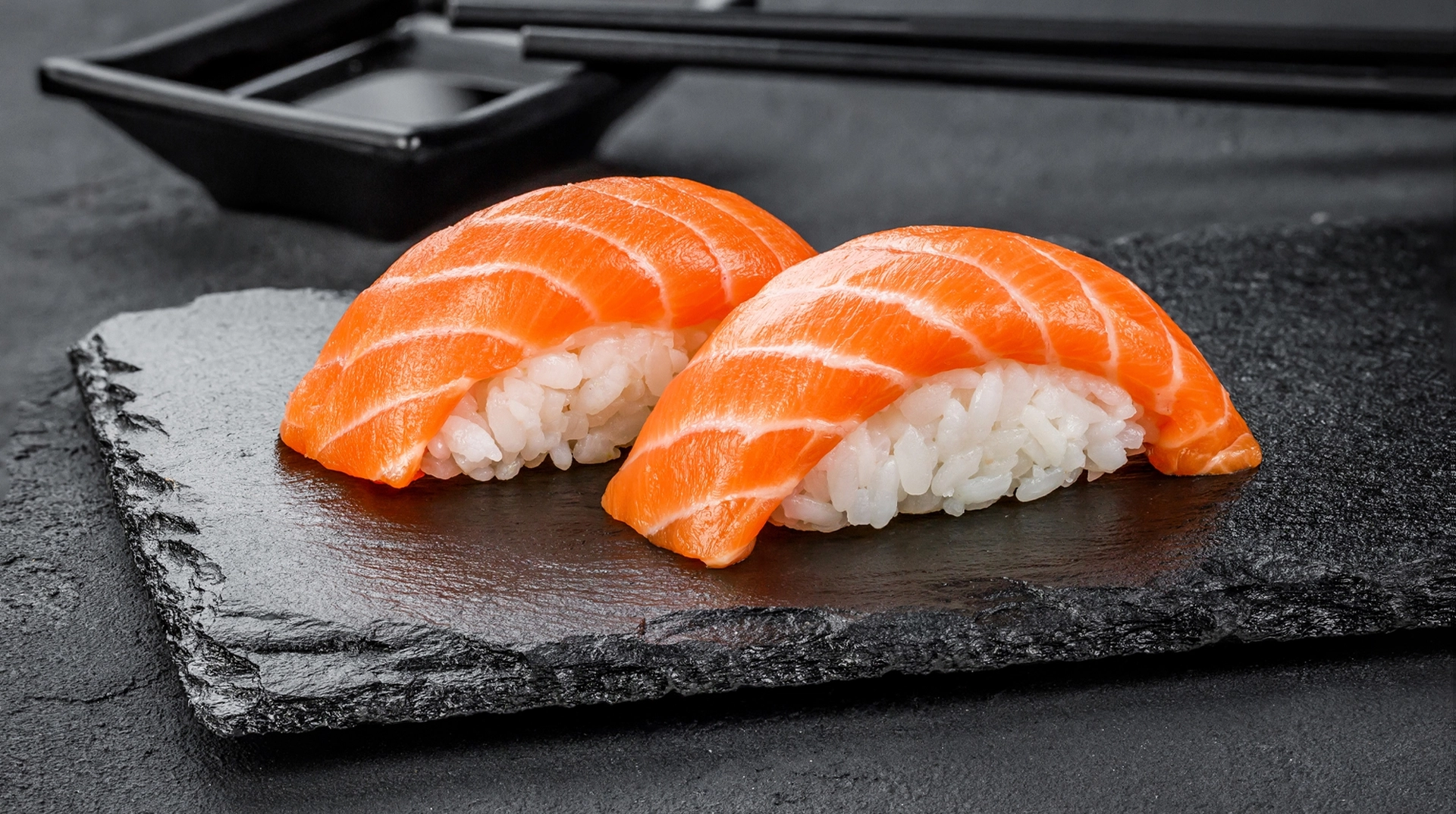
The filling has the greatest influence on the character of each roll. One of the most popular ingredients remains salmon. It is used in classic rolls, nigiri, gunkans, and numerous signature recipes. Salmon is valued for its delicate taste and soft texture.
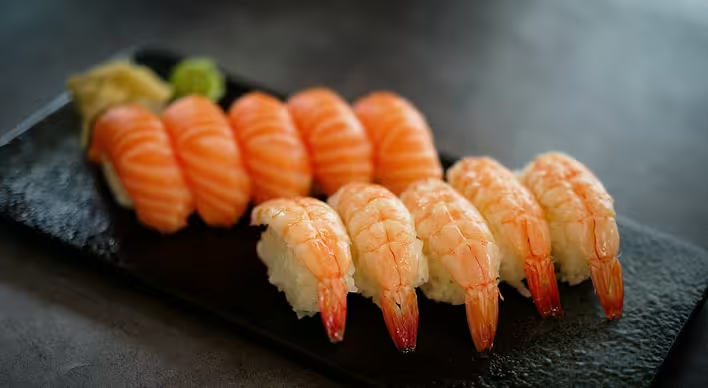
нігірі з лососем
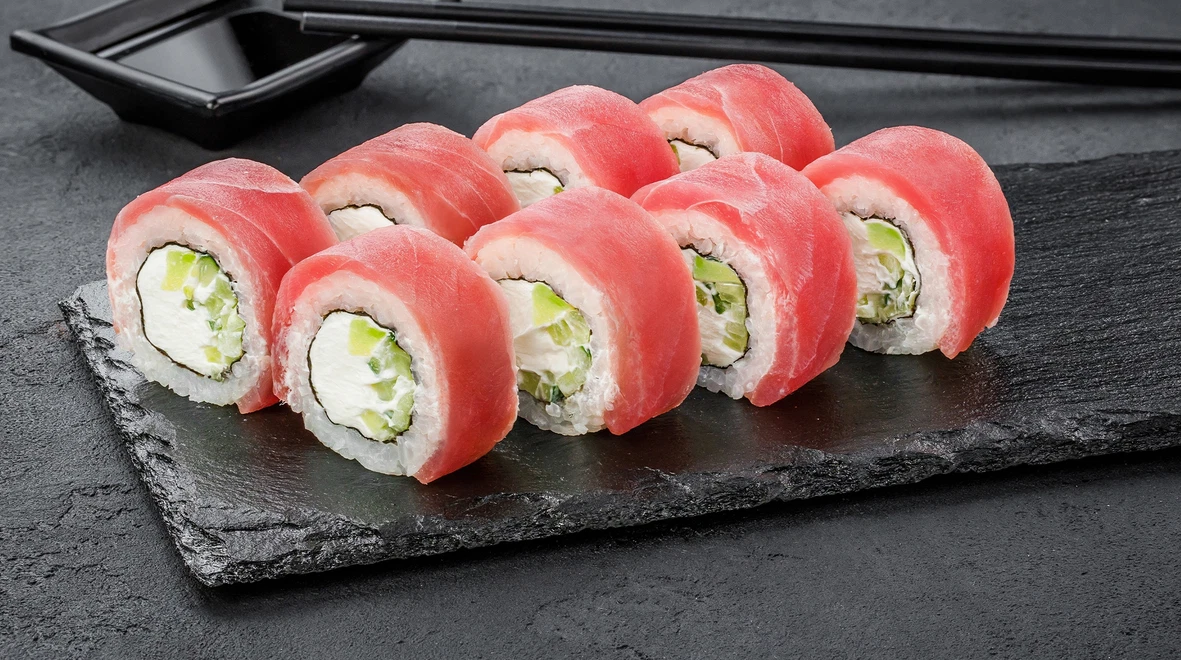
Tuna has denser meat and a delicate flavor, so it often features in traditional Japanese sushi. Shrimp is used either boiled or fried. They pair well with vegetables, avocado, and cream cheese.
Філадельфія з тунцем
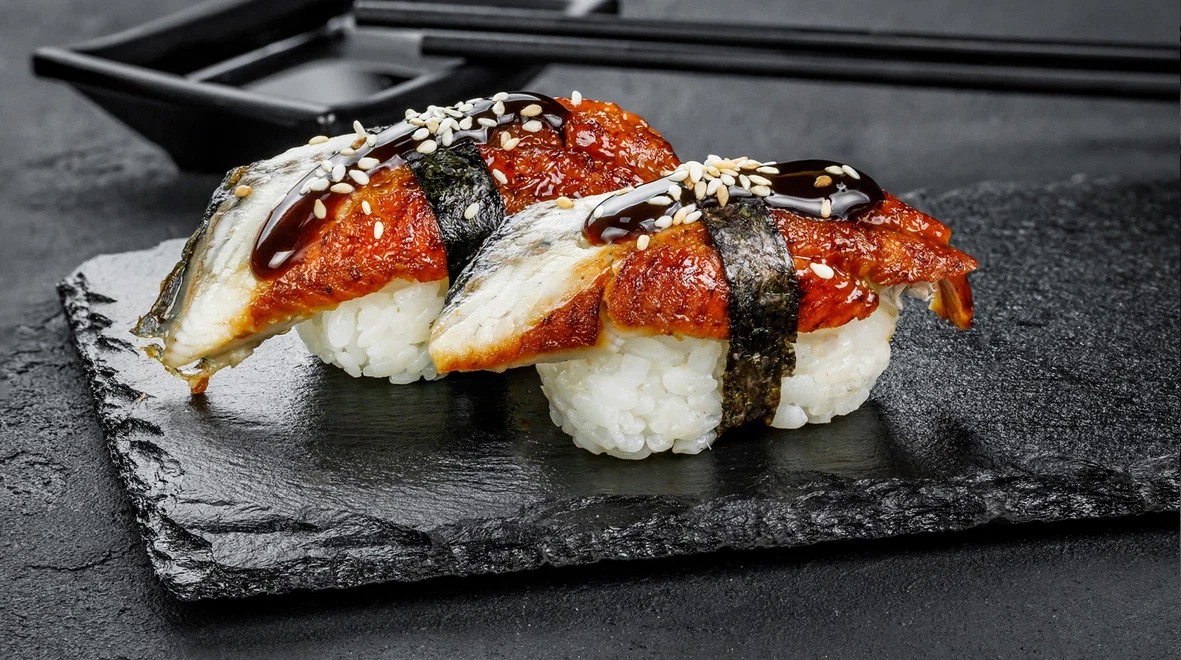
For lovers of richer combinations, eel is well-known. It is usually served smoked or baked, and its sweetish taste is complemented by unagi sauce and sesame. Another common component of modern rolls is crab meat or crab mix, which adds tenderness and a slight sweetness to the filling.
нігірі з вугрем
Ingredients that make rolls tender and fresh
In addition to seafood, vegetables and creamy components play an important role. The most famous among them is cream cheese. It gives "Philadelphia" rolls their characteristic tenderness and pairs well with salmon, shrimp, and eel.
Avocado adds a creamy texture and soft flavor to the filling. Cucumber, on the contrary, provides freshness and a light crunch, making even hearty rolls feel lighter.
In traditional Japanese cuisine, tamago — a sweet Japanese omelet — is also used. It can be a separate filling or a component of sushi and rolls.
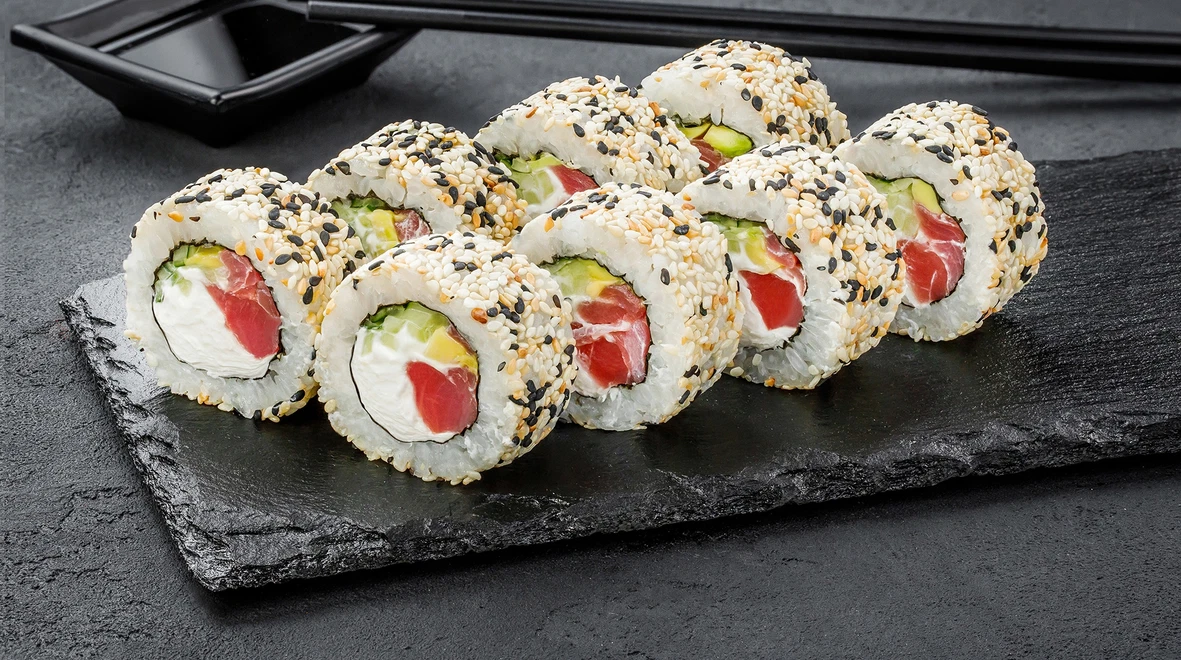
Філадельфія з тунцем в кунжуті: рис, тунець, крем сир, авокадо, кунжут, огірок, норі
Small details that radically change the taste
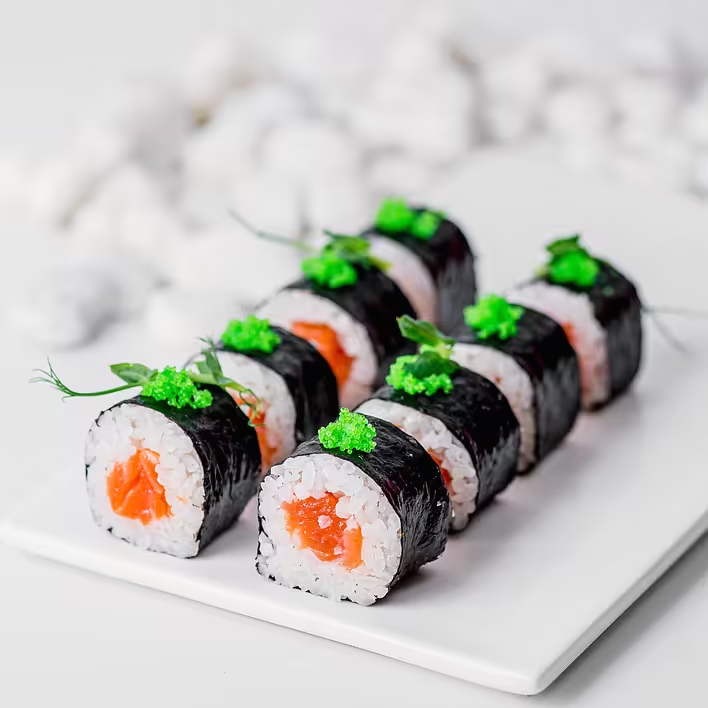
Sometimes it is the small additions that make a roll special. Tobiko or masago adds a light saltiness, pleasant texture, and bright color. The outer part of the rolls is often sprinkled with white or black sesame, which gives the dish a richer flavor and a light nutty aroma.
Equally important are the sauces. The thick sweet sauce unagi is traditionally paired with eel and baked rolls. Spicy sauce adds a hint of heat, so it is often used in modern recipes with fish, shrimp, or crab mix.
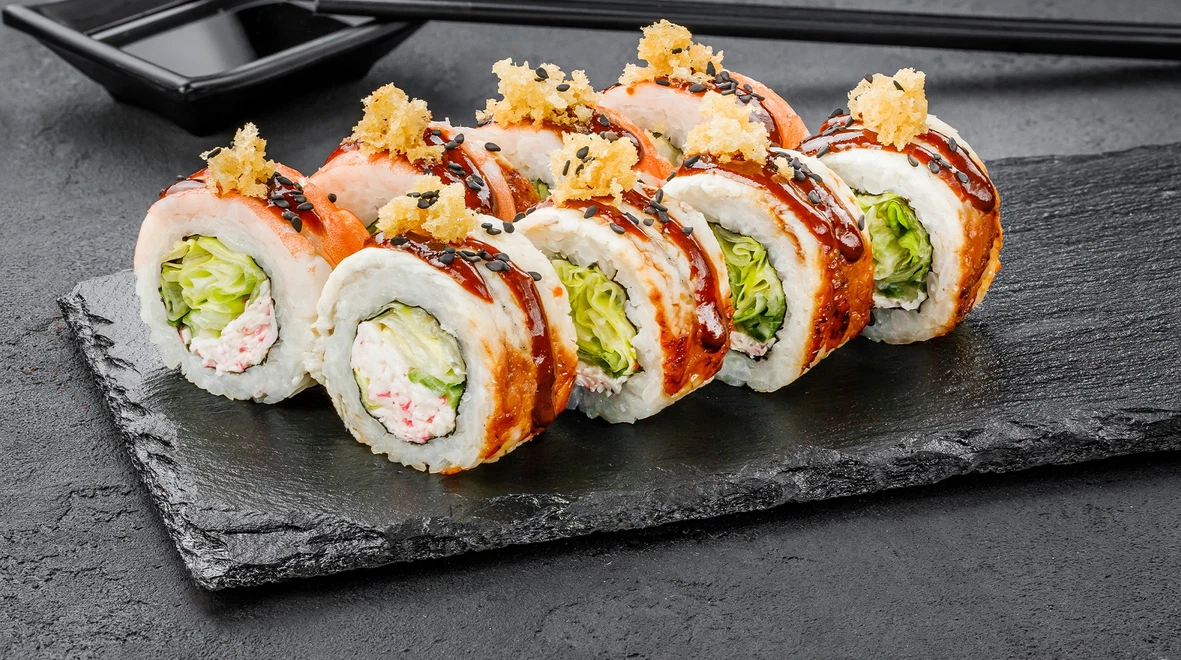
Філадельфія Ф'южн: рис, вугор, крабовий мікс, огірок, салат айсберг, варена креветка, кранч, соус Горіховий Унагі, кунжут чорний, норі
Why it's difficult to replicate the taste of restaurant rolls at home
At first glance, making rolls seems simple, but a good result depends not only on the recipe. You need to cook and season the rice correctly, choose quality seafood, cut the filling carefully, and maintain balance among all components. Even the thickness of a piece of fish or the amount of sauce can significantly affect the final taste.
That is why many enthusiasts of Japanese cuisine prefer dishes prepared by professional sushi chefs. At Sushi Master, you can choose both classic rolls with salmon, tuna, or eel, as well as modern options with cream cheese, avocado, tobiko, and signature sauces.
Quality ingredients are the foundation of any sushi and rolls. They determine the taste, aroma, and texture of the dish, and well-chosen combinations transform an ordinary set of products into a harmonious composition.