At first glance, ghee and ghee seem like the same product. And indeed — are both formed when ordinary butter is slowly melted and water and protein impurities are removed from it. However, there are interesting differences between them — and they hide not only in the recipe, but also in culture, taste and even philosophy.
Origins and traditions
Ghee — is an ancient European product. It was known even in Russia and in Central Europe, where oil was melted for long-term storage in cold and warm conditions. It was part of the diet of shepherds, housewives and monks, who valued this fat for its durability and delicate creamy taste.
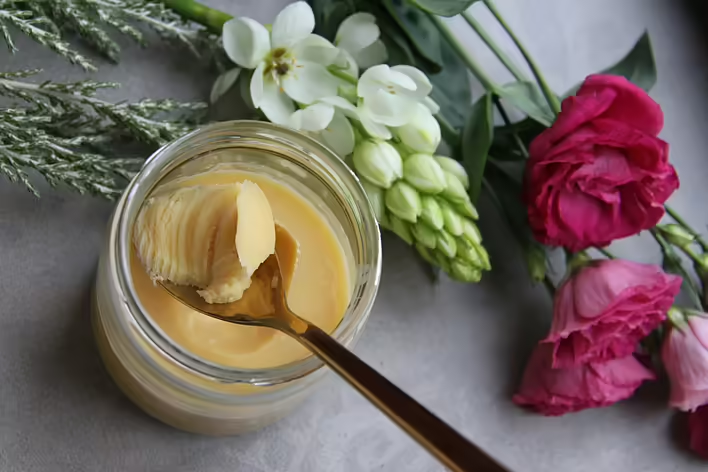
Ghee oil was born in India. There it is considered not just food, but almost a sacred substance. Ghis are used in cooking, rituals, Ayurvedic medicine and even for lighting lamps during holidays. Translated from Sanskrit, the word ghHrta means «what shines» — and indeed, this product has a rich gold color and aroma that is difficult to confuse with anything else.
How to cook
The main difference between — and the degree of heating.
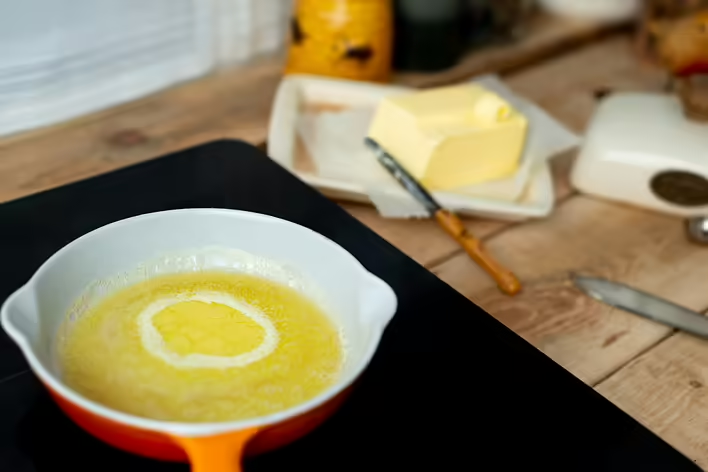
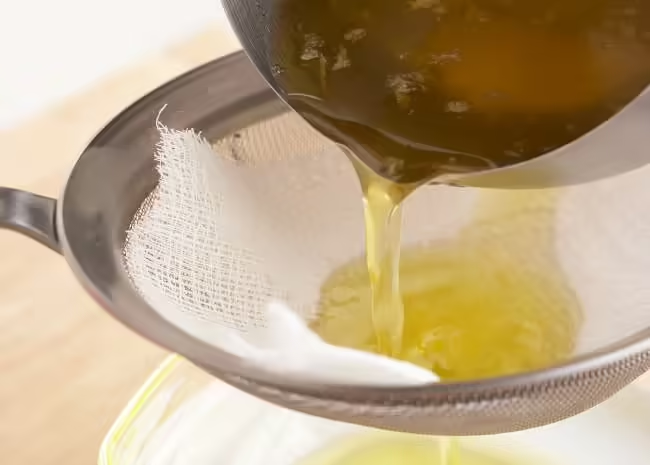
Ghee it is prepared by slowly melting the butter until it is layered: foam on top, transparent liquid in the middle, sediment on the bottom. Foam is removed, sediment — is separated. The butter remains clean and mild in taste.
Ghi drown longer. Milk proteins deposited on the bottom are caramelized, forming a light nutty taste and a characteristic aroma. It is this reaction that makes ghee more saturated and aromatic than its European «brat».
Taste and properties
Ghee has a delicate creamy taste and is suitable for dishes that do not require a dominant aroma. Ghee — is warmer, more expressive, with notes of nuts and caramel. Both species have a high smoke temperature (over 230 °C), making them ideal for frying, roasting spices or baking.
Benefits and uses
Ghi is considered the source of «pure energy» in Ayurveda — and is credited with the ability to nourish the brain and digestion. Ghee, in the European tradition, is valued as a natural fat without impurities and preservatives. Both products are lactose and casein-free, so they are often suitable for people who are intolerant to milk proteins.
So, ghee — is a universal culinary product familiar to European cuisine for a long time. And ghee — is its Indian relative, graceful, fragrant and filled with symbolism. Both are united by ease of preparation, utility and durability. The only difference is in the approach: in Europe they drowned for storage, in India — to get something almost sacred.