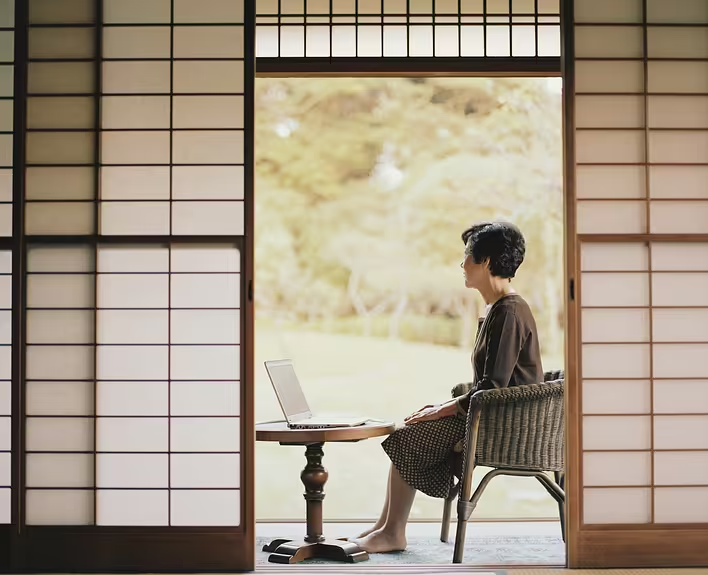
When people imagine a traditional Japanese interior, they usually envision tatami, low tables, minimalist furniture, and light translucent partitions through which soft daylight seeps. These partitions are called shōji — one of the most famous elements of Japanese architecture, which has maintained its popularity for centuries and continues to inspire designers around the world.
Shōji are not just doors or screens. They reflect a unique Japanese attitude towards space, light, and harmony between humans and the environment.
What is shōji
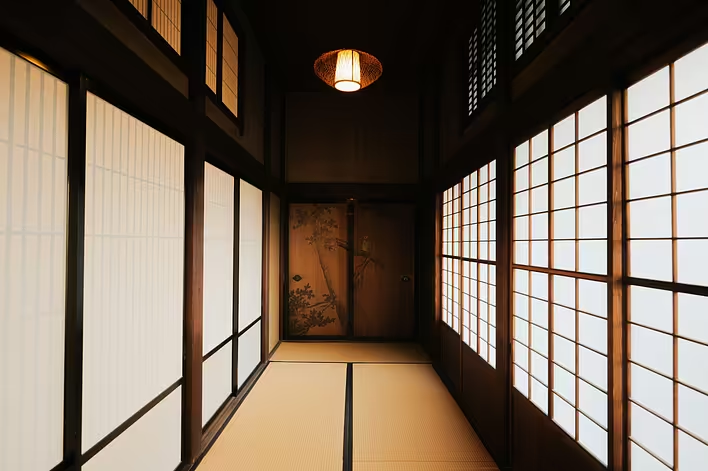
Shōji are lightweight sliding partitions or doors made of a wooden frame and a special translucent paper washi. They can be used as interior walls, room doors, window screens, or mobile partitions for zoning spaces.
Unlike the massive walls familiar to Europeans, shōji do not completely isolate a space. Their purpose is to delicately divide rooms, allow light to pass through, and create a sense of openness.
That is why traditional Japanese houses often seem much more spacious than they actually are.
How such partitions appeared
The history of shōji dates back over a thousand years. Their predecessors arrived in Japan from China along with paper-making technologies and new architectural traditions.
During the Heian period (794–1185), the Japanese nobility began using lightweight movable screens to divide large spaces. Over time, the designs were improved, becoming lighter and more practical.
In medieval Japan, shōji had already taken on a form close to the modern one: a wooden lattice covered with thin paper. This design proved ideal for the local climate and lifestyle. It ensured air circulation, allowed light to pass through, and enabled quick changes in room configurations.
What shōji are made of
A classic partition consists of two main elements.
The first is the wooden frame. Traditionally, it is made from hinoki cypress, Japanese cedar (sugi), and other local wood species. Craftsmen create a complex geometric lattice without using metal fasteners, employing traditional carpentry joints.
The second element is washi paper. This is a special Japanese handmade paper made from the fibers of paper mulberry, as well as gampi and mitsumata plants. It is remarkably strong, durable, and at the same time allows light to pass through well.
In modern versions of shōji, synthetic materials, acrylic, or special polymer films that resemble washi paper but are more resistant to moisture and mechanical damage are often used.
The magic of diffused light
The main feature of shōji lies in how they work with light.
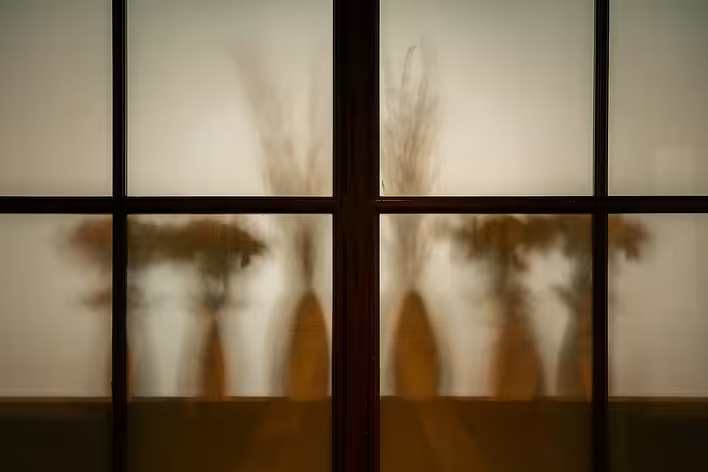
Instead of harsh sunlight, the paper diffuses light throughout the room, creating a soft, almost weightless illumination. As a result, rooms acquire a special atmosphere of calm and coziness.
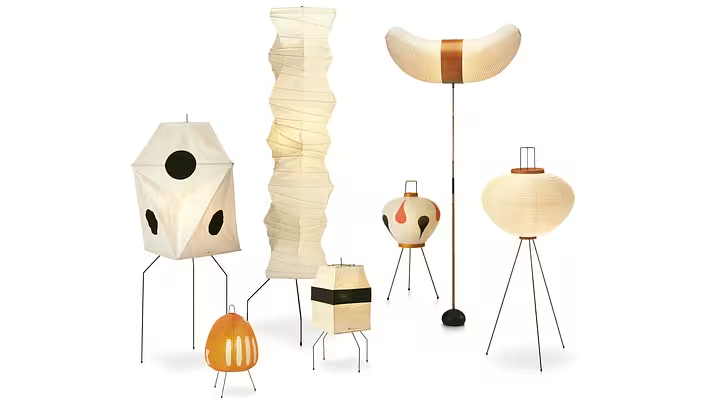
Many designers consider the light effect to be the main reason for the popularity of shōji. They transform ordinary daylight into an important element of the interior.
It is no coincidence that Japanese aesthetics pays so much attention to shadows, half-tones, and the play of light. Shōji have become one of the best tools for creating such an atmosphere.
How shōji are used
In a traditional Japanese house, shōji served several functions at once.
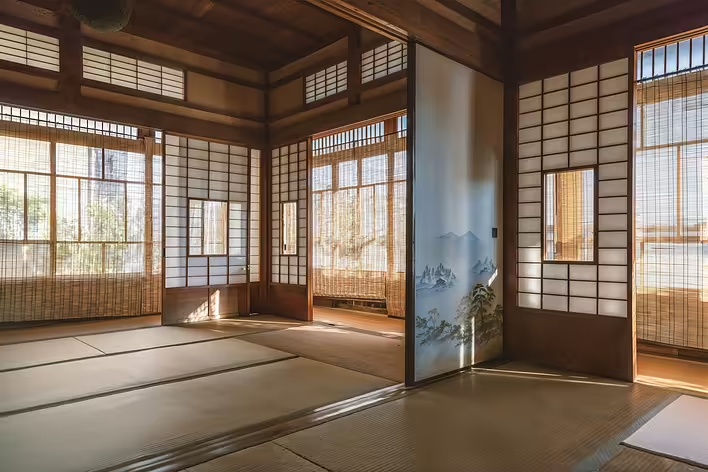
They acted as room dividers, allowing for quick changes in the layout of the home. One large room could transform into several separate spaces in just a few minutes.
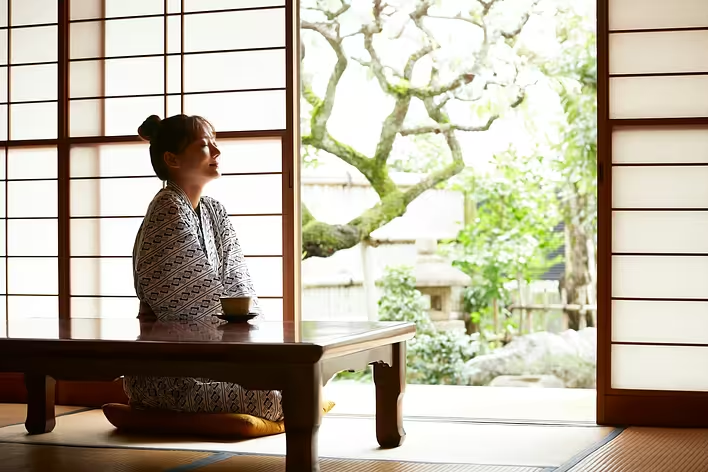
They were also used as internal window screens. Often, shōji were installed between the living room and the engawa veranda, creating a smooth transition between the house and the garden.
Today, the scope of use has become even broader. They can be seen in apartments, restaurants, hotels, tea houses, spa complexes, and offices. Designers use shōji for zoning spaces, decorating wardrobes, home offices, and even as decorative panels on walls.
How shōji differ from fusuma
People often confuse shōji with other Japanese partitions — fusuma.
The difference is quite simple. Shōji allow light to pass through thanks to the translucent paper. Fusuma, on the other hand, are completely opaque. They are made from a wooden frame covered with dense paper or fabric, providing more privacy.
In traditional houses, both types of partitions were often used simultaneously, complementing each other.
Advantages and disadvantages
The popularity of shōji can be explained by their numerous advantages. They visually enlarge the space, fill rooms with natural light, create a sense of lightness, and fit well into minimalist interiors.
Moreover, such constructions are eco-friendly and allow for easy changes in the layout of the home without major renovations.
However, there are certain disadvantages as well. Traditional paper is quite vulnerable to mechanical damage, poorly insulates sound, and does not provide complete privacy. That is why more practical materials are often used in modern homes.
Shōji in modern design
In recent decades, the popularity of Japanese aesthetics has significantly increased. Along with the trend towards minimalism, Scandinavian design, and the concept of "less is more," interest in shōji has returned.
Modern architects are increasingly adapting traditional Japanese solutions to European and American homes. Instead of paper, they may use frosted glass or polymer materials, but the principle remains unchanged: to create a light space filled with light and air.
At the same time, shōji have long ceased to be an exclusively Japanese interior element. They can be found in modern apartments, country houses, hotels, and even offices around the world. They blend beautifully not only with Eastern aesthetics but also with minimalist, Japandi, Scandinavian, and eco-design styles.
In a world where people constantly face information noise and an excess of things, shōji remind us of the value of simplicity. They show that sometimes, to create a beautiful interior, it is enough not to add new elements but to learn how to work properly with light, space, and natural materials.
That is why these lightweight paper partitions, born many centuries ago, remain relevant today, becoming one of the most recognizable symbols of Japanese culture and architecture.