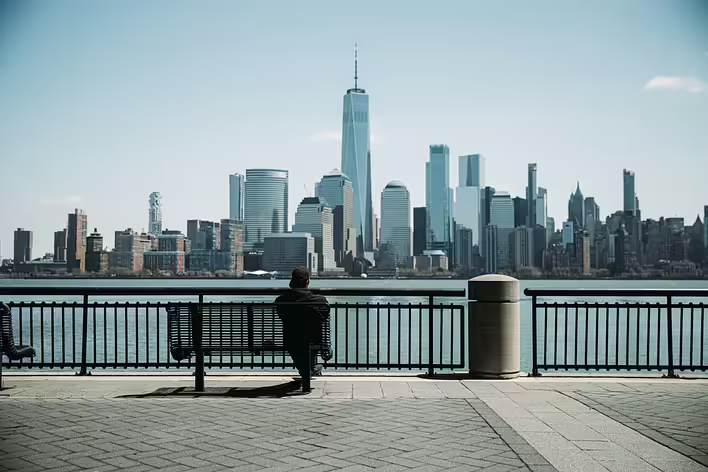
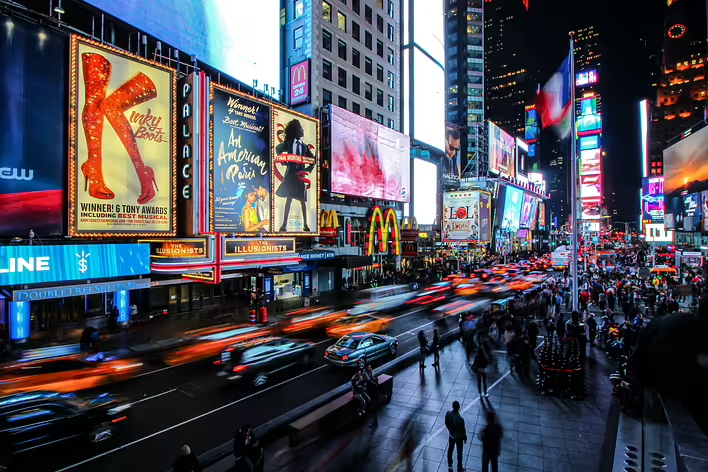
Living in a big city is associated with dynamics, opportunities and an endless flow of communication. It would seem that it is impossible to feel alone surrounded by millions of people. However, sociologists and psychologists note a paradoxical phenomenon: it is in megacities that people feel most isolated. This condition is known as urban loneliness.
Anonymity as a bond trap
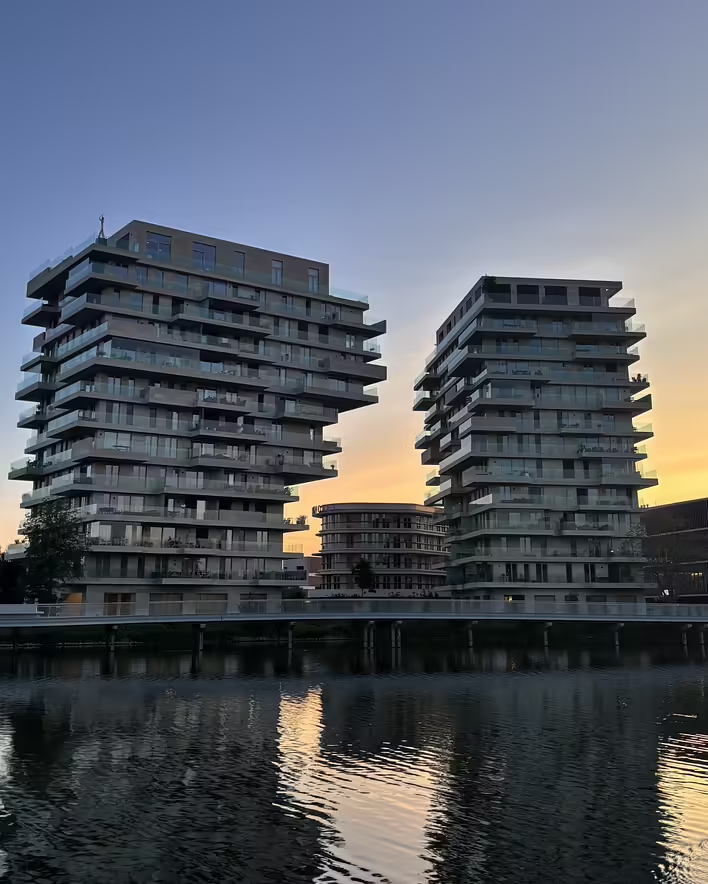
At first glance, the anonymity of a big city seems like an advantage — it gives freedom and the opportunity to be yourself. However, this same anonymity becomes a major obstacle to forming deep, meaningful connections. We live in high-rise buildings where neighbors may not know each other's names for years. Lack of sense of community and belonging to something greater leads to emotional alienation when people are physically close but socially and emotionally distant.
Social fatigue and fast pace of life
Modern life in the big city — is a continuous race. Careers, constant deadlines, long journeys in transport, endless flow of information — all exhaust. As a result, when free time is available, people often choose passive recreation over active communication. This «social fatigue» leads to people initiating meetings less and less, preferring virtual communication.
The illusion of connections in social networks
Social networks promise us to be «connected to the whole world, but they only create the illusion of communication. We see the idealized life of «friends», their travels, parties and successes, which increases the feeling of their own inferiority and isolation. Instead of forming real connections, we are watching someone else's life, and that deepens the gap between our reality and what we see on the screen.
VS metropolis Common city
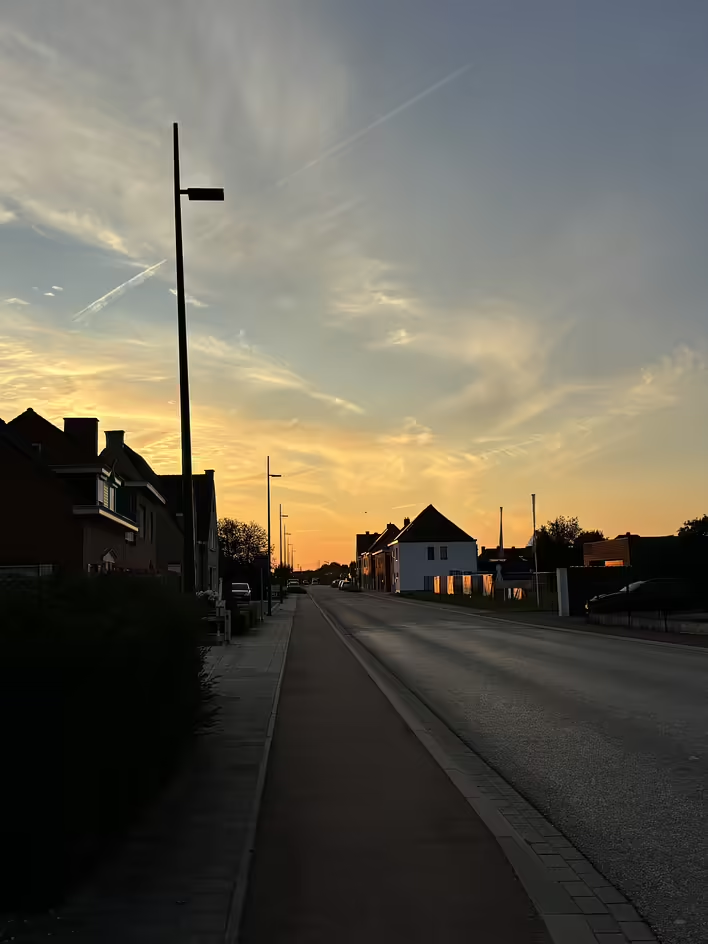
In a smaller city, where many know each other, a stronger social network reigns, where people know not only their neighbors, but also their families. This creates a sense of community and security, as there will always be someone willing to help if needed. But such a close community often leads to social control. Everyone knows what you do and it limits freedom, especially for those looking for non-standard ways in life.
A negative aspect of life in a big city, namely when it comes to exclusion, is chronic loneliness, which has serious mental and physical health consequences. Research shows that feeling isolated can lead to depression, anxiety, and increase the risk of developing cardiovascular disease.
Ways to overcome and the future of cities
Overcoming urban loneliness — is a complex task that requires personal efforts and changes at the level of urban planning. To help people find like-minded people and form real connections, you need to create local communities, interest circles, and volunteer movements. In addition, urban planners propose to create so-called «third places» <TAG1> parks, libraries, coffee shops where people can meet and socialize casually.
After all, choosing between a big and a small city — is always a compromise. The metropolis provides freedom and endless possibilities, but the cost is a feeling of isolation and high levels of stress. A small town gives a sense of community and stability, but often limits freedom of choice and opportunities for development. After all, it all depends on your priorities.
Share this post
Cite post
Select and copy the required citation standard:
This post doesn't have any additions from the author yet.