The dependence on quick dopamine is perhaps one of the most important topics that defines our everyday life in the age of digital technology. It is a biological mechanism that underlies our motivation, habits, and perception of the world.
What is dopamine and how does it work?
Dopamine is not the "happiness hormone," as it is often called, but rather the "anticipation hormone." Its main function is not so much to bring pleasure from the outcome as to motivate us to achieve it. When our brain senses a potential reward (for example, a sweet dessert, an interesting video, or a like on social media), it releases dopamine, which creates a feeling of desire and prompts us to act. This reward system was vital for our ancestors, driving them to seek food and build shelter. The more complex and prolonged the process, the greater the reward at the end.
The dopamine loop in the modern world
The problem is that modern technologies, fast food, and other "products" of instant gratification have broken this natural system. Now we can receive huge doses of dopamine instantly and with minimal effort.
For example, when we scroll through our social media feed, each update, like, or new comment is like a miniature lottery. We don’t know what we will get next, and this unpredictability causes our brain to release dopamine, prompting us to scroll further and further. The tasks set for players in video games are designed to keep them in a "dopamine loop," and food high in sugar, fats, and salt is specifically engineered to trigger a strong dopamine spike.
Consequences of dopamine addiction
The problem lies not in dopamine itself, but in how we obtain it. Our brains are programmed to receive rewards, but we abuse this mechanism by replacing "slow dopamine," which comes from achieving long-term goals, with instant gratification.
The more quick dopamine we consume, the less sensitive our receptors become. To achieve the same level of satisfaction, we need increasingly stronger stimuli.
Our brains become accustomed to constant changes in stimuli. Tasks that require prolonged concentration (such as reading a complex book, learning a new language, or working on a project) seem boring to us. We lose the ability to find pleasure in the process, not just in the result.
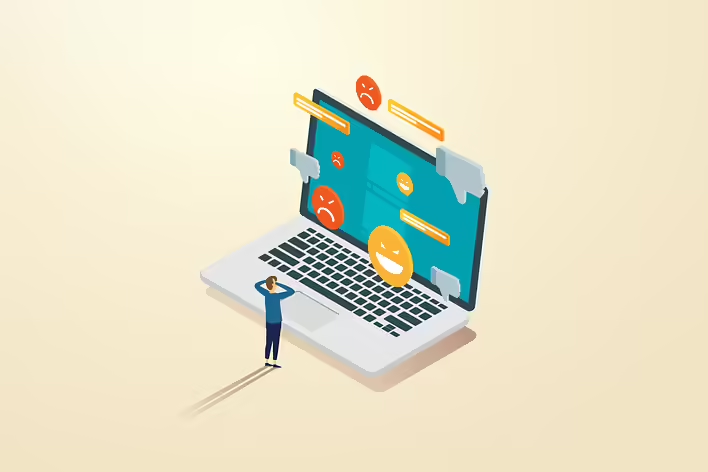
Constant dopamine "swings" lead to emotional burnout, anxiety, and apathy. When we don’t get our usual dose of instant gratification, our mood worsens, and we feel unhappy.
How to restore balance in a dopamine-driven life
I have realized one important truth: we do not have to completely give up technology to regain control. The key to solving the problem is not a total rejection of sources of quick dopamine, but mindful consumption and the ability to find balance. This means we can set certain limits, such as time restrictions on social media use, and replace mindless scrolling with activities that provide more lasting satisfaction.
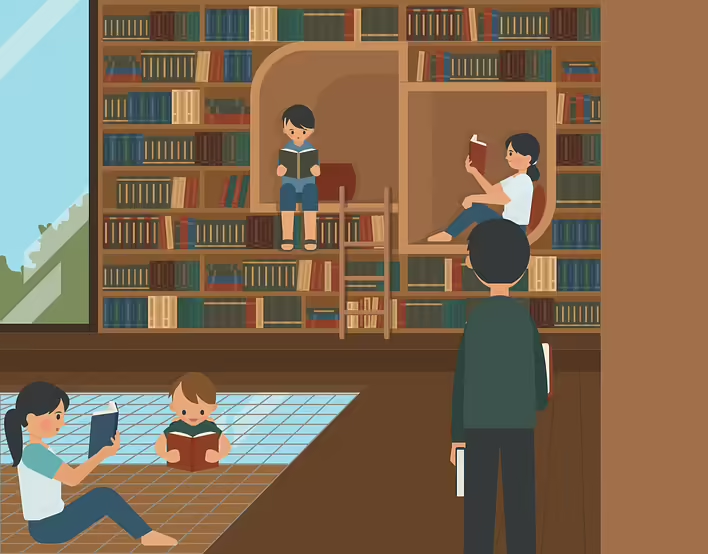
I am convinced that true joy comes from "slow dopamine." This is the dopamine we get from activities that require effort and patience. Sports, creativity, reading, and spending time with loved ones all stimulate our reward system, but in a different, more sustainable way. It gives us a sense of achievement, growth, and genuine enjoyment.