Hello everyone who wants to start 3D printing and everyone who has started and is already warming up their fingers to write critiques and advice!
I had been thinking about a 3D printer for several months after seeing how others help the Armed Forces of Ukraine. But I only dared to buy one recently. In such a short time, I have already started to understand (and am still figuring out) the basics of this craft.
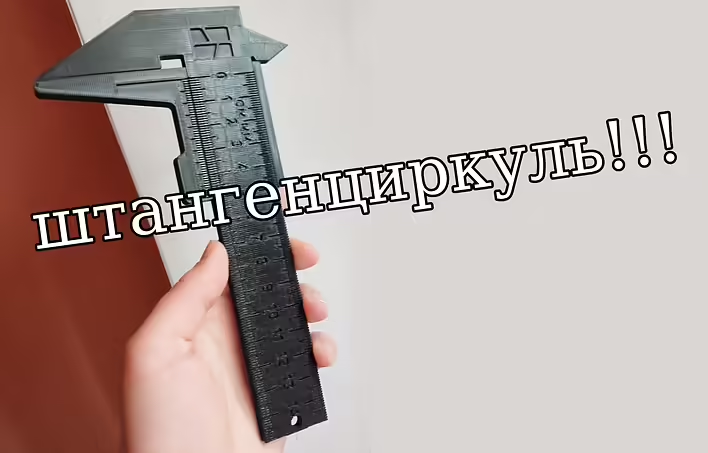
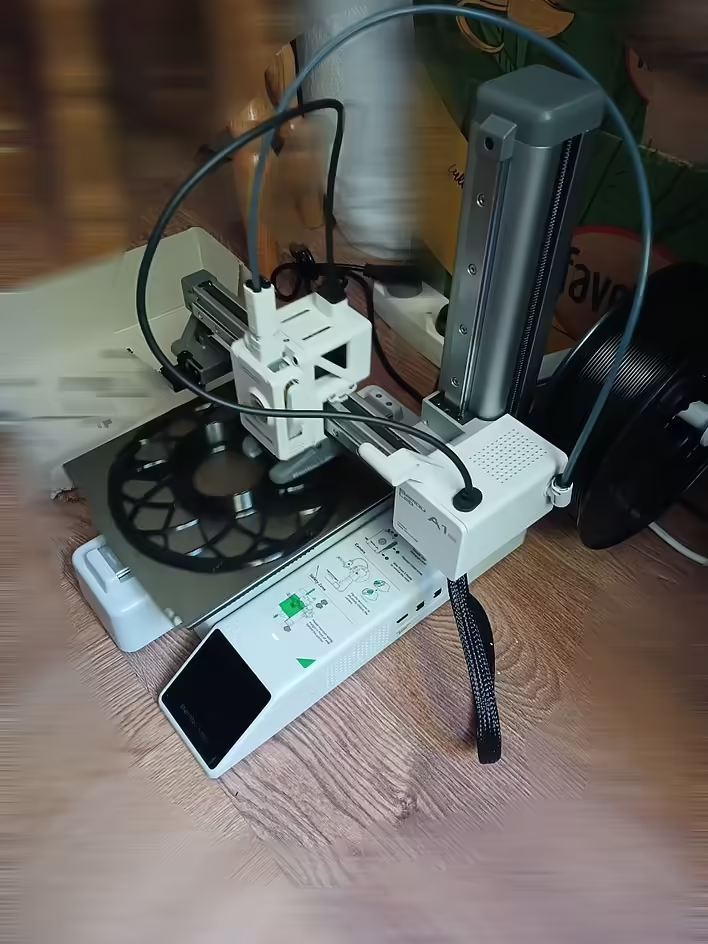
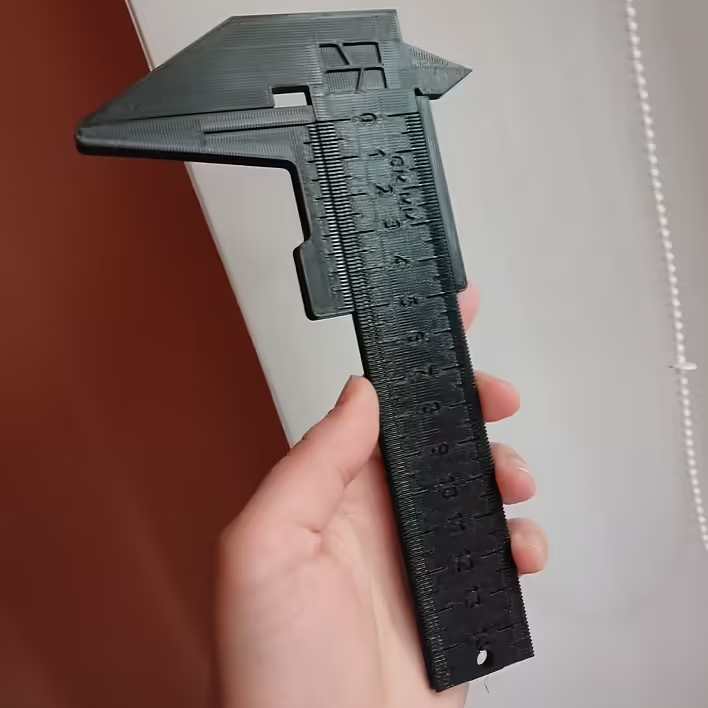
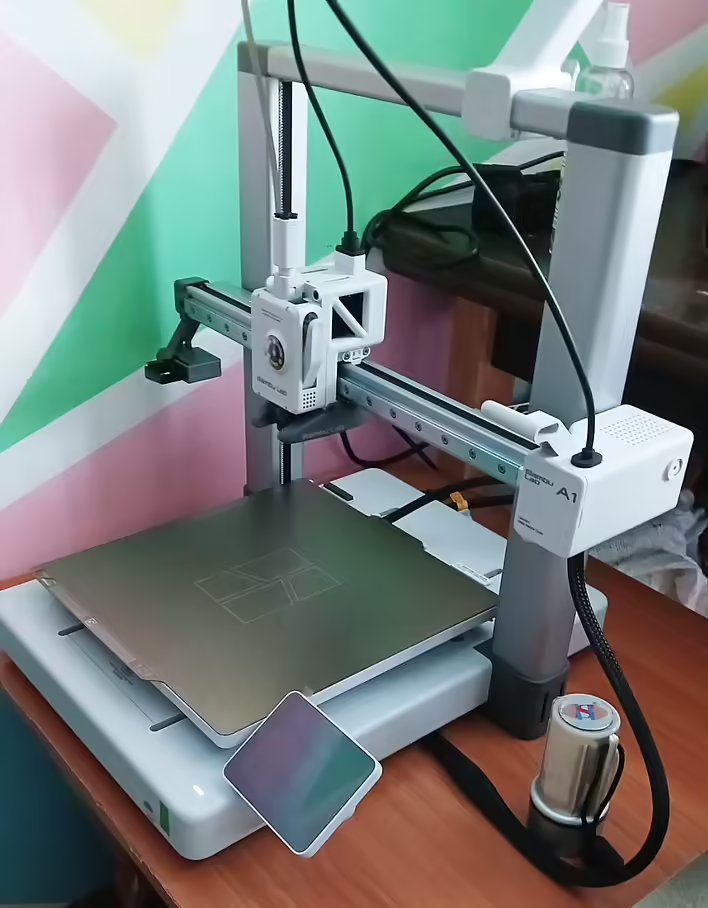
So, the foundation of it all is the printer. I have a BambuLab A1 mini. I saw it in a review and realized it was for me. It is easy to assemble and very understandable for a beginner. If the budget allows, I would recommend getting a larger BambuLab to help the Armed Forces more effectively. But if the budget is tight, the price of the mini (10,400 UAH) will hit hard as it is. After all, besides the printer, various tools and accessories are needed. For example, an additional nozzle (0.2 or 0.6 depending on needs), a cleaning brush for the nozzle, a caliper (what? why?), a filament dryer, etc.
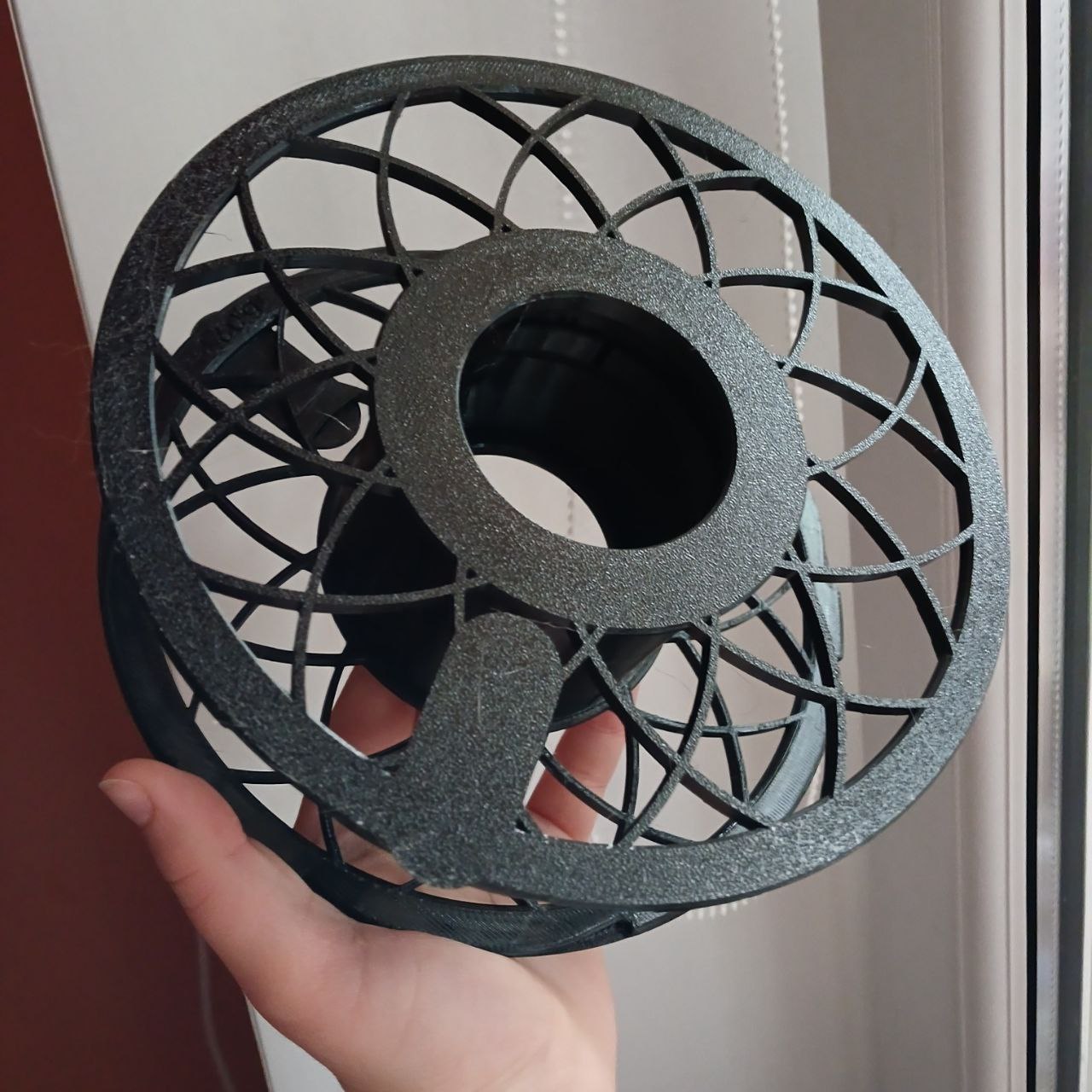
Мінік друкує котушку
BambuLab A1 mini has a print area of 18x18x18 cm. It's enough for printing figurines, various small accessories, and parts (even several pieces at once, as long as they fit on the table). This printer is one of the recommended ones in the PrintArmy and is quite good, but it somewhat limits the choice of what can be printed.
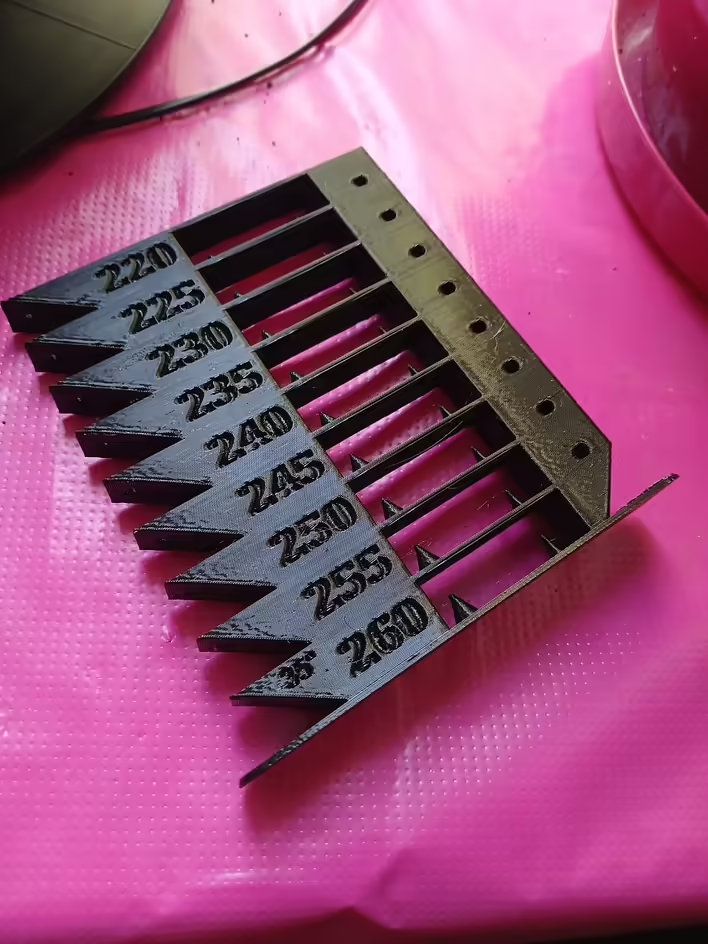
The cost of the printer is not the main hit to the budget, as plastic runs out quickly and costs from 270 to 1000 UAH per kg (depending on the type, manufacturer, etc.). If you are in the PrintArmy, you will be able to buy more economically later, but this is not the only source of cheaper plastic. Recently, I bought PETG for 270 UAH per kg (with a purchase of 6 kg) on Telegram, and compared to buying PLA, I consider that I saved.Plastic comes in several types: PLA, PETG, ABS, TPU. For now, I am only using PLA and PETG. I like PLA; at least I was lucky to work with it without calibration (which I learned about later) without defects and with satisfaction from the result. PETG is stronger and is used more often for the Armed Forces, but it is more finicky. I spent several hours calibrating the speed and flow dynamics, as well as the temperature. The print had surface defects, so I couldn't stop until I got a satisfactory result. Also, it is hygroscopic, so it needs to be stored with a silica gel bag or dried in a special dryer (which is on my shopping list).
калібрування температури
Overall, I have seen many downsides that are worth mentioning to those who are still hesitating to buy a 3D printer.
Disadvantages:1. The cost of the starter kit: this includes the printer, components (nozzles, etc.), filament, glue, etc. You might need a heat gun to melt the webbing. I have one from my previous hobby (decorative candles), so it might come in handy again (or not, who knows).
2. Calibration. The BambuLab automatically calibrates the bed, so dancing with a tambourine a caliper seems unnecessary. One of the reasons I chose Bambu over other printers is that they seemed complicated and intimidating. However, filament calibration is still necessary. In Bambu Studio, there is only speed and flow dynamics calibration; temperature and other settings can be calibrated by uploading optimized models, for example, this one: https://makerworld.com/uk/models/101483-petg-temperature-tower-temp-tower-g-code?from=search#profileId-1269620
3. Noise and vibration. Despite the fact that the mini is quite quiet, 5+ hours at one table made me feel uncomfortable. Therefore, it's better to have a separate place for the printer. Bambu is equipped with a camera, so you can monitor the work from another room, and in case of anything, you will be notified of an error.
4. The printer requires maintenance. From time to time, it needs to be lubricated, the nozzle cleaned, etc. There are videos on how to do this, so I hope I will figure it out. But in case of a breakdown, I will complain and throw my hands up.
5. Printing for the Armed Forces is a responsible task. For yourself, you can cut corners, save somewhere, but you can't do that with the needs of the army, as it could lead to harm. In the PrintArmy, before printing a batch, you send a video of your product; if the product is sturdy, you can print and send it. Personally, I check each new batch for strength. If the product turns out to be brittle, then something went wrong in the print, and it's worth discarding what was printed. This leads to the next disadvantage.
6. Material waste due to calibration and defects. To calibrate the plastic, you need to print certain models. If the plastic is poorly calibrated or you specified incorrect parameters in the slicer, the printed material goes in the trash. At first, I had little waste, but experience grows from mistakes.Maybe I missed some downsides, but I want to write about something good now.
Advantages:1. If you are printing for the Armed Forces, you are bringing victory closer. This is the main advantage. If not for the Armed Forces, then for the sake of the Armed Forces.
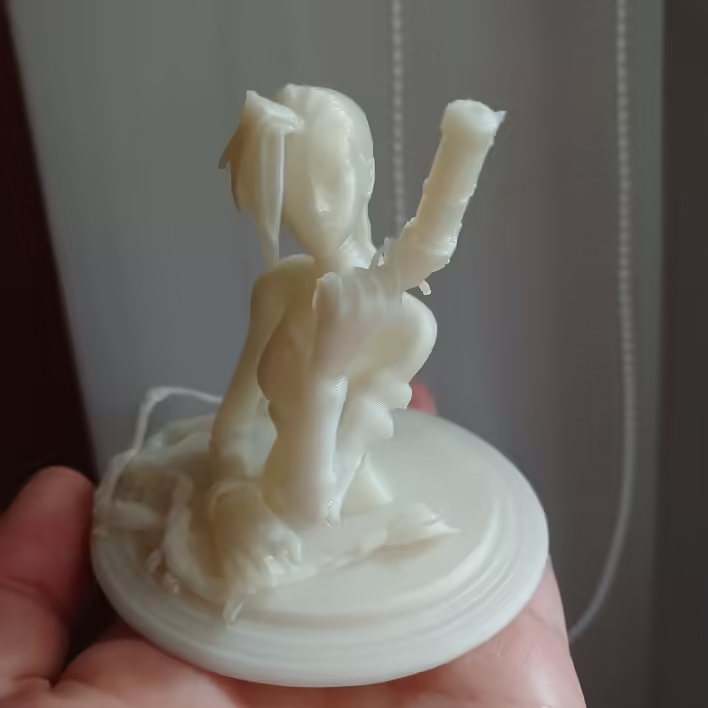
2. You can print a lot of cool stuff. Anime figurines, reusable spools (spare filament is cheaper), calipers)))
In short, there are many downsides, but if you really want to start, you shouldn't be afraid of the printer. You should be afraid of an empty wallet after these purchases...Not everyone will find this type of volunteering suitable. However, I decided to take the risk and so far I am satisfied.There is still much to learn, as there is a reason to print ^_^