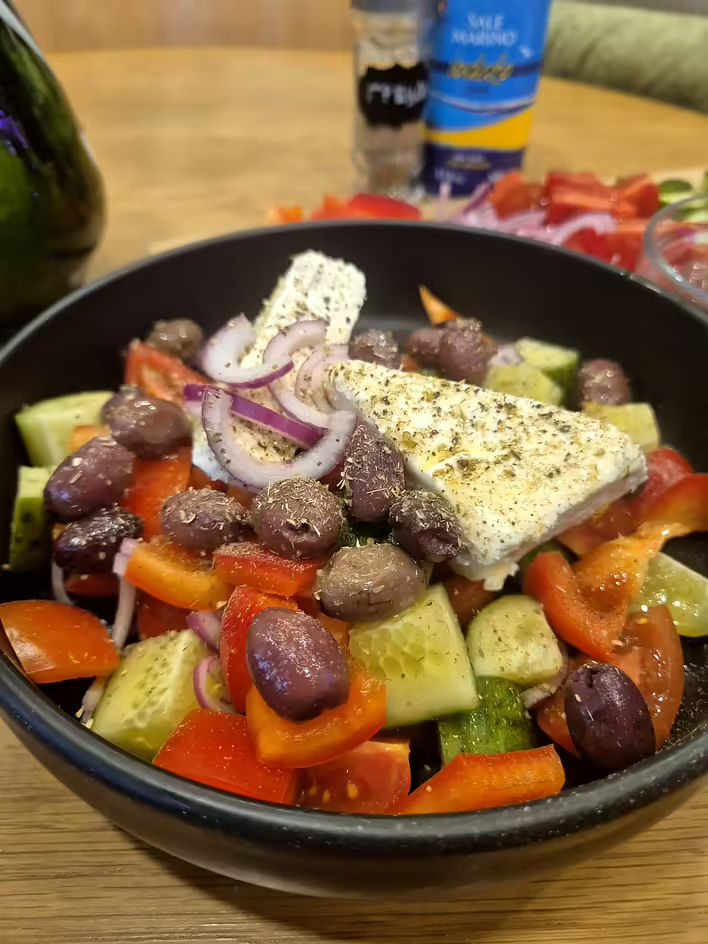
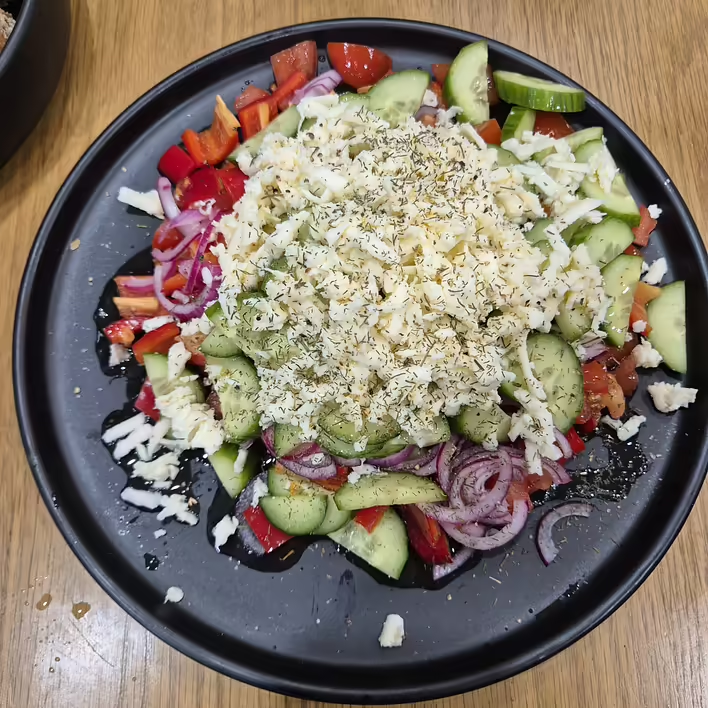
Greek salad, or “horiatiki” (χωριάτικη σαλάτα) — is a dish that embodies the essence of Mediterranean cuisine: simple, bright, fresh, incredibly tasty, and also mega-healthy. Its roots trace back to the traditions of rural areas in Greece, where farmers prepared the salad with whatever was at hand: ripe tomatoes, crunchy cucumbers, feta from the nearest dairy, olives, onions, and fragrant spices.A true Greek salad does not contain lettuce, and olive oil is used not as a dressing but as the main component that brings all the ingredients together. In different regions of Greece, the salad may vary slightly: on the islands, capers are added, while in the mainland, green peppers or even roasted eggplants might be included.Today, Greek salad has become part of global gastronomy, adapting to the tastes of Europeans, Americans, and even Asians — some replace feta with soft goat cheese, others add chicken or even quinoa. But the classic remains unrivaled. It is the recipe for the classic variation that we want to share in this post.
Time required: 10-15 minutes
Difficulty: 2 out of 5
Cost: low in the vegetable season, moderate in the off-season
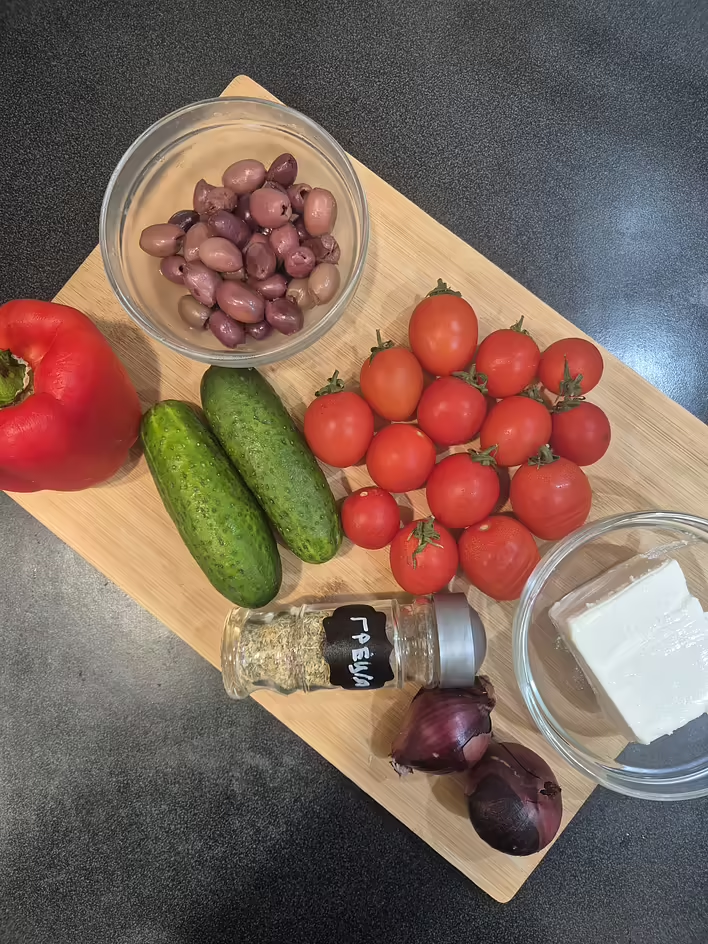
We will need:
ripe cherry tomatoes
fresh cucumbers
bell peppers
red onions
feta cheese
olives (we used Kalamata)
olive oil
salt, pepper
herb mix “Greek”
Preparation
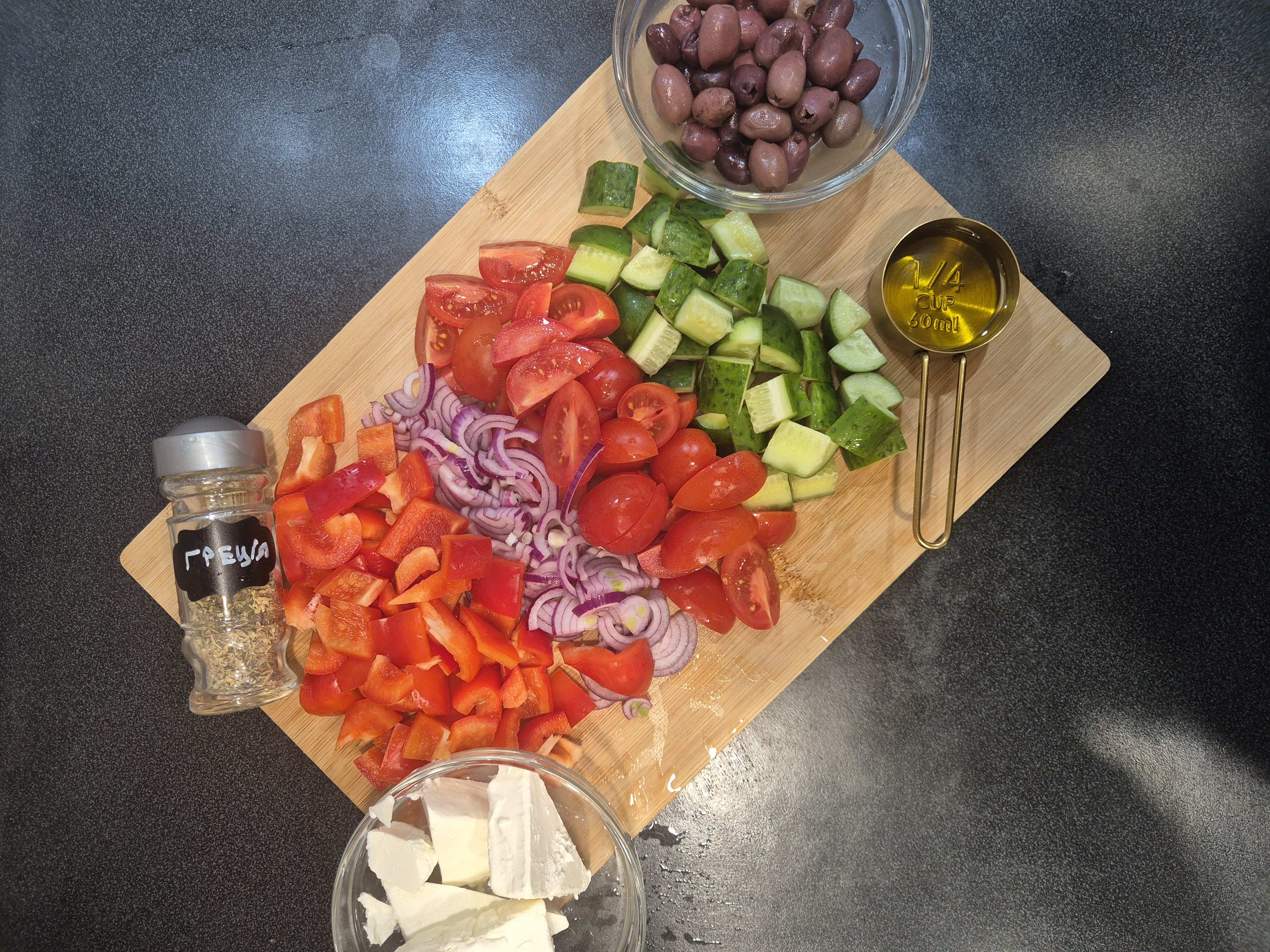
Chop the vegetables as is customary in Greece – quite coarsely. Cut the tomatoes into quarters, the cucumber and pepper into large cubes. Slice the onion into half-rings. Keep the feta in large triangles to maintain its structure.
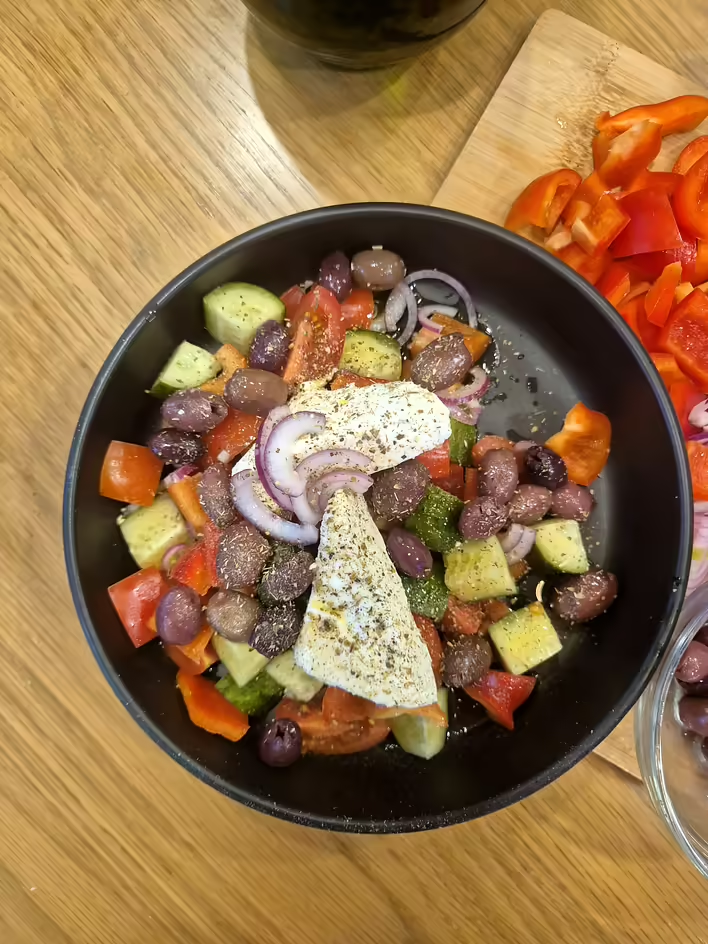
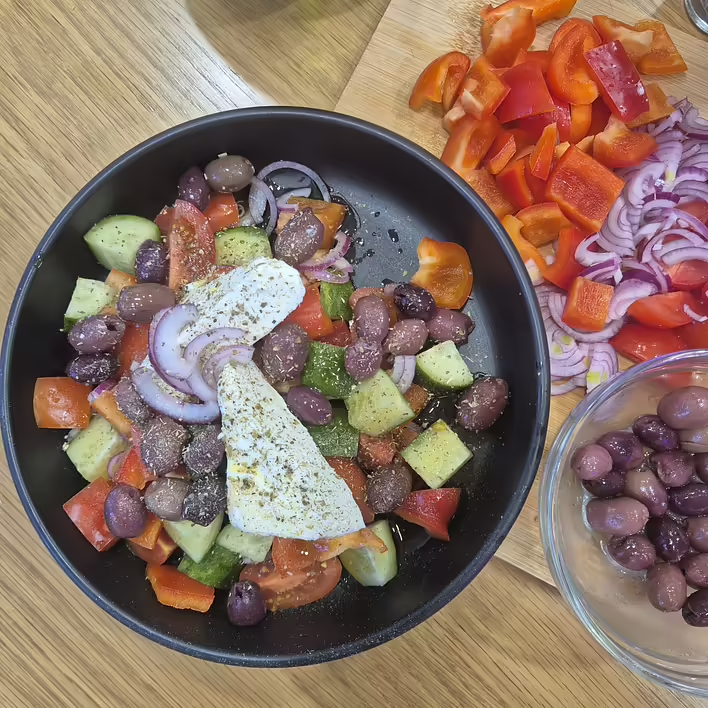
In a deep bowl, layer all the vegetables, adding the Kalamata olives. On top, place the feta cheese, sprinkle with salt, and generously add the dried herb mix, with oregano being the dominant flavor. Drizzle everything generously with extra virgin olive oil. And no vinegar or lemon juice — just oil and spices, as in the traditional recipe.
Interesting facts about Greek salad
In Greece, salad is rarely served as a standalone dish — it is always part of a larger meal.True feta is made only from sheep's milk or a mixture of sheep's and goat's milk. If the cheese is made from cow's milk, it is no longer feta.Oregano is considered Greece's “national” spice — its aroma perfectly complements cheeses and vegetables.Kalamata olives appear in dishes whole — even with pits — to retain their juice and flavor.In Greece, the salad is not mixed immediately — each guest mixes their portion on their plate.
This is exactly what we did ;)
Greek salad is not just food. It is a piece of summer, sea, and sun on a plate. If you want a quick, nutritious, and vibrant dish — it always wins among the options. Plus, it pairs wonderfully with a glass of white wine or a piece of crusty bread. Bon appétit!