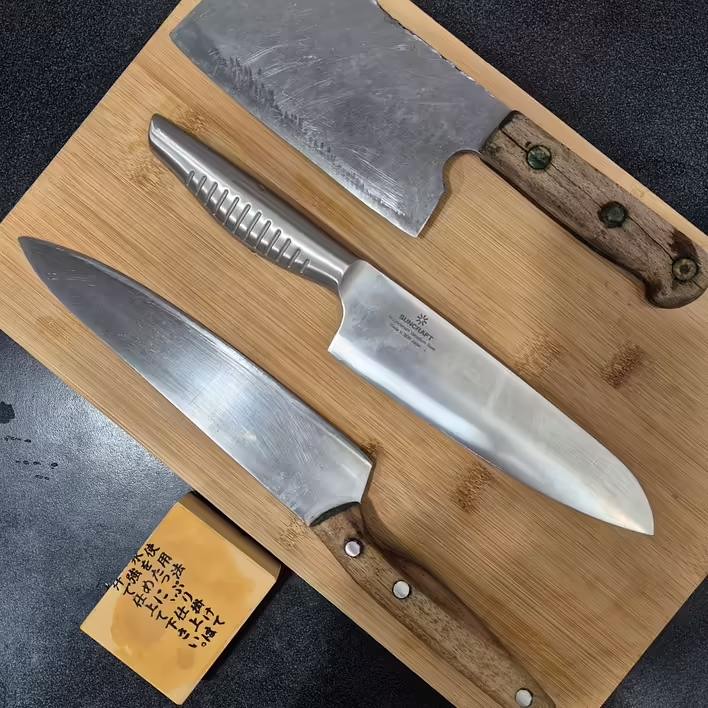
Santoku knife is a versatile tool of Japanese cuisine that has become popular worldwide due to its convenience and multifunctionality. The name "santoku" translates from Japanese as "three virtues" or "three tasks," symbolizing its versatility: it is perfect for slicing, dicing, and chopping. This knife has become an indispensable assistant not only for professional chefs but also for cooking enthusiasts. We have also discovered this kitchen tool. Recently, friends gave me a wonderful gift, namely a Japanese Suncraft santoku kitchen knife. Its photo often appears in our culinary blog. The development of this knife involved the renowned industrial designer Motomi Kawakami. In general, this knife has quite an interesting creation history, worthy of a separate post. However, while we haven't done that yet, you can read about it here. In this post, we will discuss the main characteristics of the santoku knife, what it is used for, and how to care for it.
Main characteristics of the santoku knife
Blade shape. The blade of the santoku knife has a characteristic straight shape with a slight curve towards the tip. Its length usually ranges from 12 to 18 cm, making it convenient for working with ingredients of various sizes.
Material. Traditionally, santoku knives are made from high-quality stainless steel or carbon steel. This ensures the blade's sharpness and durability.
Sharpening angle. Unlike European knives, the santoku has a smaller sharpening angle (approximately 15-20 degrees), which provides its exceptional sharpness.
Lightness and balance. Thanks to its balanced design, the knife is easy to handle, which is important for quick and precise cutting.
How to use a santoku knife?
The santoku is perfect for working with various ingredients:
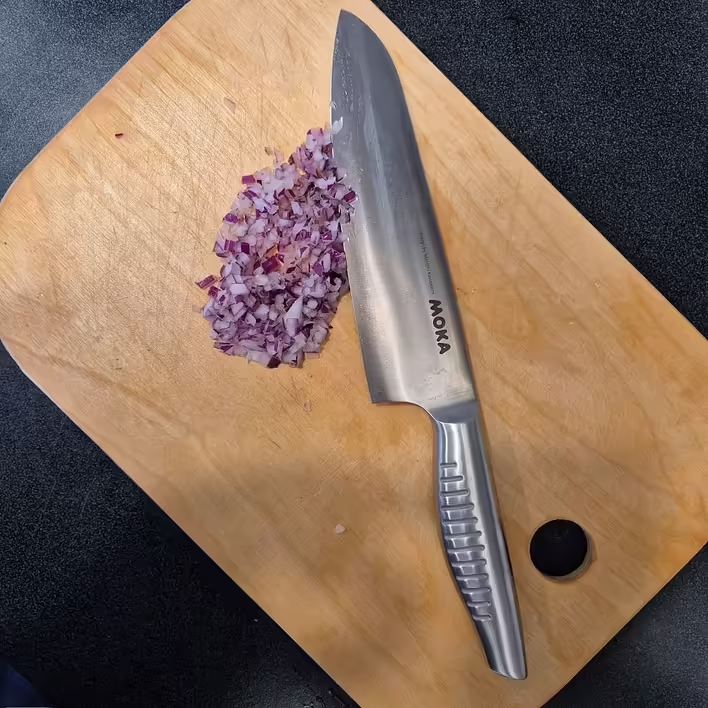
Vegetables: for thin and even slicing of carrots, onions, or cucumbers. This is done extremely easily thanks to the wide blade.
шинковка цибулі ножем сантоку
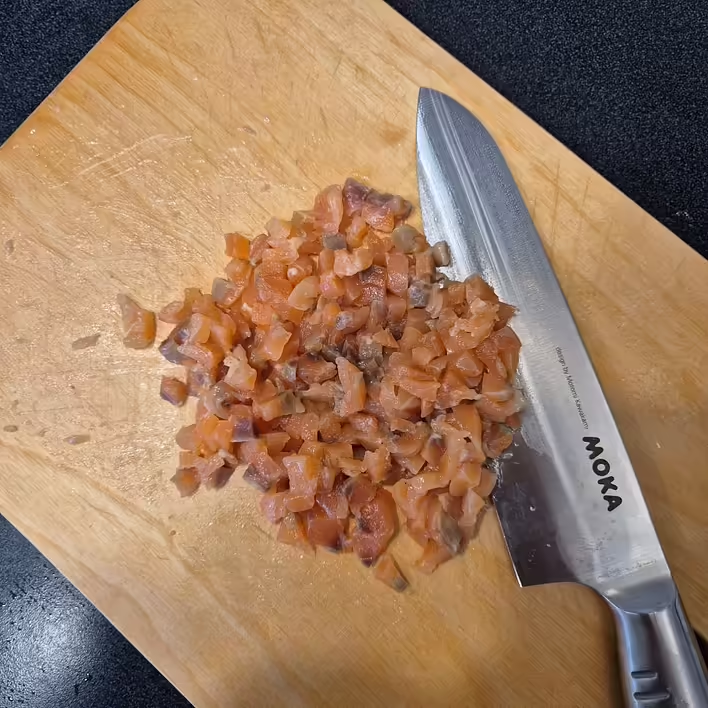
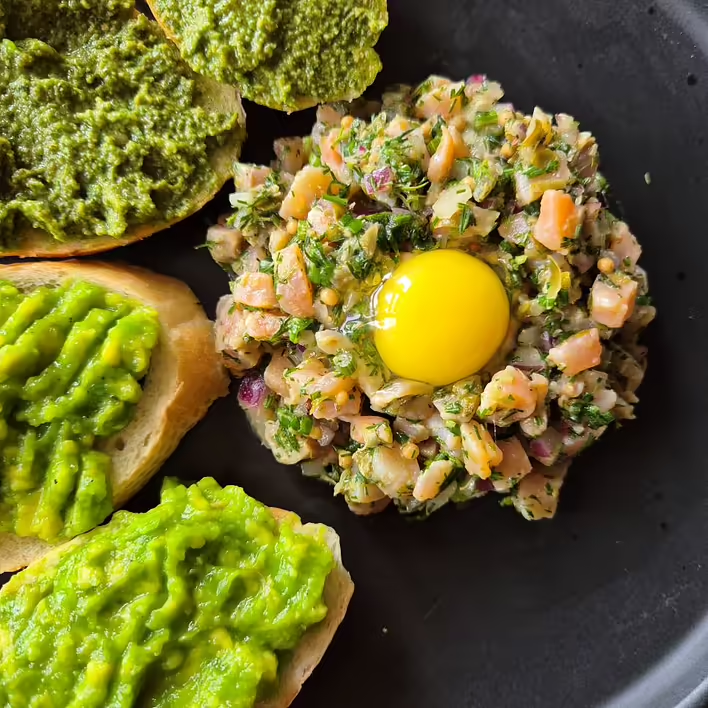
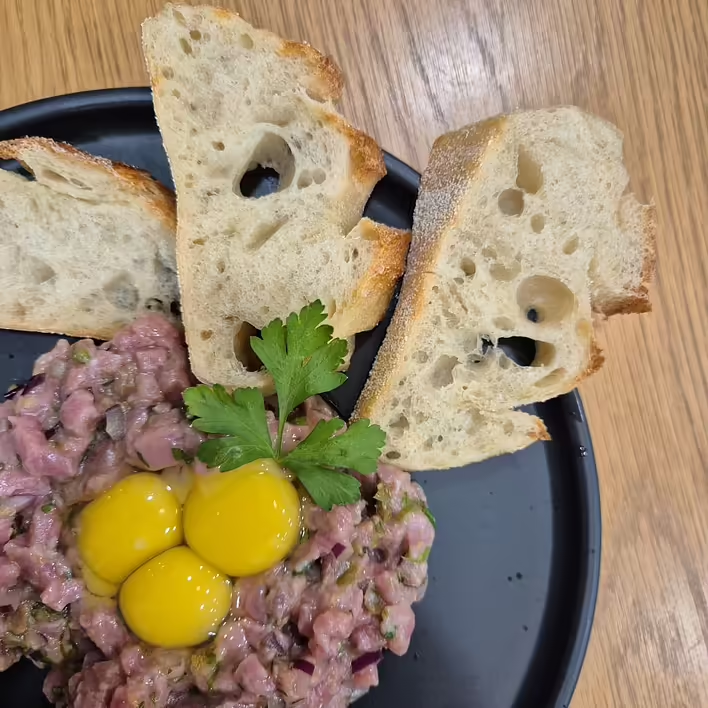
Meat and fish: the santoku is suitable for preparing fillets and evenly chopping thanks to the sharpness of the blade.
нарізка філе лосося для приготування тартару
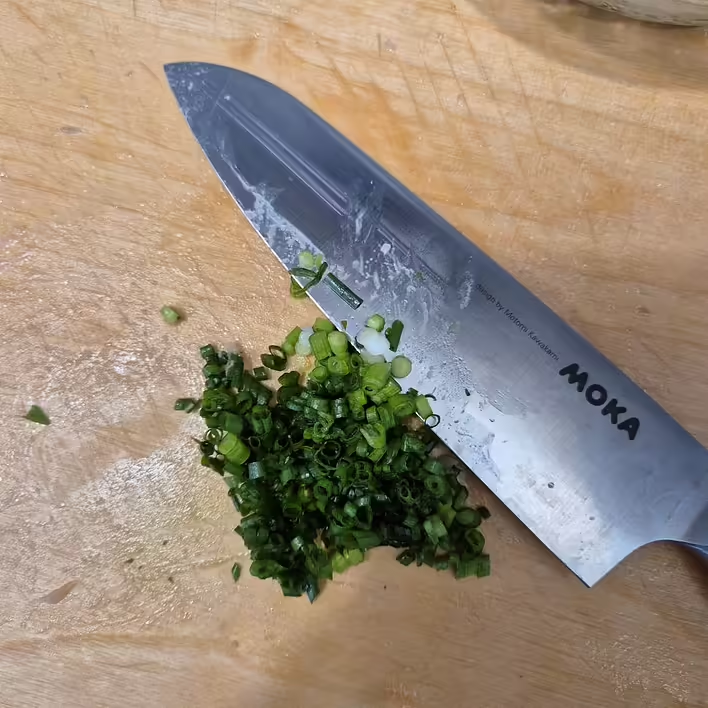
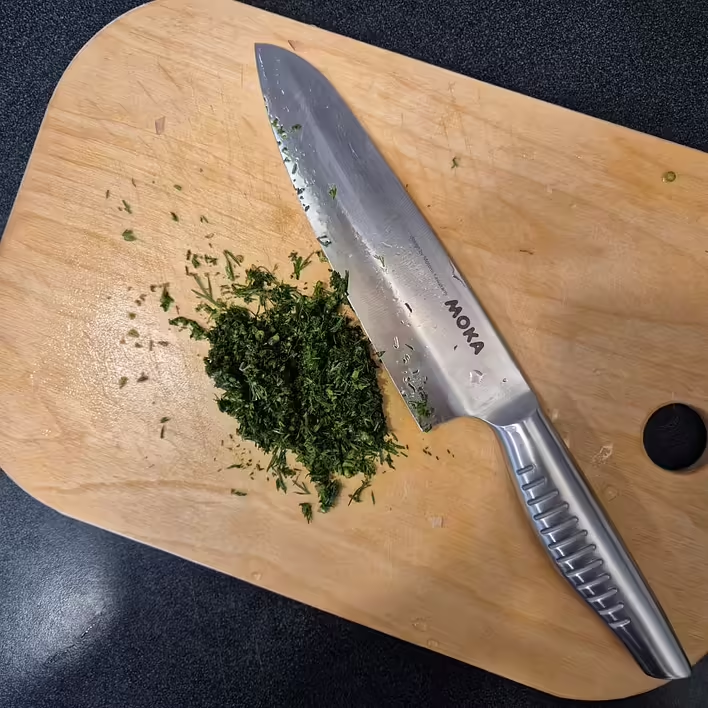
Herbs and spices: quickly chopping greens or mincing garlic becomes significantly easier with this knife.
шинкування цибулі
шинкування кропу
There are santoku models with indentations on the blade. Such design features prevent food from sticking during cutting.
Santoku and its differences from European knives
Compared to classic kitchen knives, the santoku has a somewhat wider blade, allowing it to also be used as a spatula for transferring chopped ingredients into a dish. Additionally, its compactness and lightness make it more convenient for everyday use.
How to choose a quality santoku knife?
When choosing a knife, it is important to pay attention to several key criteria:
Blade material. High-quality steel ensures durability and ease of care. Our Suncraft Moka knife uses a molybdenum-vanadium alloy, which gives it greater resilience than carbon steel.
Handle comfort. It should be ergonomic so that the knife is comfortable to hold even during prolonged use. Again, let's draw an analogy with the Suncraft Moka. Its handle and blade are one piece. The handle is hollow inside, which allows for achieving an ideal weight balance and reducing the overall weight of the tool (no, we are not paid to advertise Suncraft))))
Weight. An excessively heavy knife can be uncomfortable, especially for home use.
The price range for santoku knives varies from affordable models at $20-30 to professional options costing several hundred dollars.
How to properly sharpen a santoku knife?
Proper sharpening of the santoku knife is the key to its effective performance. Due to the specific sharpening angle (15-20 degrees), this knife requires delicate care. It is best to use Japanese water stones for sharpening, which provide precision and control. The process includes several stages:
Preparing the stone. Before starting work, soak the stone in water for 10-15 minutes to ensure its surface is moist.
Sharpening angle. Hold the knife at an angle of 15-20 degrees to the surface of the stone. This angle is important for maintaining sharpness and the correct geometry of the blade.
Movements. Sharpen the blade with even circular or sliding movements from the base to the tip. Alternate sides of the knife to avoid unevenness.
Checking sharpness. After sharpening, test the knife on a sheet of paper: a sharp blade should easily cut through it.An alternative can be a ceramic honing rod, which is suitable for regular touch-ups of the knife's sharpness. However, a honing rod cannot replace full sharpening.
Thus, the santoku knife is not just a stylish kitchen attribute. It is a powerful tool for preparing any dishes. With it, the cutting process becomes faster, more precise, and more aesthetic.