I decided to add more information about the connection - the slab and foam for the printer. Here is my experience of pouring the slab for my P1S. But let's discuss what it is.
If you place a 3D printer directly on a table, it transmits vibrations to the furniture, and they start to "hum" along with it. A concrete slab partially solves this problem, but not completely. The best effect occurs when there is a layer of secondary foam under the slab.
What is this foam
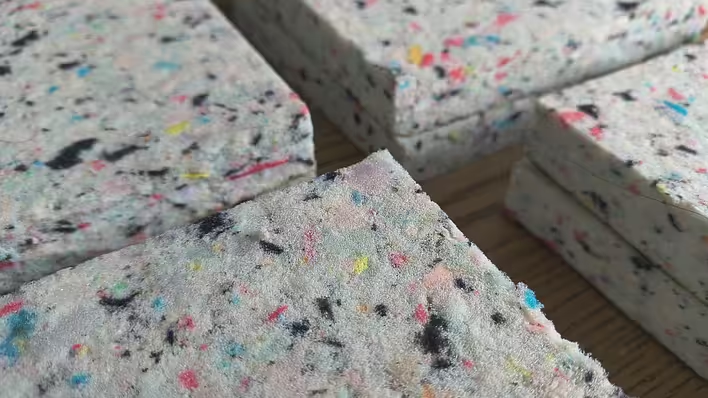
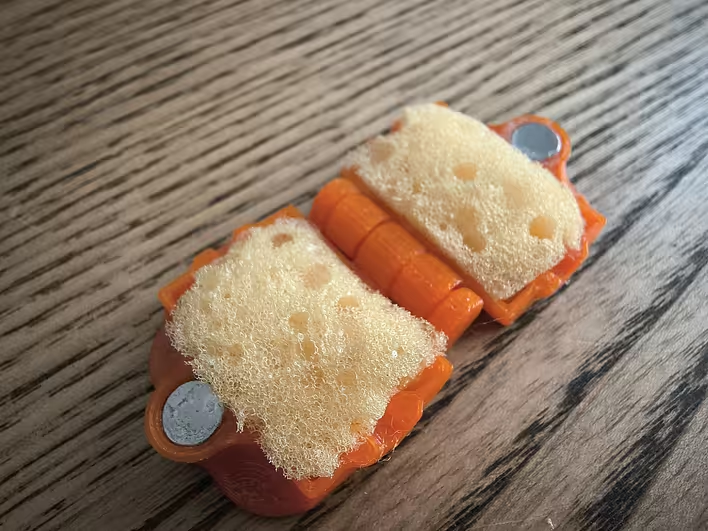
Secondary foam is a dense material made from crushed polyurethane remnants. It is pressed into blocks, making it heavy, elastic, and slightly "grainy" inside.
Its main property is that it not only is soft but also dampens vibrations.
How foam works with a concrete slab
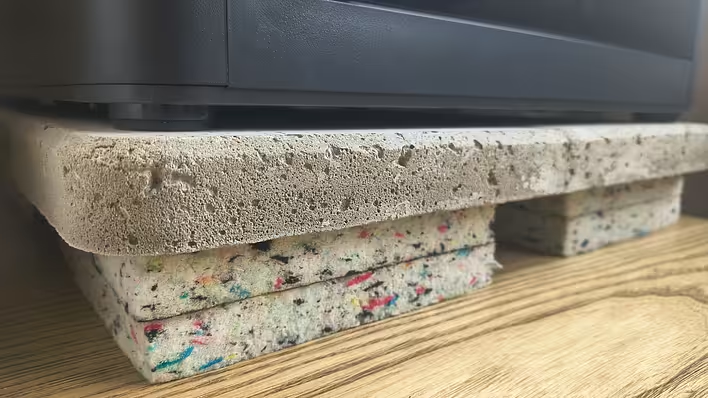
I use a slab that is 40×40 cm thick, approximately 2.5 cm, weighing about 10 kg. Its task is simple - to add mass. The heavier the base, the harder it is for the printer to shake it.
But if this slab is placed directly on the table, the vibrations still transmit further. This is where the foam is needed. It acts as a "break" between the slab and the surface, preventing vibrations from transferring to the furniture.
Together, it looks like a simple system: a heavy slab on top and an elastic layer underneath.
Why this is beneficial for 3D printing
Modern printers move very sharply. They quickly change direction, accelerate, decelerate, and all this creates short bursts of vibrations.
Without a damper, these vibrations start to spread across the table and can even amplify through resonance. This creates noise, buzzing, and sometimes even slight defects on the model.
Why concrete alone is not enough
Concrete adds stability but does not isolate. It simply "transmits" vibrations further, but in a more massive way. Therefore, the effect exists, but it is not maximal.
When foam is added, it breaks the rigid contact and dampens these vibrations. That is when the difference becomes really noticeable.
What is the result
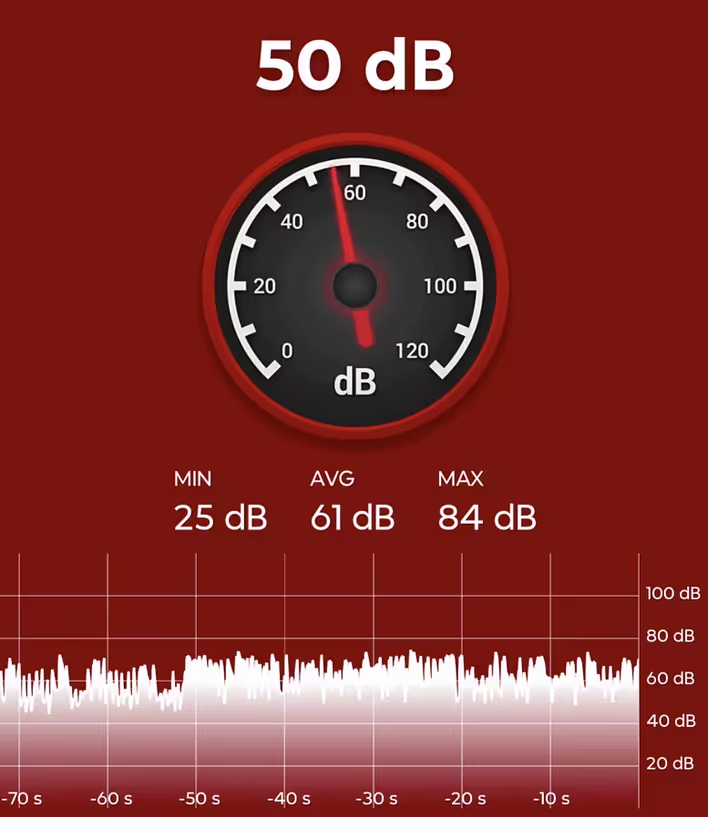
After such a combination, the printer becomes quieter. The hum of the furniture is less audible, and there are fewer vibrations in the table and floor. The printer itself operates more stably at high speeds, especially when it sharply changes direction.
The concrete slab provides mass, while the secondary foam provides isolation. Separately, they work partially, but together they offer a simple and inexpensive way to significantly reduce the vibrations of a 3D printer without complex anti-vibration systems. In my case, I felt a reduction in vibration. But my table shakes, and I need to work on it separately.



![[Fixed] Error 0300-8010 2003191 and 0300-0300-0001-0001 on P1S](https://cdn.tseivo.com/8doj09ufk2fmqvytnih0al9dypgf)