This content has been automatically translated from Ukrainian.
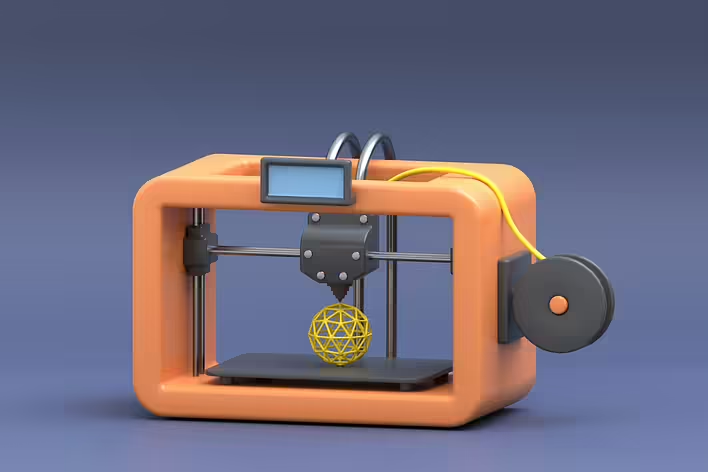
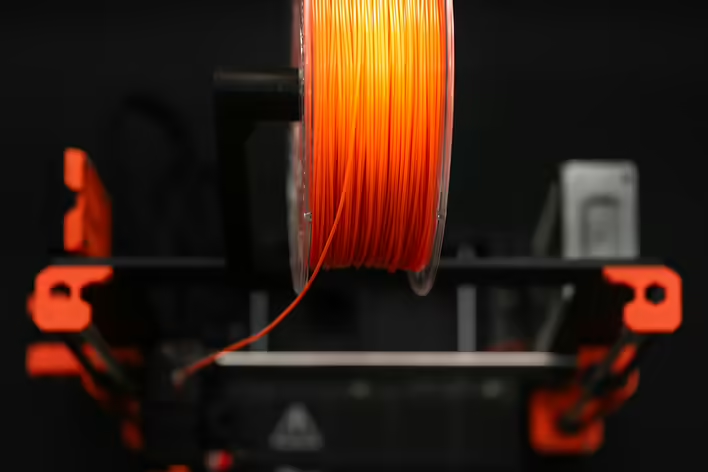
Filament is a consumable material used in 3D printers for layer-by-layer creation of objects. It is most commonly made in the form of a thin thread of plastic wound onto a spool.
Why this name?
The word filament comes from the Latin filum — "thread" and the English filament — "fiber, thread-like structure".
This name has become established in 3D printing because the printing material looks like a thin plastic thread that is fed into the printer's extruder.
Filament in 3D printing can also be referred to as:
- 3D printing plastic (3D printing plastic) – a general term for various types of filaments.
- Printing thread (Printing thread) – a less common name that indicates the form of the material.
- Polymer thread (Polymer thread) – emphasizes that the filament is usually made from polymers.
- 3D printing string (3D printing string) – sometimes used due to its similarity to a string, hair, etc.
- Spool with resin/plastic (Spool with resin/plastic) – this may refer to the filament itself along with the spool.
Popular types of filaments
- PLA (polylactic acid) – biodegradable, easy to print, suitable for decorative items.
- ABS (acrylonitrile-butadiene-styrene) – strong, heat-resistant, used for functional parts.
- PETG (polyethylene terephthalate glycol) – combines the strength of ABS and the ease of printing of PLA, moisture-resistant.
- TPU (thermoplastic polyurethane) – flexible material for printing elastic items.
How to choose filament?
The choice depends on the purpose of the printed object. For prototypes and decorative models, PLA is suitable. If strength and heat resistance are needed, consider ABS or PETG. Flexible parts are best printed with TPU.
The filament affects print quality, product strength, and printer requirements. Therefore, it is important to check if the material is compatible with your device before purchasing.
Like it?React
🧵
This post doesn't have any additions from the author yet.