Table of contentsClick link to navigate to the desired location
What does the word "mayadere" mean?Main traits of mayadereOrigin of the termHow does mayadere differ from yandere?How does mayadere differ from tsundere?Why do viewers like this archetype?Most famous examples of mayadereFrequently asked questionsIs mayadere an official Japanese term?Does mayadere necessarily fall in love with the hero?Is every former villain a mayadere?
This content has been automatically translated from Ukrainian.
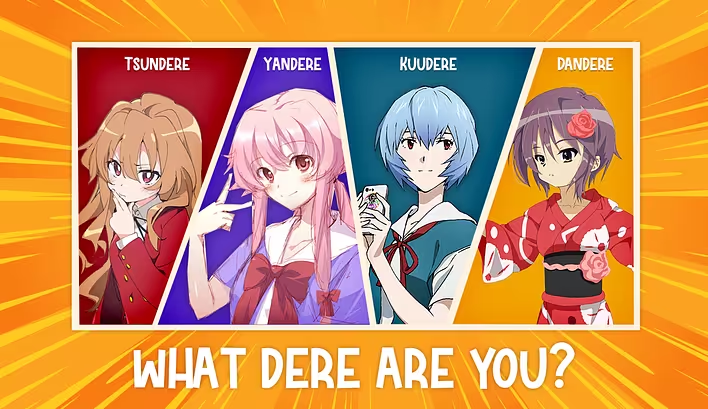
The world of anime has gifted us with numerous character archetypes: tsundere, yandere, kudere, dandere, and many others. One of the lesser-known but quite popular among genre fans is the mayadere (Mayadere). This term usually refers to a character who initially acts as an opponent to the main hero but later switches to their side. The reasons can be love, respect, friendship, or a complete re-evaluation of their own beliefs.
That is why mayadere are often considered some of the most interesting characters: they undergo significant internal development and often completely change their role in the story.
What does the word "mayadere" mean?
In the modern anime community, mayadere (Mayadere) is a character who starts the story as an enemy or antagonist but later becomes an ally or even a romantic partner of the main hero.
It is worth noting that the term itself has an interesting history. Its origin is linked to the Japanese manga Glass Mask, however, the meaning in which the word is most commonly used outside of Japan has developed within the anime fan community. Because of this, mayadere does not belong to official literary or psychological terms but is an element of fan classification of character archetypes.
Main traits of mayadere
At the beginning of the story, mayadere usually:
- is an enemy or opponent of the main hero;
- may serve the main antagonist;
- pursues goals that contradict the interests of the protagonist.
However, as the plot develops, something changes. The character begins to doubt their own beliefs, sees the injustice of their allies, becomes captivated by the hero's spirit, or falls in love with them. As a result, they switch sides.
This journey from opponent to ally is the main characteristic of mayadere.
Origin of the term
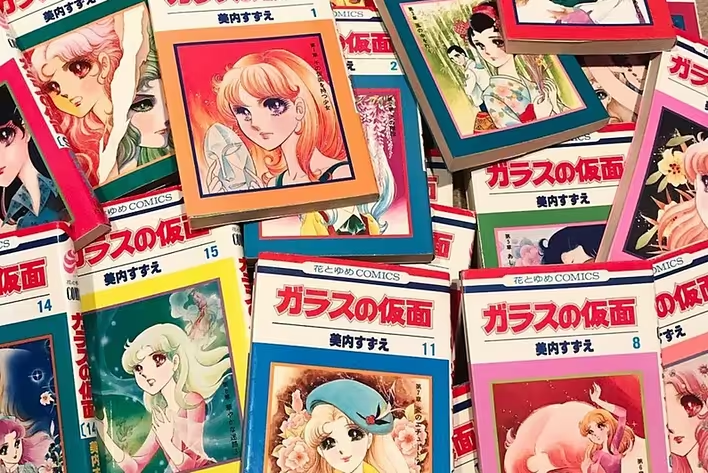
The history of the word mayadere turned out to be much more interesting than it seems at first glance. Unlike most other "-dere" archetypes, its origin is not entirely clear.
It is believed that the name is associated with Maia Kitajima — the main heroine of the classic manga Glass Mask (Glass Mask). Over time, in Japanese and English-speaking fan communities, the word Mayadere began to be used to describe characters who were initially opponents of the hero but later changed their attitude towards them.
Approximately in the late 2000s, this meaning became established in the anime fandom and became widely used. Today, this is how mayadere are described in most guides, wikis, and thematic communities, although this term does not belong to the official Japanese classification of character archetypes.
How does mayadere differ from yandere?
Due to similar names, these archetypes are often confused.
Yandere is a character whose love becomes so strong that it turns into obsession, jealousy, or even violence.
Mayadere, on the other hand, is defined not by the way feelings are expressed but by their role in the plot. The main feature of such a hero is the transition from enemy to ally.
One character can theoretically combine traits of both archetypes, but this happens rarely.
How does mayadere differ from tsundere?
Tsundere usually starts off on the same side as the main hero, although they hide their feelings behind cold or harsh behavior.
Mayadere, however, is initially a true opponent. Their development lies not so much in a change of character as in a change of views, beliefs, or sides in the conflict.
Why do viewers like this archetype?
Mayadere allows for one of the most interesting narrative transformations — the change of a person under the influence of their own experiences.
Such characters often have ambiguous pasts, internal conflicts, and complex motivations. That is why their development appears more natural and evokes strong emotions in viewers.
Most famous examples of mayadere

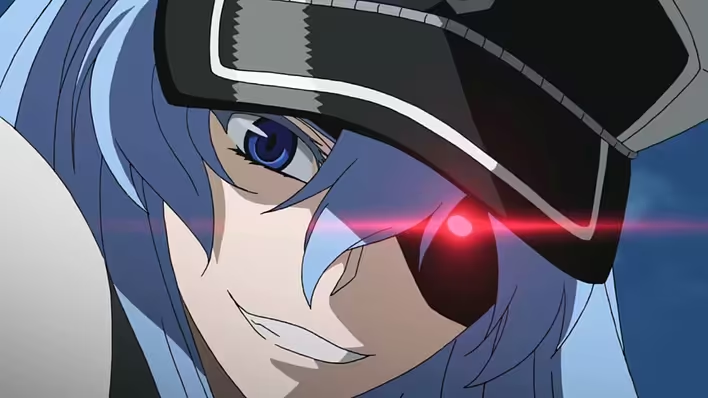
One of the most famous examples is Esdeath from the anime Akame ga Kill!. She remains one of the main antagonists of the story, but gradually falls in love with Tatsumi. This is why she is often referred to as a classic example of mayadere.
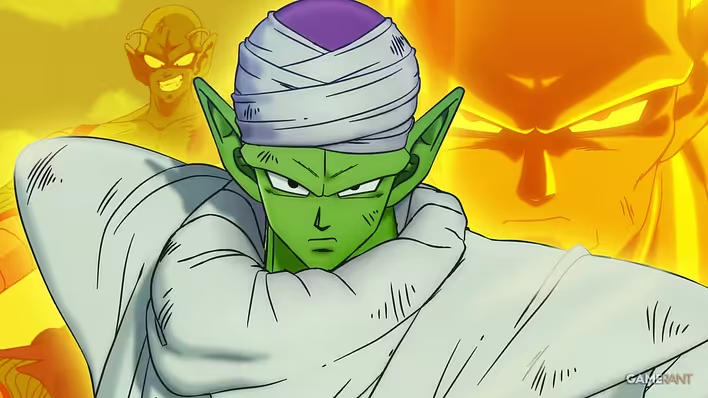
This archetype also often includes Piccolo (Dragon Ball). Initially, he was one of Goku's main rivals, but over time he transformed into a reliable ally and mentor to Gohan.
Among other characters that fans often classify as mayadere, you can find Juvia Lockser (Fairy Tail), Emilia Yusu (The Devil Is a Part-Timer!), and Charlotte Pudding (One Piece), although the boundaries of this archetype remain quite conditional.
Frequently asked questions
Is mayadere an official Japanese term?
No. This concept has formed within the anime fandom and is primarily used to describe a certain type of character.
Does mayadere necessarily fall in love with the hero?
Not always. In many cases, romantic feelings are the reason for switching sides, but a character can also switch to the hero due to friendship, respect, gratitude, or a re-evaluation of their own beliefs.
Is every former villain a mayadere?
Not necessarily. This term is usually used for characters whose change of side becomes an important part of the plot and is related to personal feelings or a strong emotional bond with the main hero.
Mayadere is one of the most interesting fan archetypes of anime characters. Its main feature is the journey from opponent to ally. Such a transformation can be triggered by love, friendship, respect, or a change in worldview. That is why mayadere often become some of the brightest heroes in the story: they demonstrate that even the fiercest enemy is capable of change.
Like it?React
🧵
This post doesn't have any additions from the author yet.