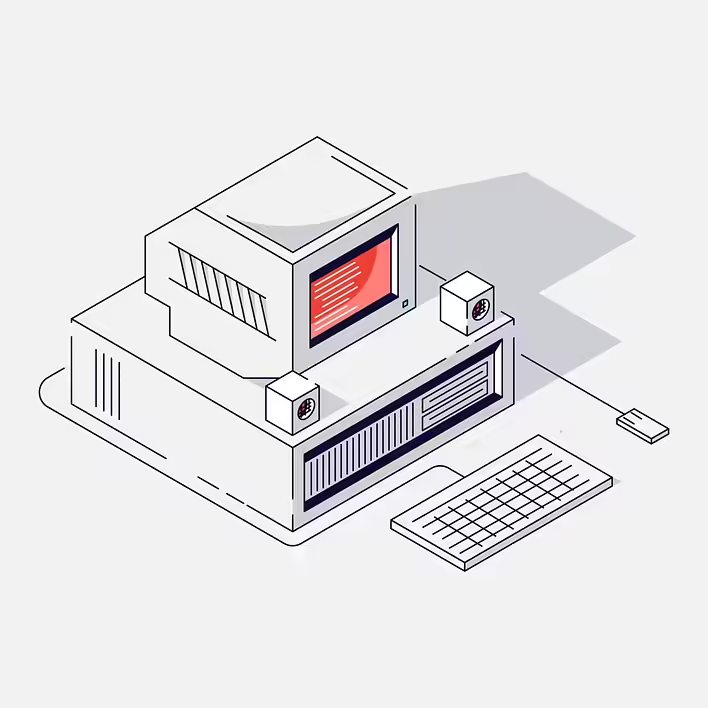
A virtual cloud server is a service that involves providing part of the hardware resources of a physical server through a virtualization software layer. This allows for the creation of a server that is nearly indistinguishable from a physical one in terms of its characteristics. By using modern solutions, virtual cloud servers VPS/VDS provide users with the same capabilities as when working with a dedicated server, including access to computing power, storage, and features.
A cloud virtual server can operate from multiple locations, united in a single network. For example, the Ukrainian provider XServer supports servers in various countries, such as Bulgaria, the Netherlands, and the USA, unlike traditional physical servers that are hosted locally and are subject to certain risks. Choosing a cloud server is advisable if flexible configuration is needed, which can be tailored to individual requirements.
How such a server works
VDS is an example of the development of cloud technologies alongside other innovations such as virtual networks, cloud databases, storage, and specialized software.
Virtual servers VPS/VDS operate thanks to virtualization technology. The main software that manages them is the hypervisor, which allows for hardware virtualization and the creation of virtual machines by combining resources to form a single computing environment. These VPS virtual servers can be connected via a network, allowing access to be provided to both a single organization and multiple ones.
Sometimes a virtual server can combine a significant amount of resources, creating a single server. In this case, known as a VPS server without an operating system, the provider combines several physical servers into one and offers the client a single VPS platform. This solution is used when a client requires a large amount of memory or power that is insufficient for a standard virtual server.
Is it worth renting a cloud server
Cloud servers have become an important stage in the evolution of the IT industry. Many companies are transitioning from the traditional approach of setting up and maintaining their own infrastructure to virtual VPS servers, which open up new opportunities.
The main advantages of virtual servers:
availability;
convenience;
scalability;
reliability.
A virtual server for rent is a cost-effective solution, as it does not require large investments. The cost of renting a VPS server in Ukraine and Europe is significantly lower than the expenses for purchasing and maintaining one's own infrastructure. Companies can save money due to economies of scale: by using VPS, organizations only pay for the necessary resources, as the capacities are shared among several clients.
New resources for the VPS server can be provided instantly, and their management is significantly simplified thanks to tools such as APIs or control panels. Now companies do not need to maintain a complex and inflexible server network. XServer clients have the opportunity to access their cloud server from anywhere in the world.
In case of changing needs for computing power or data storage, companies can easily rent a VPS server with different characteristics or from another location. This allows for the instant integration of the entire virtual infrastructure into a single network, adapting the scale to current requirements.
Renting a VPS server also ensures high reliability, as the combination of several servers into a cloud provides uninterrupted operation even in the event of a failure of one of the components.






![[Fix] Factory not registered: "user" (KeyError) (FactoryBot / Rails 7)](https://cdn.tseivo.com/gyxl720efgaf5xep8a661gf5w5th)
![[Fix] Heroku / SearchBox addon - indexing error "The client is unable to verify that the server is Elasticsearch"](https://cdn.tseivo.com/m448ldh0z3jg07nqvkzqasw9g4nv)