This content has been automatically translated from Ukrainian.
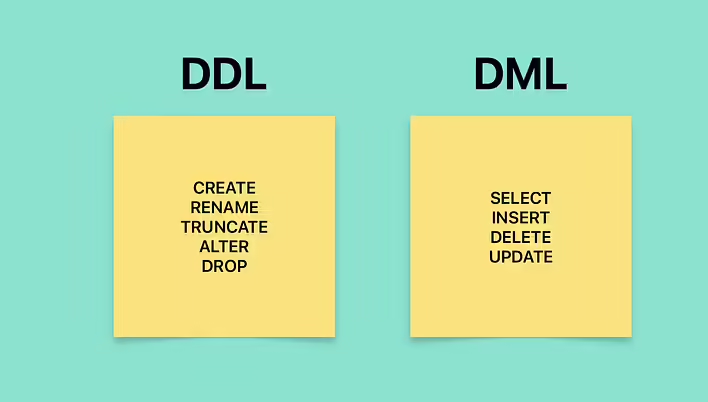
TCL (Transaction Control Language), DCL (Data Control Language) and DQL (Data Query Language) are important elements in databases. Previously, we discussed DDL and DML. For a complete understanding, we will also look at TCL, DCL, and DQL.
TCL (Transaction Control Language)
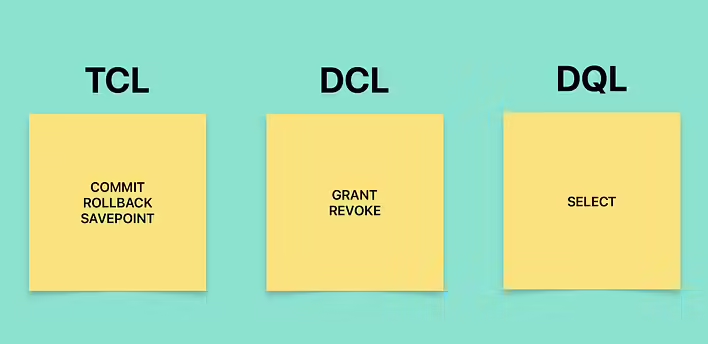
TCL is used to manage transactions in a database. It allows for commit (confirmation), rollback (cancellation), and savepoint operations in the database.
- COMMIT: Confirmation of a transaction.
- ROLLBACK: Cancellation (rollback) of a transaction.
- SAVEPOINT: Saving a restore point within a transaction.
DCL (Data Control Language)
DCL is used to manage access rights to data in a database. It includes granting or revoking access rights to users and roles, as well as managing privileges.
- GRANT: Granting access rights to users or roles.
- REVOKE: Revoking access rights from users or roles.
DQL (Data Query Language)
DQL is a data query language used for retrieving (searching) data from a database. It allows for various queries to obtain the necessary information from the database.
- SELECT: Retrieving (searching) data from the database using various conditions and criteria.
Difference between TCL, DCL, and DQL
TCL is used for managing transactions, DCL is for managing access rights, and DQL is for retrieving data from the database. Each of these languages plays an important role in the management and use of databases.
Like it?React
🧵
This post doesn't have any additions from the author yet.