This content has been automatically translated from Ukrainian.
Best practice in programming refers to recommendations and methods that are considered optimal or effective for achieving specific goals in software development. These practices are based on experience and expert knowledge in the field and may change over time depending on the development of technologies and industry requirements.
Key principles of best practice in programming
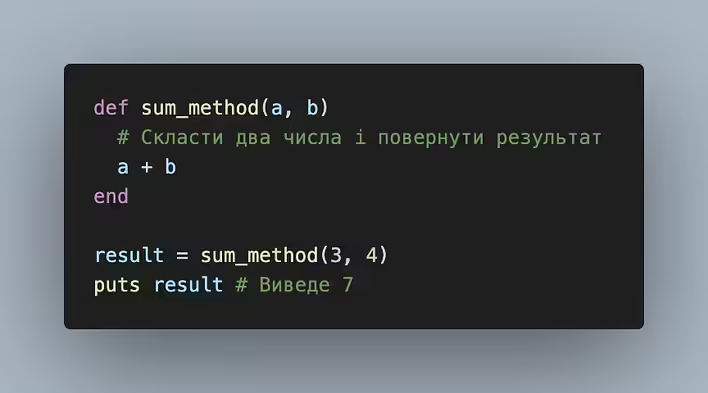
Readable code. You should write code that is easy to read and understand. Use clear variable and function names, and adhere to coding conventions. The code should be understandable not only to you but also to all other people who will work with it.
Use of comments. Add comments to explain complex or non-obvious code. Comments should be informative and helpful.
Modularity. Break your code into small modules and functions to make it easier to maintain.
Code testing. Write tests to verify the functionality of your code. Automated tests can make it easier to detect and fix bugs. Writing tests takes a lot of time, but it's easier now. Smart IDEs, copilots, etc. write good test skeletons and save a lot of time.
Efficiency. Write efficient code that runs quickly and uses resources economically. Use profilers to see the number of database requests or RAM consumption. Don't neglect volume testing on QA servers.
Security. Follow best practices for software security. For example, monitor vulnerabilities in the libraries from your Gemfile.
Use of distributed version control systems. Use version control systems (e.g., Git) to track changes in your code and collaborate with other developers.
Documentation. Write clear and understandable documentation for your code, including descriptions of functions, usage, and possible configurations.
Like it?React
🧵
This post doesn't have any additions from the author yet.