This content has been automatically translated from Ukrainian.
Have you ever felt an inexplicable discomfort while looking at a robot that looks almost like a human, but something is missing? Or watched an animated film where the characters are so realistic that instead of awe, they evoke anxiety? If so, you have encountered the uncanny valley (uncanny valley) – a psychological phenomenon where something almost human seems eerie to us.
What is the uncanny valley effect?
The term uncanny valley was introduced by Japanese scientist Masahiro Mori (Masahiro Mori) in 1970. He suggested that the more a robot or image resembles a human, the more we like it – but only up to a certain point. If the resemblance is too high but not perfect, we start to feel discomfort. This is the "uncanny valley" – a zone where the object looks almost realistic, but something about it triggers revulsion.
Mori illustrated this in the form of a graph:
- When a robot or character has a simple, cartoonish appearance (for example, a toy robot), people perceive it positively.
- The more it resembles a human, the more sympathy it evokes.
- But when the resemblance reaches a point where the object is almost like a human, but still "not quite," sympathy drops sharply – a feeling of unease and even fear sets in.
Why does it scare us?
Scientists and psychologists have proposed several explanations for this phenomenon:
- Evolutionary mechanism
The human brain has learned to recognize threats well. When we see something that closely resembles a human but has "wrong" details (unnatural movements, strange expressions, lifeless gaze), our brain subconsciously signals danger. This may be related to the fact that in nature we avoid sick or dead people – their appearance may remind us of what we see in the uncanny valley.2. Discrepancy between expectation and reality
We expect that an object that looks like a human will behave like one. But when it moves or reacts unnaturally, it creates cognitive dissonance – the brain cannot find a familiar behavior pattern, leading to a feeling of anxiety.3. Subconscious association with the inanimate
Some researchers suggest that objects from the uncanny valley remind us of death, mannequins, corpses, or zombies. This intensifies fear and the sense of unnaturalness.
Examples of the uncanny valley
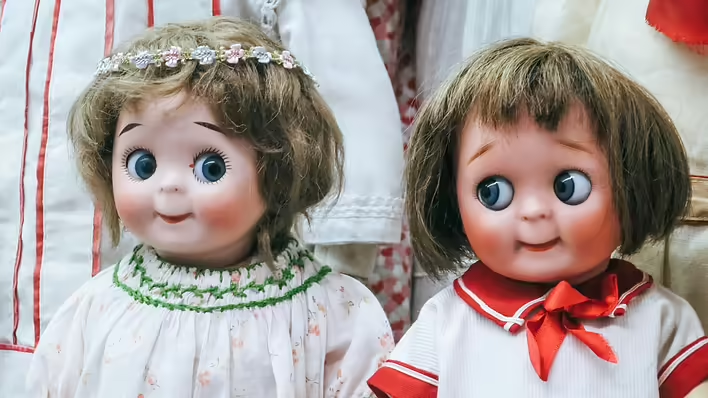
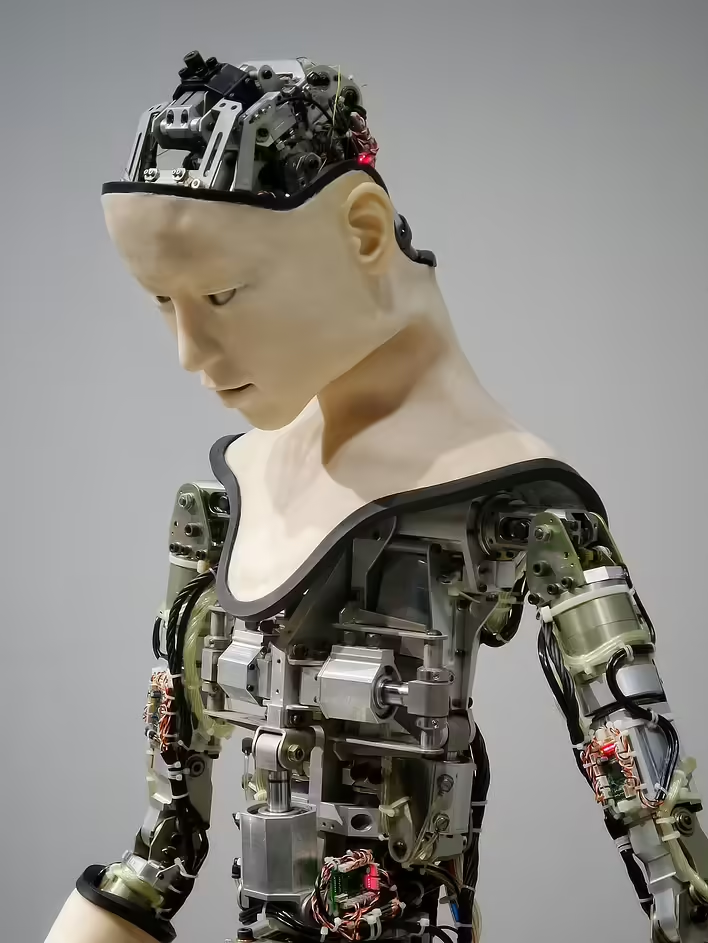
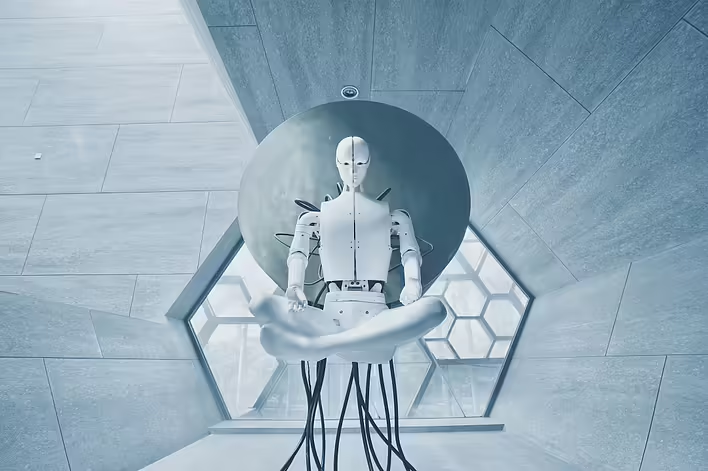
- Humanoid robots – modern androids like Sophia or Ameca have realistic expressions, but still seem a bit "off." Their movements are sometimes too smooth or, conversely, jerky, which creates an eerie feeling.
- Animated films – in the 2000s, studios began experimenting with photorealistic computer animation, and this was not always successful. For example, characters from The Polar Express (2004), Beowulf (2007), or Final Fantasy: The Spirits Within (2001) look realistic, but their eyes seem "empty," and their expressions are not lively enough, causing discomfort.
- Video games – the more realistic the graphics become, the greater the chances of falling into the uncanny valley. For instance, early CGI models of people in L.A. Noire (2011) looked both impressive and frightening due to their strange expressions.
- Wax figures – they perfectly replicate a person's appearance, but due to their lifeless gaze and lack of lively expressions, many people feel discomfort around them.
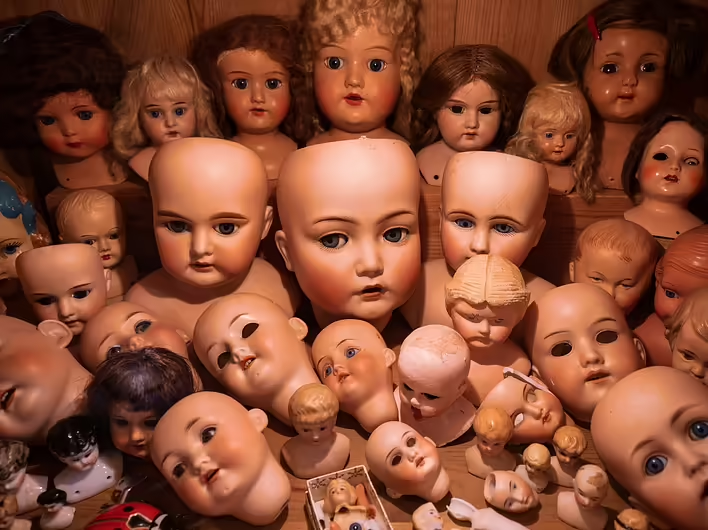
- Masks and dolls – Japanese theater masks No or realistic dolls often fall into the uncanny valley. They seem "alive," but something about them makes us uneasy.
How do people cope with the uncanny valley effect?
Modern designers and developers try to avoid this effect by using several approaches:
✔ Less realism, more stylization – cartoonish or slightly simplified characters (for example, Pixar heroes) are perceived much better than hyper-realistic CGI models.
✔ Improved animation – if a character or robot looks realistic but moves naturally, fear decreases.
✔ Focus on eyes and expressions – the most unsettling effect occurs when a character has an "empty" or lifeless gaze. Therefore, new models try to pay more attention to eye movement and expressions.
Will the uncanny valley disappear?
With the development of artificial intelligence and robotics, the uncanny valley effect may gradually disappear as robots and CGI become so realistic that they no longer evoke cognitive dissonance in us. But for now, this phenomenon remains a significant challenge for the film, gaming, animation, and robotics industries.
Like it?React
🧵
This post doesn't have any additions from the author yet.