This content has been automatically translated from Ukrainian.
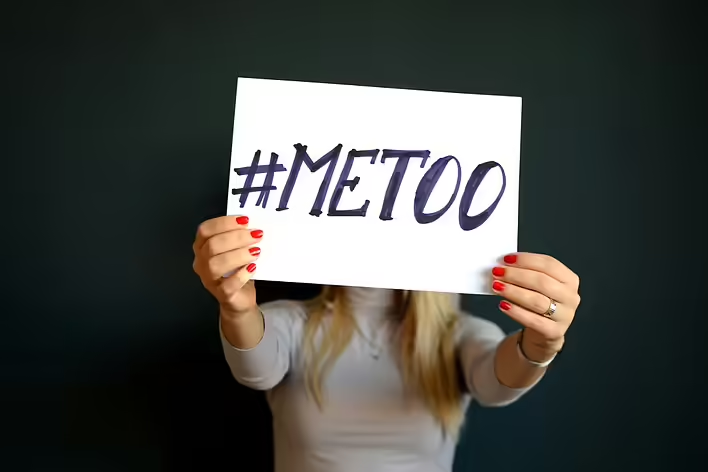
The #MeToo movement is a social and cultural phenomenon that has drawn attention to the issue of sexual harassment and violence, particularly in workplace environments. Its main goal is to create a space for victims to share their stories, find support, and fight against the impunity of aggressors.
History and Emergence
The #MeToo movement was founded in 2006 by Tarana Burke, an American activist working in the field of social justice. She used this hashtag as part of her work to support victims of sexual violence, particularly in African American communities. However, the movement became globally recognized only in 2017 when actress Alyssa Milano and other celebrities began to widely share the #MeToo hashtag in response to allegations against Hollywood producer Harvey Weinstein.Harvey Weinstein was a true legend of Hollywood. As the founder of Miramax and The Weinstein Company, he was behind hits like "Pulp Fiction," "Shakespeare in Love," and "The Lord of the Rings." His influence was limitless: he could make any actor or actress a star, and his films regularly won Oscars. However, in October 2017, everything changed.
Reporters from The New York Times and The New Yorker published investigations where dozens of women accused Weinstein of sexual harassment, violence, and abuse of power. These were not just ordinary accusations, but stories that shocked with their brutality and scale. Actresses Angelina Jolie, Gwyneth Paltrow, and many others made public statements confirming these horrific facts.
Accounts of how Weinstein used his power to manipulate young women flooded the media. He lured them to his hotel rooms under the pretense of professional meetings and then forced them into intimate relations. Those who refused faced threats and harassment, and their careers could be destroyed.
These confessions triggered a wave of new statements from women around the world. #MeToo became a symbol of the fight against sexual violence and harassment, a movement that united millions of women who shared similar experiences. Weinstein's story showed how deep corruption and abuse of power can be, even in the most glamorous and successful fields.
How It Works
The main idea of the #MeToo hashtag is support and solidarity. People who have experienced sexual violence or harassment share their stories accompanied by the #MeToo hashtag to show that they are not alone in their experiences. This allows others to see the scale of the problem and understand that such cases are very common.
Impact and Consequences
- Increased Awareness: The #MeToo movement brought attention to the widespread issue of sexual violence and harassment. People began to discuss these issues more, break taboos, and foster cultural change.
- Exposure of Aggressors: Thanks to this movement, many high-profile individuals have been held accountable for their actions. The exposure led to firings, legal investigations, and a general increase in accountability for sexual harassment.
- Reforms: The movement influenced changes in company and organizational policies regarding sexual violence and harassment. Many companies revised their policies to create safer working environments.
- Global Impact: Although #MeToo began in the U.S., its impact is felt in many countries around the world. The movement has inspired local initiatives and campaigns that fight against sexual violence and harassment on a global scale.
Criticism and Challenges
Like any social movement, #MeToo has not been without criticism. Some believe that the movement may lead to abuses or false accusations. Others argue that the focus on individual stories can distract from systemic issues.
However, overall, #MeToo has brought important changes to societal perceptions of sexual violence and harassment, raising awareness and creating new opportunities for supporting victims and punishing aggressors.
Like it?React
🧵
This post doesn't have any additions from the author yet.