
Table of contentsClick link to navigate to the desired location
This content has been automatically translated from Ukrainian.
When investigators take on a crime investigation, they look for not only evidence but also the characteristic handwriting of the criminal – their modus operandi. This Latin expression means "method of operation." In forensics, it describes the habits, techniques, and methods that a criminal uses to prepare, commit, and conceal a crime.
What is modus operandi and why is it needed?

Criminals, like any people, have their habits. Some steal exclusively through first-floor windows, others break into safes of a certain brand, and some always use the same transport for escape. These repeated actions make up the modus operandi.
For forensic experts, it is important because it allows:
- Linking crimes together. If several robberies were committed in the same way, the police may assume that the same person is behind them.
- Predicting the behavior of the criminal. Knowing the modus operandi helps anticipate their next actions and prevent new crimes.
- Finding suspects. When police see a familiar handwriting, they can narrow down the search to individuals who have used a similar method in the past.
Modus operandi vs. Criminal signature

Often, modus operandi is confused with the so-called "criminal signature". However, there is a key difference between them.
- Modus operandi is a rational method that a criminal uses to successfully commit a crime. It can change depending on circumstances and the criminal's experience. For example, initially, a robber breaks a window, and later begins to use lockpicks.
- Signature is a psychological element of the crime that does not affect its essence but has personal significance for the criminal. For example, a serial killer may leave a flower next to the victim or draw something on the wall. This does not change the act of killing itself, but is part of their personal motivation.
Evolution of modus operandi

Modus operandi rarely remains unchanged. Criminals learn and refine their methods, adapting to new challenges. For example, fraudsters who previously forged signatures on documents now use digital technologies and phishing.
However, even with changes in techniques, the overall logic of their work remains. That is why investigators analyze not only specific actions but also style, motivation, and choice of victims.
Famous examples of modus operandi
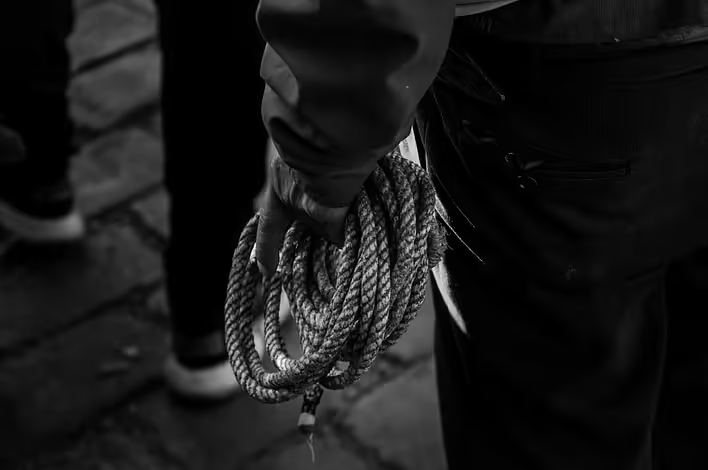
🔎 Jack the Ripper (1888) – a killer who operated in London, always chose victims from among prostitutes, inflicted the same mutilations, and hid in the dark.
🔎 Conspirators – for example, criminal groups involved in car theft may have a clear scheme: a thief, a driver who moves the car, and an intermediary who changes the documents.
🔎 Phone scam artists – they often call victims, posing as relatives in trouble, using emotional pressure and certain phrases (for example, "Mom, I'm in the police").
How do law enforcement use modus operandi?
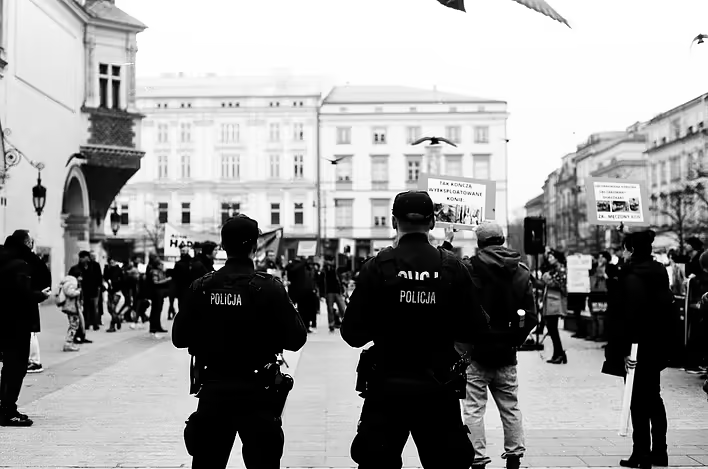
Modern technologies allow for the collection and analysis of vast amounts of data about crimes. Criminal analysis systems and databases, such as CODIS (genetic database) or VICAP (database of serial crimes in the USA), help link individual cases together.
Investigators also use psychological profiles created by criminal psychologists based on modus operandi. This helps predict who the criminal might be, their social background, age, level of intelligence, and even professional skills.
This post doesn't have any additions from the author yet.