This content has been automatically translated from Ukrainian.
The first playing cards appeared in China around the 9th century, and over time they spread to India and Persia before reaching Europe in the 14th century. Europeans adapted the cards to their cultural realities, creating different suits and face cards.
Interestingly, in different countries, cards could have different names and images. For example, Italian and Spanish cards use the suits of swords, cups, coins, and clubs, which also reflect their cultural heritage.
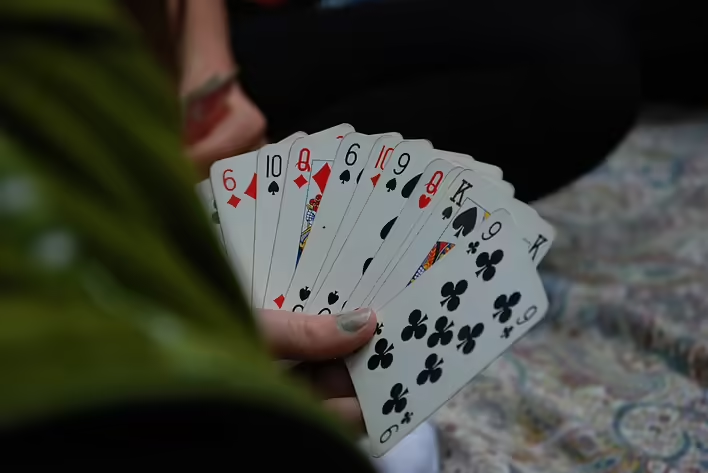
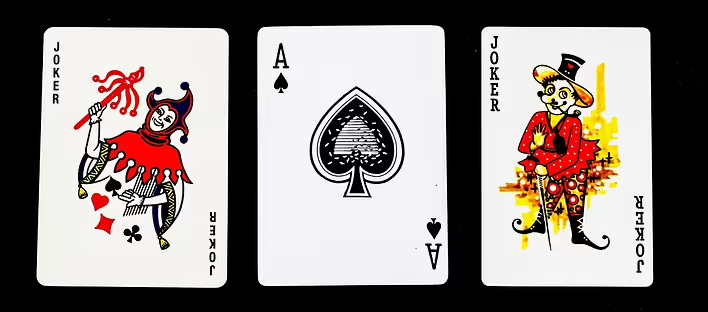
Most modern decks of cards have four suits: spades, hearts, clubs, and diamonds. These names come from different traditions and have deep symbolic meanings:
- Spades: The name "spades" comes from the French "pique," which means "spear" or "spike." In early European decks, this suit symbolized weapons and military affairs, and in modern interpretation, it is often associated with complex or dangerous situations.
- Hearts: The name "hearts" is directly related to the symbol of the heart. In many cultures, the heart symbolizes love, life, and emotions. It is one of the most positive suits in the deck.
- Clubs: Clubs come from the French "trèfle," which means "clover." They symbolize luck and the natural world. In English-speaking countries, they are also called "clubs," which may refer to a weapon - a mace.
- Diamonds: The name "diamonds" comes from the French "carreau," which means "stonecutter." This suit symbolizes wealth and material values. In English-speaking countries, the term "diamonds" is used, which is associated with jewels.
Face cards also have their names, reflecting social statuses and roles:
- King: The king has always been a symbol of supreme power and authority. The image of the king on the card reflects the monarchs who ruled at the time the decks were created.
- Queen: The queen represents a queen or an influential woman. Her role in the card game symbolizes the importance and power of women in society.
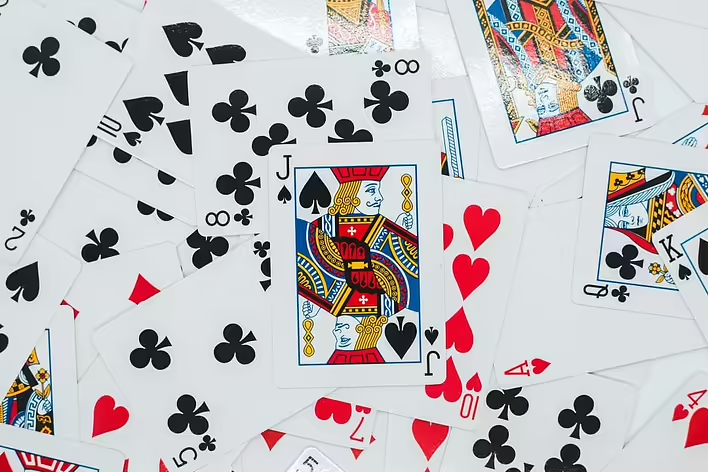
- Jack: This is a young man who serves the king or queen and symbolizes youth and ambition.
Let's dive into the origin of the word "jack."
The word "jack" in the Ukrainian language comes from the French "valet," which literally means "servant" or "assistant." In medieval Europe, jacks were young servants in the court who often served knights or higher nobility. They performed various duties, from taking care of their master's clothing to accompanying him on hunts. Over time, this term began to simply mean "servant."
How did this image end up on playing cards? It all started in the 14th-15th centuries when playing cards began to spread in Europe. The jack in the card game occupied a place between the numbered cards and the higher face cards – the king and queen. He was a representative of the middle class, possibly even aspiring to a higher status. Interestingly, in different cultures, the jack has its special names and meanings. For example, in English-speaking countries, the jack is known as "Jack." Until the 19th century, in England, the jack was called "knave," which also meant "servant" or "boy." However, to avoid confusion with the numbered card "K" (King), he began to be called "Jack."
Another interesting aspect is the depiction of the jack on the cards. In classic French decks, jacks are depicted as young men in colorful outfits, often with swords or other knightly attributes. This depiction has persisted to this day and is one of the distinctive features of the card deck.
Thus, the name "jack" reflects an ancient social structure and cultural traditions that have transitioned from medieval Europe to modern playing cards. This word carries a history and traditions that help us understand how social relations and entertainment have evolved over the centuries.
Like it?React
🧵
This post doesn't have any additions from the author yet.