This content has been automatically translated from Ukrainian.
How often have you seen a headline like "You won't believe what happened next!" or "This simple thing will change your life forever"? If so, you're already familiar with the phenomenon known as clickbait. This word has long become synonymous with enticing, yet often misleading headlines that we encounter online. But do you know where this term comes from and how it became so popular?
The Origin of the Term "Clickbait"
The very word "clickbait" consists of two parts: "click" and "bait." Literally, it means "bait for clicks." The term began to be actively used in the early 2000s with the rise of online journalism and social media platforms. With the growth of digital content and competition for users' attention, editors and marketers started to come up with headlines that compel people to click on links.
How Does Clickbait Work?

The mechanism is simple: clickbait creates curiosity in the reader that needs to be satisfied immediately. This can be:
- Intrigue: the headline promises to reveal something extraordinary but does not specify what exactly.
- Emotions: the text evokes shock, outrage, or excitement. For example, "This discovery shocked the whole world."
- Incomplete Information: it provides only part of the story, forcing the reader to click to learn more.
Often, clickbait is accompanied by bright images or loud words: "sensation," "shock," "immediate."
Why is Clickbait So Popular?
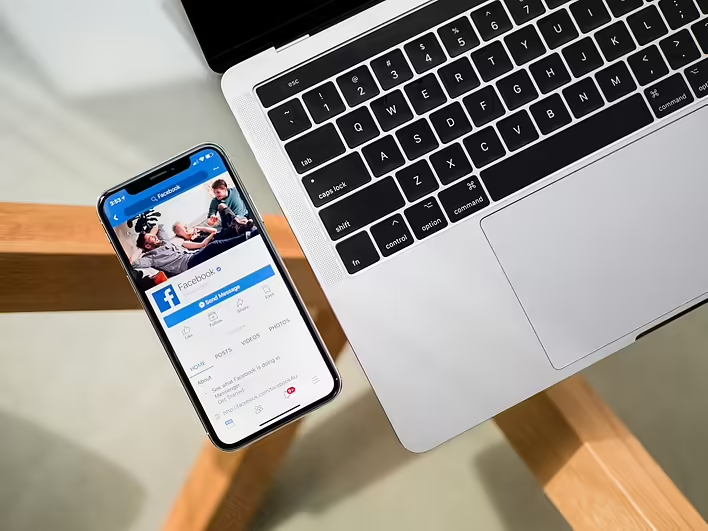
In a world where attention is becoming the most valuable resource, clickbait is an effective way to attract it.
- Social Media Algorithms: Facebook, YouTube, TikTok, and other platforms often favor content that gathers many clicks, likes, and comments.
- Advertising: every click on an article generates revenue through ads. Therefore, some publications sacrifice content quality for the sake of view counts.
The Impact of Clickbait on Society

Although clickbait can be an effective marketing tool, it also has negative consequences:
- Audience Disappointment: when the content does not meet expectations, readers lose trust.
- Fake News: clickbait is often used to spread misinformation.
- Decline in Content Quality: in the race for clicks, the value and depth of materials are lost.
Is There "Clean" Clickbait?
Not all clickbait is bad. Quality clickbait is that which delivers on the promises of the headline. For example, an intriguing headline that leads to genuinely useful or interesting material.
How to Recognize and Avoid Clickbait?
To avoid falling into the trap:
- Read Between the Lines: consider whether the information in the headline seems realistic.
- Check the Source: is it an authoritative site or a lesser-known resource?
- Ask Questions: could what the headline promises be true?
Clickbait is a vivid example of how users' attention has become the main "currency" in the age of digital technology. It is both a tool for attracting an audience and a challenge for the media. Therefore, each of us must learn to be critical readers to avoid falling for sensational headlines and to value quality content.
Like it?React
🧵
This post doesn't have any additions from the author yet.