This content has been automatically translated from Ukrainian.
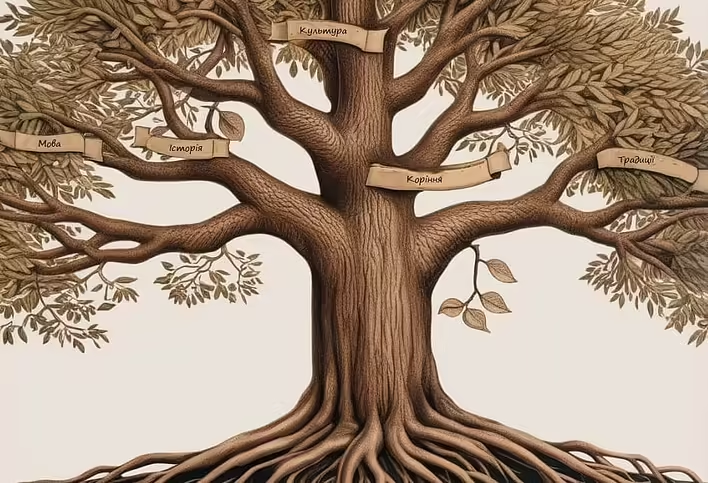
The words we use every day are more than just a means of communication. They carry stories, emotions, and cultural traditions. One way to understand the true depth of language is by studying etymology. This fascinating field allows us to glimpse into the past of each word, revealing its origins, transformations, and the paths it has taken to reach the present.
What is etymology?

Etymology is a branch of linguistics that studies the origins of words, their history, as well as changes in meaning and form over time. The word "etymology" comes from Greek (ἔτυμον – "truth, true meaning" and λόγος – "word, study").
Through etymology, we learn how words were born, transformed, and influenced one another, reflecting cultural, historical, and social changes.
How does etymology work?
Etymology is based on the analysis of historical texts, the comparison of languages, and the reconstruction of ancient forms of words. Researchers study how languages interacted with each other, borrowing words and adapting them to their phonetic and grammatical norms.
The main tools of an etymologist:
- Comparative analysis: comparing similar words in different languages.
- Reconstruction: restoring proto-forms of words using rules of sound change.
- Sources: researching historical documents, dictionaries, and texts.
Why study etymology?

- Cultural enrichment: through words, we learn about the everyday life, beliefs, and traditions of our ancestors. For example, the Ukrainian word "хата" has a common origin with the Sanskrit kṣetrá ("place"). This indicates the agrarian basis of our ancestors' culture.
- Understanding language borrowings: etymology helps us understand how other cultures have influenced our language. For instance, the words "кава," "апельсин," and "пан" came to us from other languages and became an inseparable part of the Ukrainian lexicon.
- Intellectual development: studying etymology sharpens attention to detail, develops logical thinking, and fosters a better understanding of the language system.
Examples of etymology of Ukrainian words
- The word "Ukraine"Derives from the word край, which meant "land," "country," and also "borderland." This word reflects the historical context of the period when the territory of Ukraine was a border land.
- "Книга"Comes from Old Slavic кънига, which is likely related to the Turkic word künik ("tablet for writing").
- "Борщ"Initially, this was the name of the plant hogweed, which was added to the dish. Over time, the word became associated with the soup we now know.
How do meanings of words change?

Etymology also tells us how words acquire new meanings. For example:
- The word "мишка" initially meant the animal, but in the digital age, it took on the meaning of a computer device.
- "Зірка" in modern context denotes famous people, although historically it referred only to a celestial body.
Interesting facts about etymology
- The word "варвар" in ancient Greece referred to people whose language sounded like incomprehensible "barbaric" speech.
- The English word salary comes from the Latin salarium, related to salt, as Roman legionaries often received it as payment.
- The Ukrainian "гарбуз" has Turkish origins (kavun), which initially meant melon.
Etymology in the modern world
In the age of globalization, etymology remains relevant, as new words and terms are constantly emerging. For example, in the digital age, the words "podcast," "hashtag," or "drone" have interesting origin stories that reflect technological progress.
Etymology is a way to see history, culture, and traditions through the lens of language. Delving into etymology opens up new horizons, helping us better understand our linguistic environment and the history of the people. Every word has its journey, and often this journey is much more interesting than it seems at first glance.
Like it?React
🧵
This post doesn't have any additions from the author yet.